
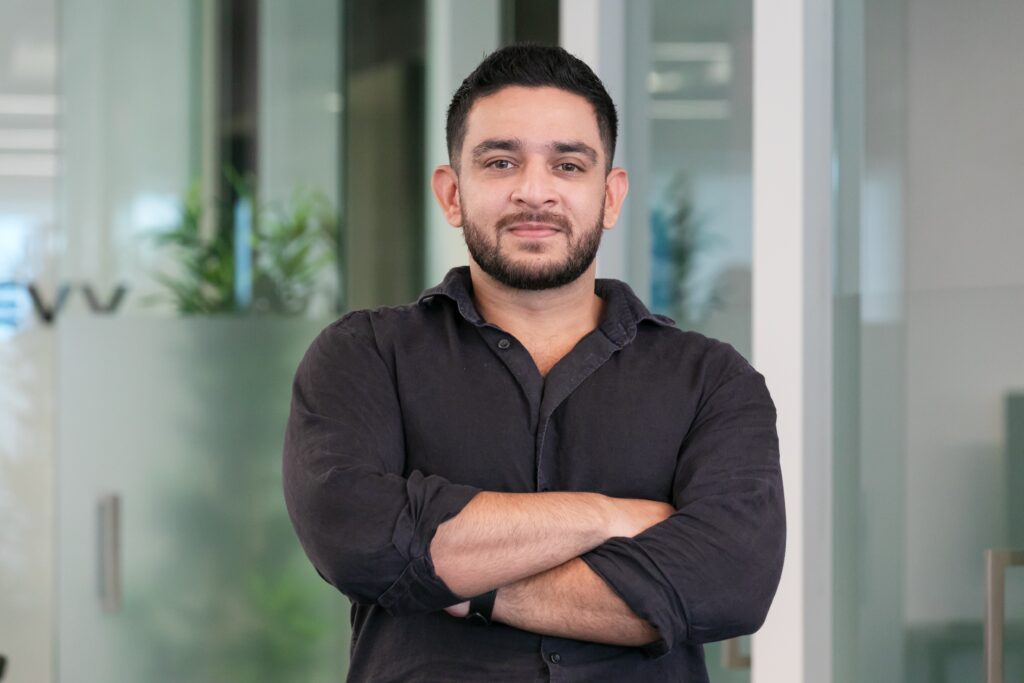
I recently went one-on-one with Adi Bathla, co-founder and CEO of Revv.
Adam: Thanks again for taking the time to share your advice. First things first, though, I am sure readers would love to learn more about you. How did you get here? What experiences, failures, setbacks, or challenges have been most instrumental to your growth?
Adi: I grew up in India and both of my parents were doctors. Their philosophy was always to add value to society, and that’s stuck with me throughout my career. At 16, I started competing in NASA’s International Space Settlement Design Competition, where I led the winning team three years in a row. This was the first time I realized I didn’t need permission to be ambitious and it’s the same mentality I try to bring to Revv.
The competitions helped me earn a full ride to Brown, and while I was excited, it was definitely intimidating to pick up my whole life and move to the U.S. My time at Brown completely reshaped my perspective. I came in thinking I’d be an aerospace engineer, before pivoting to software and building products for athletes and students. I then had stints at Jet, Walmart, Macy’s, and Misfits Market.
In 2022, I launched Revv with my co-founder, Rashmi. And building Revv wasn’t easy; I even spent a night in the ER when my arm stopped working from stress and still took business calls while there. But to build a company, you really have to be all in.
Adam: How did you come up with your business idea and know it was worth pursuing? What advice do you have for others on how to come up with and test business ideas?
Adi: With Revv, I didn’t start with an idea; instead, I started with an industry. Parts of my extended family ran a national auto parts distribution business, so I chose auto as my sandbox and went in with no real knowledge of the space. I was just giving out a card with my phone number, saying: if you have a problem, call me.
I spent a ton of time speaking to different people in the industry, but there was one phone call that changed everything. A shop owner called in a panic, scared of getting sued: he’d repaired a car, and the lane-change system malfunctioned afterward.
It had me thinking about ADAS, the technology behind features like automatic emergency braking and lane-keeping. I was hearing the same story everywhere: cars were too complex. They’d become computers on wheels, and technicians were spending hours hunting through manuals for something that should take minutes. That was the hair-on-fire problem.
Adam: What are the key steps you have taken to grow your business? What advice do you have for others on how to take their businesses to the next level?
Adi: The first thing I did was just show up for customers. Before we wrote a single line of code, I was driving around the country, sleeping in repair shops, watching how technicians worked, and building real relationships with people in the industry. I wanted to understand the industry from the inside before I tried to build anything for it.
The second step was learning to let go. For the first two years, I was doing everything myself, from sales to customer calls and everything in between. And I wasn’t even paying myself. At some point, I had to start hiring people who were better than me at each of these things, then I had to learn to trust them to own it.
The third step is to build systems before you think you need them. A lot of founders wait until after they’ve scaled to put structure in place, but by then it’s too late. Build the infrastructure that can handle 10x the volume you have today.
Adam: What are your best sales and marketing tips?
Adi: The earliest sales strategy was getting in front of customers before we had a real product to sell. I started visiting shops in 2018, way before Revv even existed, just to get a better understanding of the industry. I’d hand out a card with my personal number and say, “If you have a problem, call me,” and they did. By the time we launched, shops already knew us because we’d put in the effort long before we had anything to sell.
Another key strategy for us was referrals. I really believe that A+ customers bring other A+ customers. If you do right by the customers who take a chance on you early, they’ll tell everyone they know. That compounded faster than any paid channel we could have built.
Adam: What are the most important trends in technology that leaders should be aware of and understand? What should they understand about them?
Adi: One trend I keep seeing is software finally coming for industries that have traditionally been offline. The catch is that generic AI doesn’t work for these industries that have very specific needs and workflows, so you can’t just slap AI on top and say it’s improved. It has to be built around how those users actually operate.
The auto industry is a great example of this: each estimate has 100 to 200 line items, and each one has a ripple effect depending on the make, model, year, and lifecycle of the car. Two cars with the exact same make and model year might need completely different repairs. Generic AI can’t differentiate and doesn’t have the knowledge database to really help with these workflows.
Adam: In your experience, what are the defining qualities of an effective leader? How can leaders and aspiring leaders take their leadership skills to the next level?
Adi: One leadership skill I find extremely important is being bullish on your vision but flexible on the details. A lot of leaders have this backwards, and they’re locked in on how they’re going to do something, but unclear on where they’re trying to go. I recommend the opposite: the destination shouldn’t waver, but the path there can always change.
My advice for leaders trying to take their leadership to the next level would be to build a “what’s next” culture around you. When the people around you are always asking what’s next, small thinking becomes uncomfortable, and the bar keeps moving on its own.
Adam: What is your best advice on building, leading, and managing teams?
Adi: The biggest piece of advice I’d give is to hire for what you’re not. I came into auto repair knowing nothing about the industry, so the first thing I did was surround myself with people who were experts. Whatever gap exists on the team, find the best person at that specific thing rather than trying to figure it out yourself. The best leaders I know are the fastest learners in the room, not necessarily the smartest. You don’t need to have all the answers; you just need to know who to ask.
Adam: What are your three best tips applicable to entrepreneurs, executives, and civic leaders?
Adi:
- Think in patterns. I grew up playing chess, which wired my brain to always look for repeatability and think five steps ahead. Now, before I make any move, I ask myself how it’ll manifest three or four years down the road.
- Always start with the hair-on-fire problem first and let the product follow from there. So many entrepreneurs start with a SISP, a solution in search of a problem, and fall in love with their product before they’ve really validated the pain.
- Don’t ask for permission to be ambitious – you don’t need a degree or title to go after something big.
Adam: What is the single best piece of advice you have ever received?
Adi: Add value to society, don’t chase money. My parents said that to me growing up, and now it’s the lens I use for every major decision. I’m constantly asking the questions: Does this problem actually matter? Does solving it help people? Am I building something that makes lives better? If the answers to those questions are yes, everything else tends to take care of itself.