
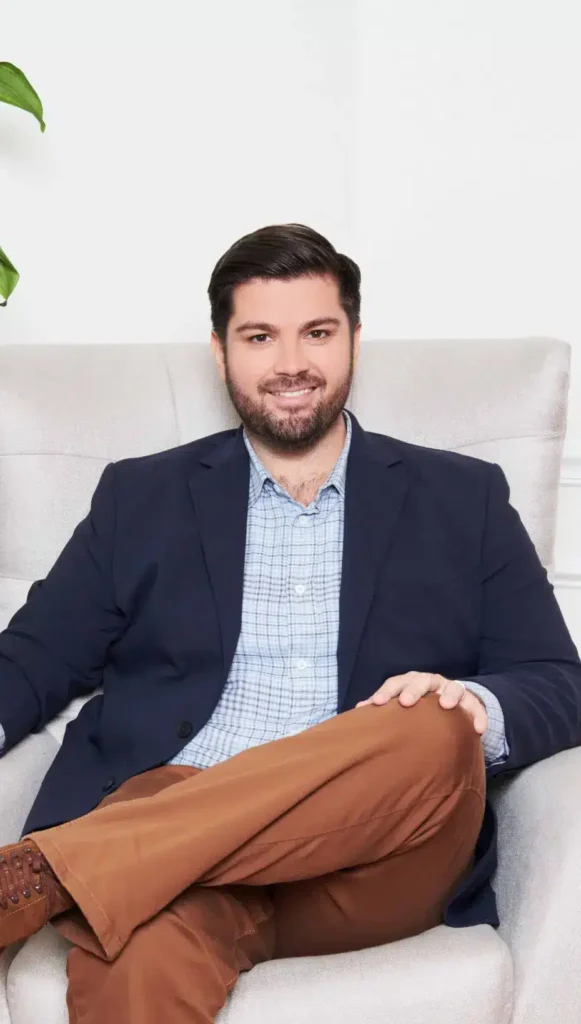
I recently went one-on-one with Michael Rubino, founder of HomeCleanse.
Adam: Thanks again for taking the time to share your advice. First things first, though, I am sure readers would love to learn more about you. How did you get here? What experiences, failures, setbacks, or challenges have been most instrumental to your growth?
Michael: Honestly, I backed into this. When I came home to New Jersey after college, I had no real plan. I’d studied architecture because I loved buildings and figured I’d end up designing them. Then Hurricane Sandy hit and put water into roughly 200,000 homes across the Northeast. My father had run a restoration company since I was a kid, so I started working alongside him and told myself it was temporary.
What changed me wasn’t the construction. It was the people. Family after family described the same thing: they’d had their house fixed, and they were still sick inside it. I couldn’t stop thinking about them after I left the job site. I also started remembering my own childhood, growing up with asthma in a moldy apartment on Staten Island, and a lot of things clicked into place.
My first project set the tone for everything after. A woman had already had her home remediated after Sandy by one of the fly-by-night crews, and the work was bad. Her insurance wouldn’t pay again, since they won’t cover the same job twice, so she paid out of pocket and trusted me anyway. I’ll be straight with you: I didn’t get it all right on the first round of testing. It took three weeks and a lot of redone work to get that house actually clean. But when she walked back in and wasn’t hit in the face with symptoms, I was hooked for life.
The setbacks since then have been real. Financial pressure, projects that went sideways, nights when the weight of it felt like too much. The hardest lessons all came from the same place: moving forward without enough information, or letting good enough slide. Those are the ones that stuck.
Adam: How did you come up with your business idea? What advice do you have for others on how to come up with great ideas?
Michael: I didn’t sit down and invent an idea. I noticed a gap and couldn’t unsee it. For the first few years, most of the homes I worked on were the back end of failed jobs from other companies. I’d read their report, walk the house, and see the same thing over and over. They were pulling out the mold source, the wet drywall or the leak, and leaving behind all the contamination that source had spread through the rest of the home. The house passed its test. The person living in it didn’t get better.
That gap is where the real question came from. I kept asking why my clients could pass a mold test and still feel awful. So I decided I didn’t want to pass tests. I wanted to pass people. If someone could walk back into their home and breathe without their symptoms flaring up, that was the only result I cared about.
So my advice on ideas is boring but true. Go work inside a real problem, pay close attention to what frustrates the people you serve, and stare hard at the thing everyone else has agreed to call normal. My best ideas never came from brainstorming. They came from standing in someone’s house, watching a problem the whole industry had decided to ignore.
Adam: How did you know your business idea was worth pursuing? What advice do you have on how to best test a business idea?
Michael: The signal for me was repeatability. Once I’d built a process I could run in one house and get the same result in the next, I started asking why every company couldn’t do this. I figured I couldn’t be the only person who had cracked it. The more homes I compared, the clearer the pattern got.
The strangest piece of validation came from a contractor who’d been at it for twenty-five years. I’d been brought into a house where his work had failed, and when I pressed him on it, he told me, you guys are the Mercedes of mold remediation, and I’m the Honda. He meant it as a defense. To me it confirmed the whole thing. There was real demand for the better version, and even the old guard knew it existed and chose not to do it.
If you want to test an idea, test it against the outcome the customer actually cares about, not the metric your industry hides behind. Don’t ask whether you passed the inspection. Ask whether the person’s life got better. And gather your information before you commit. Early on, I quoted a job in New York at around twenty thousand dollars. It ended up north of a hundred thousand, because I hadn’t done enough homework up front. That one permanently changed how I plan every project I touch.
Adam: What are the key steps you have taken to grow your business? What advice do you have for others on how to take their businesses to the next level?
Michael: A few things mattered more than the rest. First, I had to get myself out of the field. For a long stretch, I was the quality control. The business couldn’t grow past me until I built it so a client got the same result whether I was standing in their living room or not. That meant trusting regional managers and a real team, and accepting that delivering the same thing every single time is harder than doing one great job yourself.
Second, I committed to teaching people instead of selling them. We had to create demand for better work by helping homeowners understand why the cheap version kept failing them. Most of that audience didn’t even know there was anything better to ask for.
Third, I stopped letting we’ve always done it this way win an argument. Every real step up in our work came from questioning a method everyone around me treated as settled.
My advice for taking a business to the next level is to find the one thing only you can do, then build a system that does it without you. If the quality lives in your hands, you don’t have a business. You have a job with employees.
Adam: What are your best sales and marketing tips?
Michael: The best sales advice I have is to stop selling. People in my field love fear, because a scary lab result is an easy way to close a nervous homeowner. I won’t work that way. My clients are already frightened and confused by the time they call me. They need a guide, not a closer.
So I lead with honesty and plain explanation. I walk people through what is actually happening in their home and what it will really take to fix it. When the price comes up, I tell them the truth: if there’s a twenty-five thousand dollar difference between two proposals, it’s almost always because there’s a twenty-five thousand dollar difference in what’s getting done. I’ve watched too many families take the cheapest bid, have it fail, and then pay again to do it right.
On marketing, the thing that has worked for me is teaching. Give people real information with no strings attached, and the ones who need you will find you and already trust you by the time they do. Trust is the whole game. Strip away the science and the equipment, and what people are really buying is the belief that you’ll tell them the truth and stand behind your work.
Adam: In your experience, what are the defining qualities of an effective leader? How can leaders and aspiring leaders take their leadership skills to the next level?
Michael: The leaders I respect take responsibility for things that aren’t technically their fault. In my work, if my team gets it wrong, a family stays sick inside their own home. I can’t hand that off. So the first quality is ownership, the real kind, where your people’s mistakes are yours to fix and your people’s wins are theirs to keep.
The second is staying calm and keeping everyone pointed at the problem instead of their own ego. Plenty of smart people get attached to the way they’ve always worked, because that way built their reputation. A good leader makes it safe to question the old method without making it personal.
You take leadership to the next level by getting comfortable being wrong out loud. I’ve changed materials, methods, and entire protocols over the years because better information showed up. When your team watches you update your own thinking the moment the evidence changes, they start doing the same. That habit is worth more than any speech about standards.
Adam: What is your best advice on building, leading, and managing teams?
Michael: Treat them like it matters, because it does. The men and women I work with became family, and I don’t say that as a slogan. When COVID hit and the work dried up, my first worry wasn’t myself. It was them. We kept people employed by going out and doing free disinfecting work for police, fire, and EMT crews. I’d rather have my team out giving back than sitting home anxious, and when the help finally ran out, downsizing was the hardest thing I’ve had to do.
On the management side, my biggest lesson is that experience does not equal quality. The contractor whose failures taught me the most had twenty-five years behind him. Hiring is hard for exactly that reason. A long resume can just mean someone has been doing it wrong for a long time.
What I drill into everyone is that we don’t take orders; we guide. If I let someone hand a customer whatever they asked for instead of what the situation actually needs, the job fails, and the family pays for it. Train your people to care about the outcome instead of the invoice, protect them like family, and most of the hard parts of managing a team take care of themselves.
Adam: What are your three best tips applicable to entrepreneurs, executives, and civic leaders?
Michael: First, question the way it’s always been done. That single sentence has held back more good work than any shortage of talent I’ve ever seen. Industries evolve, science evolves, and your thinking has to keep up or you slowly become the thing you used to criticize.
Second, define success by the other person’s outcome, not your internal scoreboard. It’s easy to hit your own number and still fail the human in front of you. Pick the measure that actually matters to them and live by it.
Third, get your information before you commit. Almost every serious failure I’ve had came from moving forward without enough data, or trying something I hadn’t proven yet. Slow down at the front end and you’ll spare yourself the expensive lesson at the back end.
Adam: What is the single best piece of advice you have ever received?
Michael: The best line anyone ever gave me came from a client, not a mentor. Her name was Kathleen, and she told me, simply, don’t cut corners. It sounds obvious until you’re under pressure, the budget is tight, the timeline is short, and an easy shortcut is sitting right in front of you. Every time I’ve ignored her, it cost me more than the corner ever saved. I’ve carried those three words ever since.
I’ll add one more that shaped me, from my father-in-law, who was an inspector and one of my real mentors. We spent years arguing about methods and challenging each other. He taught me that being made better by the people around you beats being right. We made each other sharper because neither of us would let the other coast.
Adam: Is there anything else you would like to share?
Michael: Just this, in case the person reading it needs to hear it. If you’ve been told your home is fine and you still feel sick inside it, you are not crazy, and you are not alone. I’ve sat with too many families who spent years being doubted before someone finally took them seriously. We spend about ninety percent of our lives indoors and take roughly twenty thousand breaths a day, almost all of it inside. The places we live deserve far more attention than we give them. That’s the work, and it’s the reason I keep showing up for it.