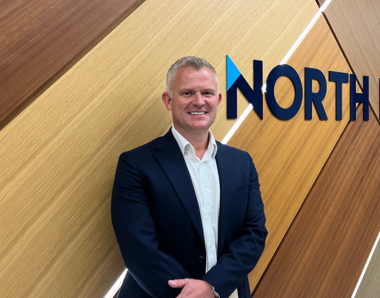


I recently went one-on-one with Talbott Roche, CEO of Blackhawk Network (BHN).
Adam: Thanks again for taking the time to share your advice. First things first, though, I am sure readers would love to learn more about you. How did you get here? What experiences, failures, setbacks, or challenges have been most instrumental to your growth?
Talbott: My career has given me the opportunity to work through periods of growth, reinvention, and constant change, but my path at Blackhawk Network (BHN) started with a very simple consumer insight: make gift cards easier to buy by putting them where people already shopped. What began as a practical solution around convenience became the foundation for something much larger. BHN began inside a grocery company as a small idea focused on providing consumers convenience while driving incremental spend for stores, and over time, it evolved into a global branded payments business. Along the way, I have had the opportunity to help lead a spinout, an IPO, dozens of acquisitions, global expansion, and a major digital transformation. Each phase required a different version of leadership from me.
The most important lessons came as the business changed. We moved from startup mode to scale, from a single line of business to a broader platform, and from assembling different solutions to bringing our capabilities together around the customer. Companies do not scale in a straight line. The structure, team, and operating model that work in one stage may not be right for the next. I learned you do not scale optimally by overextending yourself. I have always cared deeply about people, and at times, I was too willing to jump in and solve things. Over time, I realized sustainable growth and scalability require the right people in the right roles, clear accountability, and a shared focus on measured outcomes. Recruiting and empowering experienced leaders and teams is a critical shift for most leaders.
I also believe some of the pivotal innovations and growth in our business came from a continued focus on listening to customers. Leaders deeply committed to innovation create space for customers to share ideas and needs. Staying curious and open to change has always been a priority for me as a leader. I do not think innovation is an event-driven; rather, it is a mindset and a value. Today, I spend a lot of time thinking about the next chapter of innovation, especially as technology reshapes how brands engage consumers. My role is to help BHN lean into that change thoughtfully, keep the customer at the center, and continue building toward where commerce is going.
Adam: In your experience, what are the key steps to growing and scaling your business?
Talbott: Growth starts with staying close enough to the customer to see how their needs are changing. At BHN, the original opportunity was convenience, but the opportunity has expanded significantly. Brands need better ways to move value through rewards, incentives, payouts, refunds, loyalty, and digital engagement in a way that is simple for the consumer and valuable for the business.
Scaling requires the company to be built around that need. How you organize will dictate how you go to market. You can tell teams to collaborate, but if the structure does not support it, it will not happen consistently. And if the organization is built around collaboration, value will be created in new and exciting ways.
You also must recognize that the business will evolve in stages. What helps a company succeed early on may not be what helps it scale globally. Leaders must be willing to adapt; the operating model must change to ensure the organization supports where the customer and market are going next.
Adam: What are your best tips on the topics of sales, marketing, and branding?
Talbott: Start with the customer problem. Too often, companies lead with what they sell instead of asking why the customer should care. Customers do not buy products. They are looking for solutions that make something easier, more valuable, or more efficient for them.
For sales, that means understanding the business outcome the customer is trying to achieve. Are they trying to acquire new customers? Reward loyal customers? Reduce costs? Inspire loyalty? The more clearly you understand the problem, the more value you can create.
For marketing, relevance is everything. A message matters when it reaches someone at the right moment with value they can use. That is why I think stored value is so interesting. A gift card, reward, incentive, or payout creates an existing relationship between the brand and the consumer. When used thoughtfully, it allows brands to engage consumers in ways that feel timely and useful instead of disruptive.
Branding ultimately comes down to trust. In payments, trust is built through every interaction, including the ones customers never see. Reliability, security, risk management, and operational execution all shape the brand experience. The strongest brands make the experience feel easy for the customer because the hard work has already happened behind the scenes.
Adam: What are the most important trends in technology that leaders should be aware of and understand? What should they understand about them?
Talbott: The first is AI, but leaders need to move beyond the broad conversation and focus on where AI will change customer behavior. AI is already changing how consumers discover products, compare options and make decisions. A consumer may no longer begin with a brand’s website or a traditional search engine. They may ask their AI assistant to help them find the best option based on price, reviews, convenience, or personal preferences. That changes how brands compete for attention and how they stay relevant in the decision-making process.
As AI begins to influence more purchasing decisions, leaders will also need to think carefully about trust, control, and permission. Consumers will want transparency around how decisions are made and how their value is being used. Stored value has an interesting role to play because it is pre-funded and easy to manage within clear parameters, which can help build confidence as these experiences evolve.
Another important shift is the move toward more dynamic and personalized consumer engagement. Gift cards, rewards, incentives, and payouts are becoming more flexible and contextual. They can increasingly be programmed for maximum impact based on timing, behavior and consumer preferences in ways that create more relevant experiences.
The third trend is fraud and risk management. Every new technology creates opportunities for bad actors. The challenge for businesses is strengthening protection without adding friction for legitimate customers. When companies get that balance right, trust grows. The broader point is that technology should make experiences more useful, more personal, and easier to navigate. Leaders should focus less on the technology itself and more on where it creates real value for customers and employees.
Adam: What do you believe are the defining qualities of an effective leader?
Talbott: Effective leaders create clarity. As companies grow, it becomes easier for teams to get pulled in different directions. There are more priorities, more ideas, and more decisions being made across the organization. A leader must create clarity around corporate priorities, values, and organizational objectives. Setting priorities and goals is not enough; they must be backed by regular and consistent measures to create alignment and make them part of an organization on a weekly and quarterly basis.
Leadership also requires a willingness to build the team for the chapter the company is entering. Businesses do not scale in a straight line. The structure and talent that helped a company reach one stage may need to evolve for the next. Change can be difficult, but avoiding hard decisions rarely helps the organization or the employees in the long run.
The best leaders also create a culture where the truth moves quickly. Bad news should travel faster than good news. If people are afraid to raise problems, the company loses valuable time. When teams can bring forward facts early, without blame, the business is in a much better position to solve the problem.
Curiosity matters too. No leader has a complete view from their own chair, especially during periods of change. I spend a lot of time talking to customers, partners, board members, and other leaders because I want to understand how they see the same shifts from their vantage point. That broader perspective helps you make better decisions.
Adam: How can leaders and aspiring leaders take their leadership skills to the next level?
Talbott: Leadership growth usually comes from putting yourself in situations that make you a little uncomfortable. Every major chapter of my career has required me to learn something new. Building a business, leading through scale, integrating acquisitions, evolving the operating model, and now navigating rapid technology shifts have all required different skills and perspectives.
Aspiring leaders should stay close to change. Talk to people who see the world differently than you do. Spend time with customers, partners, and other leaders. Leaders should also spend time using emerging tools themselves. You cannot lead through a technological shift from a distance. You must understand how these tools change the way people work, make decisions, and create value.
One of the most significant transitions for any leader is learning to lead through others. Early in your career, success is often tied to your own output. As you grow, your role becomes creating the conditions for other people to do their best work. That requires clear direction, trust, accountability, and empowering growth. Leadership is a long game. You must keep learning, keep listening, and keep asking how you and your team can create more value.
Adam: What are your three best tips applicable to entrepreneurs, executives, and civic leaders?
Talbott: I always come back to clarity, talent, and measurement. You must be clear about the problem you are trying to solve. If you cannot explain it simply, you probably do not understand it well enough yet. That applies whether you are building a company, leading a large organization, or working in public service.
You also must build for what comes next. Businesses, organizations, and communities all move through stages. The needs change, the skills change, and the operating model changes. Leaders must be honest about whether they have the right team and structure for the work ahead.
The other discipline is measuring outcomes. Activity is easy to confuse with progress. People can work very hard and still miss the goal. Pick the right targets, make them visible, and use them to align the organization.
I would add one more: stay open to feedback. Feedback really is a gift. When someone trusts you enough to tell you something difficult, pay attention. That is often where the most useful information is.
Adam: What is your best advice on building, leading, and managing teams?
Talbott: The best teams are built on trust, accountability, and complementary strengths. You need people who understand the mission, own their part of it, and are willing to tell the truth when something is not working. That last point matters. A team that hides problems will always move slower than a team that can surface facts early and solve them together.
I also believe leaders must give people room to grow. Accountability should not feel punitive. It should give people a clear way to contribute and a clear understanding of what they own. The strongest teams are not made up of people who all think the same way. You need different vantage points, different strengths, and a shared commitment to the outcome. When that works, the team can move faster because people trust one another to play their roles.
Adam: What is the single best piece of advice you have ever received?
Talbott: If you cannot measure it, you cannot improve it. That advice has shaped how I lead. It forces clarity. What are we trying to accomplish? What is the target? What does success look like? How will we know if we are making progress? The discipline of measuring becomes even more important as companies grow. Alignment gets harder. Communication gets harder. You cannot rely on everyone being in every conversation.
Metrics have become a common language. They help teams understand the goal and see whether the business is moving toward it. The caution is that you must measure the right things. I do not like measuring activity for the sake of activity. I care much more about outcomes. The goal is to create focus, not bureaucracy.
Adam: Is there anything else you would like to share?
Talbott: I am optimistic about the future of commerce and payments. We are entering a period where technology can make experiences more useful, more personal, and more trusted. At BHN, we have spent decades building networks that connect brands and people through stored value. The next chapter is about making those experiences more connected, more flexible, and more relevant to the moments when consumers are ready to engage. That is exciting for brands, but it is also good for consumers. The future should make value easier to find, easier to use, and more relevant to people’s lives. Our job is to help our partners get there.