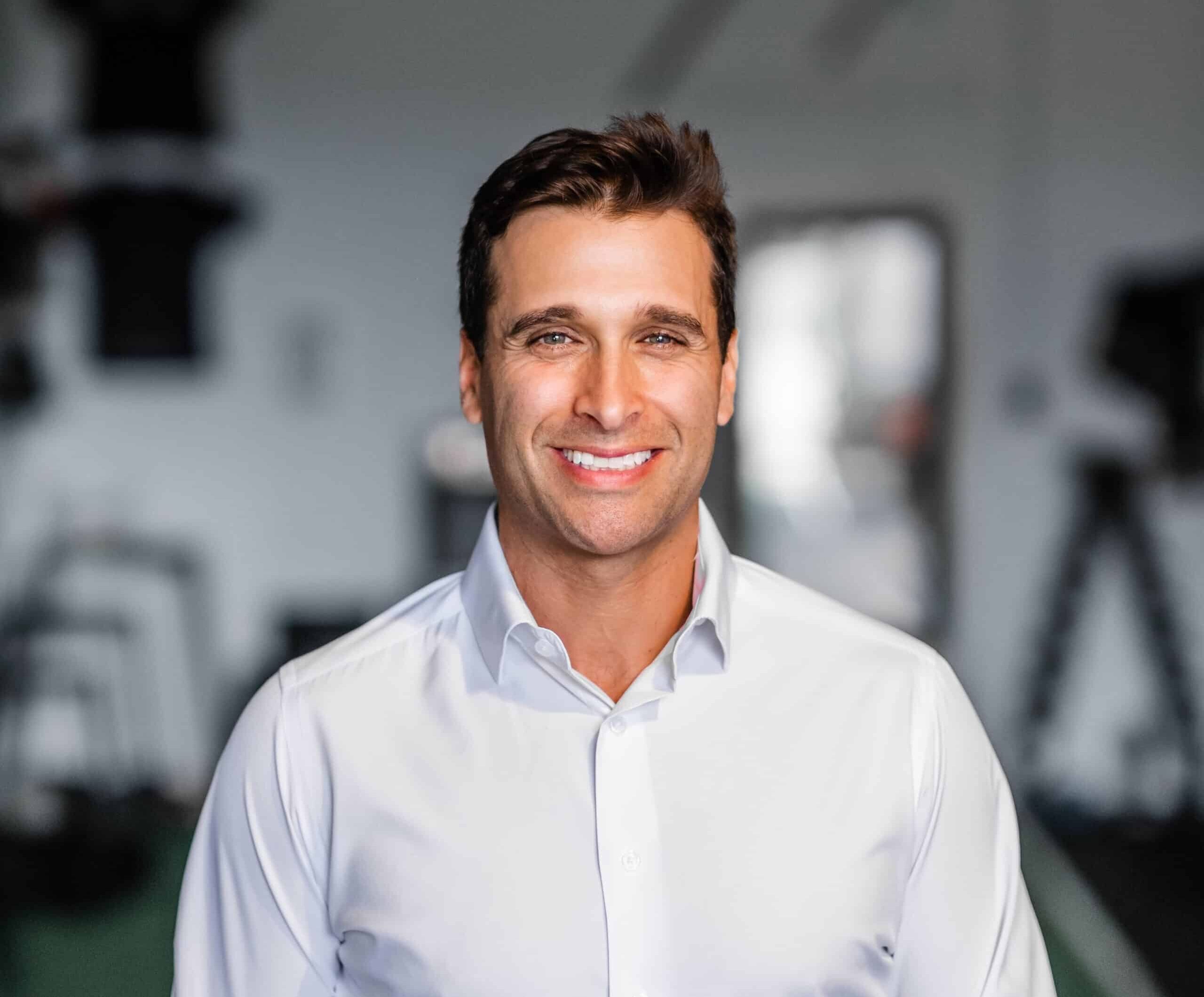


I recently went one-on-one with Jude Melville, CEO of b1BANK.
Adam: Thanks again for taking the time to share your advice. First things first, though, I am sure readers would love to learn more about you. How did you get here? What experiences, failures, setbacks, or challenges have been most instrumental to your growth?
Jude: I’m an accidental banker. I was transitioning out of the military, trying to make my way home, and agreed to help my uncle with a start-up for six months or so while I tried to figure it all out. Zero expectation that I would stick around for long or ever actually become a banker. Twenty-two years later, we’re approaching $10 billion in assets with just about 1,000 employees, and I’m a community banker through and through, including being CEO for the last 15 years during the bulk of our growth, seven whole bank acquisitions, the crossing of state lines, and taking the company public. It’s turned into a wonderfully unexpected journey, and proof that God knows better than I do (as apparently did my uncle!).
Before banking, my first adult job was serving in the US Air Force, including spending a considerable amount of time in the Middle East around 9/11. One of the many things from that time that remains with me today is the observation that in life, it’s often the hardest moments that turn out to be the best ones. When I look back at the challenges our company has made it through (the Global Financial Crisis, the energy collapse, the pandemic, the recovery from the pandemic, “March Madness”), they are invariably the moments of which I have the fondest recollections and the most pride, the moments in which we became we. It’s hard to narrow it down to one, but collectively, it’s the bad times and the characters I didn’t want to emulate that I would credit with creating the most good in us as a team and in me as a leader.
Adam: In your experience, what are the key steps to growing and scaling your business?
Jude: As someone who has spent a lot of time thinking about, pushing for, and accomplishing a significant amount of growth, my biggest piece of advice is: don’t think too much about, push too much for, or worry excessively about accomplishing growth for growth’s sake. Much of leadership, particularly in a start-up, comes down to prioritization. We as individuals, and we as a company, have limited bandwidth, and that precious attention and energy need to be spent on things that create lasting, leverageable value. Focus on doing the right things the right way and the growth will take care of itself. Focus on growth as if it is the goal, and things are less likely to get done right; you’ll find yourself, as we have from time to time, re-doing some of that growth, which isn’t nearly as much fun!
If you are on a path for growth, though, whether on purpose or as a byproduct of success, I have three pieces of practical advice:
First, by definition, no one grows scale alone. Who you partner with (teammates, vendors, clients, regulators, capital providers) matters more than almost anything else I can think of, so be selective going in. That said, being selective up front doesn’t mean you can’t be decisive once something clearly isn’t working.
Second, as you grow, things change. Be prepared to evolve, and encourage your partners to evolve too. What worked yesterday in a relatively small number of personal interactions may not work tomorrow at scale. When you’re the leader of a growing company, your challenge is to change the perspective from which you manage: you begin managing by relationships, transition to managing by portfolio, then ultimately have to manage by process. Each of those steps has its own pros and cons, its own opportunities and pitfalls. The job of a growth-oriented leader is to figure out which one works best when, and that changes over time.
By the way, I wouldn’t be a banker if I didn’t add a third: make sure you can afford the growth. Investments take cash, and scaling businesses often don’t generate as much net revenue (replacement cash) as they will once they mature. I know the world’s biggest tech companies often grow unprofitably for years by tapping venture and then public capital markets, but most of us don’t have that luxury. This might sound overly simple, but it doesn’t matter how fast you grow today if you aren’t around tomorrow, so make sure your expenses are realistic given the confines of your cash flow and capital.
Adam: What are your best tips on the topics of marketing and branding?
Jude: I’m not salesy in the least (in fact, probably the opposite), but over time I’ve been able to convince a fair number of people to do a number of things. I think the main attribute I bring to these interactions is a comfortability with being genuine. I am who I am, and partnering with me on those terms is either attractive or not. It’s not that I don’t care what you think about me (I do), but I care more about you thinking what you think about me for the right reasons. I think this same idea is what differentiates good marketing and branding. It needs to feel authentic: an accurate reflection of who we are, and at the same time who we really want to be, even if we aren’t always perfect. A brand should be something to live up to.
We recently rethought b1BANK’s branding around a simple idea: our clients, rather than we, are the ones doing the truly ambitious work, so it’s more appropriate to make it about them. The entrepreneurs, the builders, the families taking a risk on something new; they’re the heroes of the story, and our job is to be a credible partner alongside them. That’s why we launched “Ignite Ambition” and the b1BANK Hall of Ambition, which puts a spotlight on the people, communities, and businesses we serve. And the good news is it’s honest: that really is what we do and what we want to do.
Speaking of our rebrand, just as my advice on scaling is partly dependent on who you choose to partner with, branding is heavily influenced by affiliation too. This is why I feel fortunate to partner with Drew Brees. He’s an NFL Hall of Fame quarterback, a successful entrepreneur, and a hero of New Orleans during Hurricane Katrina (an all-around good guy). But Drew is also a longtime client, so his affiliation is real, and what most people don’t see is that beyond football, he’s a serious entrepreneur. His work ethic, his discipline, and his commitment to the community match what we’re trying to build. Who you surround yourself with is who you become, and that applies to brand partnerships as much as it does to any other critical relationship.
Adam: What do you believe are the defining qualities of an effective leader?
Jude: An effective leader stays grounded. I’m drawn to people who strike a special balance of confidence and humility. They’re open to feedback, they adapt and evolve, they grow, they “let others eat first,” but they can also make a decision, communicate it meaningfully, and be followed, partly because of the credibility they’ve earned through their genuine humility. Leadership is hard, especially when you hope to do it sustainably; it’s easier when you admit that. It’s okay to be doing the best that you can, if it’s with the right intentions.
Adam: How can leaders and aspiring leaders take their leadership skills to the next level?
Jude: I have always tried to be what I call educatable. I ask my broad team to submit anonymous questions before our internal bank-wide calls, and I ask my smaller leadership team to give me honest feedback. I listen to podcasts. I reach out to peers to compare notes, and I read a lot, not just about banking. I will be working on being a better leader until the day I retire, and probably reflecting on what I would do differently long after that. Everyone’s climb up the leadership ladder is unique, but no matter which rung you’re on, the best way to succeed at the next level is to never stop learning and never stop trying to be better than you were before. By the way, I don’t read a ton of business books, but Jim Collins’s Good to Great and Andy Grove’s Only the Paranoid Survive are still my two favorites.
Adam: What are your three best tips applicable to entrepreneurs, executives, and civic leaders?
Jude: It doesn’t seem to me that the path to success in just about any arena is that complicated:
• Work hard: you’ll outrun 90% of the competition.
• Be curious: that’s how you uncover opportunities, business or personal, to improve.
• Be kind to yourself and to others. Some of life is luck and circumstance. Most people are trying their best; recognize that. It doesn’t mean being soft or weak. Sometimes being kind means being tough: a quick no, or a quick firing, is often best over the long run for the person you’re hesitant to give bad news to, and almost always best for the other 99% of your team, to whom you also owe an obligation. It does mean remembering the world is small, so there’s a good chance how you treat people today is how you’ll be treated tomorrow. Plus, it’s just the right thing to do.
Adam: What is your best advice on building, leading, and managing teams?
Jude: When I first began, I assumed that business, and banking in particular, was just about numbers and facts and logic. If we knew those and designed our tactics correctly to match, then directives would be executed, and our goals would be reached. Very rational. Over time, I’ve come to realize numbers are the easy part. A team is a collection of actual people living in actual, very specific contexts: real feelings, real capabilities, real differences. As with any collection of actual people, the team will perform best if those differences are recognized and leadership style is adjusted to account for them. When I’m leading at my best, I’m operating under the assumption that my team is made up of individuals, and I’m being thoughtful about how to respond to that. When I’m at my least effective, I communicate things to the group as if saying them makes them real, forgetting that it’s my responsibility as the leader not only to say things, but to be heard.
Adam: What is the single best piece of advice you have ever received?
Jude: I have been blessed to have had many positive influences in my life, but probably the two strongest during my early years were my dad, who was a pastor, and my uncle, who was a politician as well as a businessman. Both answered deep “callings” that revolved around getting other people to do and believe things. One thing I learned from watching both of them, and what I’ve come to understand more as I’ve gotten older, is that there are ultimately only a handful of things that really matter. It’s easy to spend your energy trying to win the small argument and lose sight of why you’re in the room in the first place. The best advice I can offer is not to let the daily noise distract you from the main purpose of what you’re there to do. Aim high. Neither of them told me this, by the way. Sometimes the best advice is shared not through words but by example.
Adam: Is there anything else you would like to share?
Jude: This might be an unexpected thing to say in today’s political environment, but I’m really proud to be a committed businessman. Work done well, done with intention, is one of the most underappreciated ways to make a community better. When we offer people a good job, a place to grow, and a sense of purpose, we’re doing something that manifests constructively well beyond the short-term P&L that popular culture assumes business leaders are obsessed with. Capitalism done right is an uplifting force, and I’m thankful for the opportunity I’ve been given to make a lasting difference for the people in our company, in our community, and our country.