
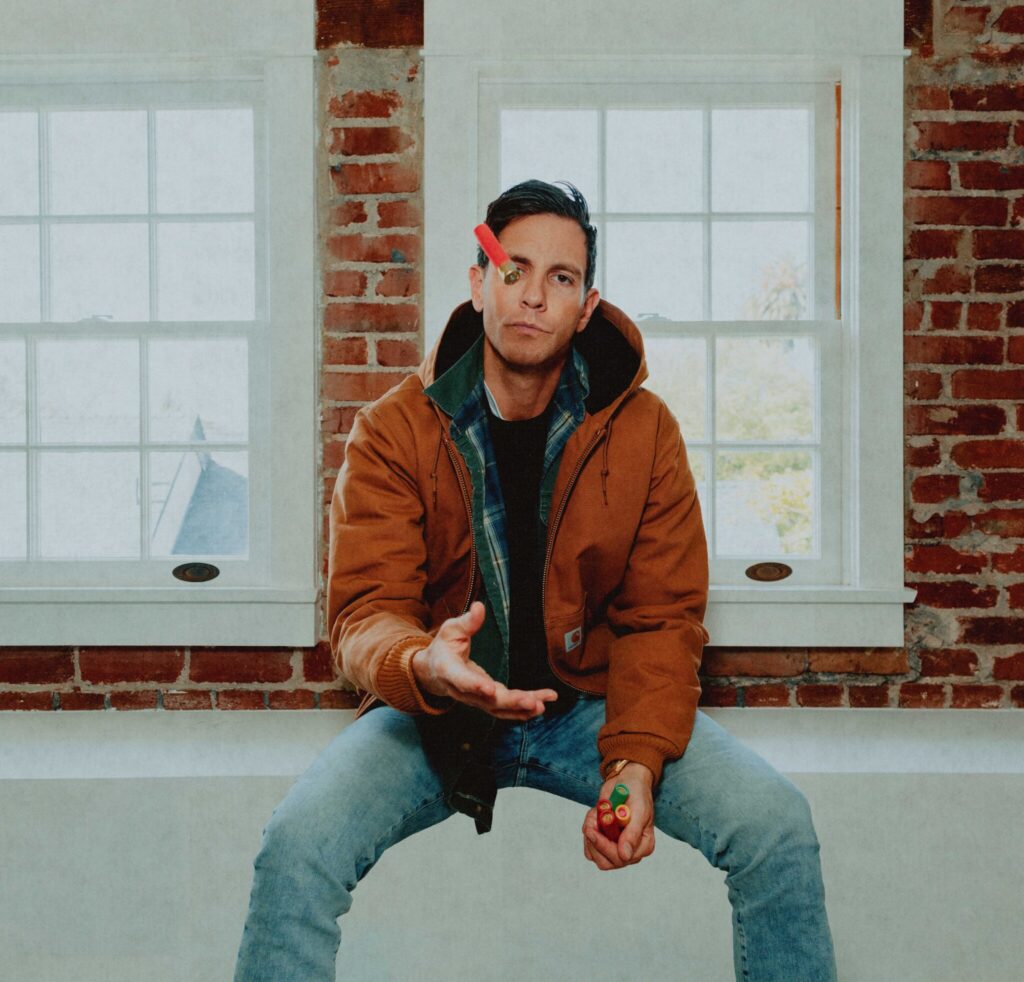
I recently went one-on-one with musician and entrepreneur Gabe Saporta. Gabe is the frontman of Cobra Starship, where he has achieved multi-platinum success with hits like Good Girls Go Bad and You Make Me Feel, and is the founder Brotege, a U.S.-based men’s skincare brand.
Adam: Thanks again for taking the time to share your advice. First things first, though, I am sure readers would love to learn more about you. How did you get here? What experiences, failures, setbacks, or challenges have been most instrumental to your growth?
Gabe: I got here mostly by following things I was obsessed with and then figuring out how to survive the consequences. I wanted to play music. I didn’t have a master plan to become an artist, entrepreneur, executive, or build companies. I also failed a lot. Bands broke up. Records didn’t work. Business decisions went wrong. I’ve been rejected, criticized, misunderstood, and had periods where something I thought was my identity disappeared almost overnight. Those experiences were painful, but they taught me something I probably couldn’t have learned through success: failure doesn’t kill you.
Once you really internalize that, you become much freer. You stop organizing your life around avoiding embarrassment or protecting some image of yourself. You can take bigger swings, change direction, and evolve without feeling like every setback is a verdict on who you are. That has probably been the most important through-line in my life, from music to business: becoming more comfortable knowing who I am while being less afraid of being wrong.
Adam: In your experience, what are the keys to succeeding in the music business? What advice do you have for those either trying to break in or advance?
Gabe: The music business is incredibly competitive, and talent by itself is rarely enough. You need to develop taste, become exceptional at something specific, and make yourself someone other people want to bet on. When I was coming up, I thought success was mostly about making great music. That is obviously the foundation, but the people who last are usually good at a lot more than that. They understand people. They build real relationships. They communicate well. They follow through. They create momentum instead of waiting for someone else to create it for them.
I also think you have to be brutally honest about what is and isn’t working. Artists can waste years protecting an idea of themselves instead of paying attention to the response they are actually getting. That doesn’t mean chasing trends or letting other people define you. It means learning to distinguish between criticism that should be ignored and information that can make you better.
And finally, you need endurance. Almost everyone I know who built a meaningful career had long stretches where things were not working. The people who make it are often the ones who can keep evolving without losing the thing that made them interesting in the first place.
Adam: How do you get to a place where you are at your most creative? How can anyone unlock their creativity?
Gabe: I think creativity starts with attention. Most people have more ideas than they realize, but they’re filtering them too quickly. They dismiss things because they seem stupid, too weird, too obvious, or because they’re worried about how they’ll be received. Creativity also gets unlocked when you create enough quiet to notice what is actually coming up, become less afraid of being wrong, and follow your curiosity somewhere that wasn’t obvious when you started.
For me, getting into a creative state is almost like meditation. I need to disconnect from the outside world enough that I can actually hear my own thoughts. A lot of creative people describe this as some version of a “no-mind” state, where the rational, efficient, self-editing part of your brain gets quiet and you can access ideas without immediately judging them.
For better or worse, I’ve often gotten there by staying up incredibly late. Eventually the practical part of my brain gets exhausted and stops trying to organize, optimize, and censor everything. What’s left is this much more instinctive creative state. Once I’m there, I try to stop making something “good” and make something true or interesting. In songwriting, that often meant doing strange things outside the norm of conventional chord structures or arrangements; lyrically, that meant paying attention to the thought I was almost embarrassed to say out loud.
You also have to be willing to make a lot of bad stuff. Successful creatives don’t necessarily have better ideas; they’re just more willing to generate enough bad ones that eventually something great comes out. Coming from music to CPG really gave me a unique perspective because I didn’t approach this the way most product-focused companies do. I didn’t start by asking, “What skincare product should we make?” I started with the creative vision. What I wanted the universe of the brand to look and feel like. Who are the people we are speaking to? And what do they need? What frustrates them? What would make their lives better? Then I designed products that solved those problems but stayed within the world I envisioned as the foundation.
Adam: What are the best lessons you have learned from your career in music that are applicable to those who will never work in the music industry?
Gabe: A lot of the people I grew up with went into completely different fields, and many of them became wildly successful. But even though they made a lot of money, I actually felt more successful than them because I felt like being in music forced me to wrestle (and consequently know) myself more than my peers, and that proved more valuable than any amount of money. In most professions, people are generally polite to you. They don’t constantly tell you exactly what they think about your personality, your appearance, your work, or who they think you are. As an artist, you get exposed to thousands of unsolicited opinions about all of those things very early, whether they’re accurate or completely insane.
At the same time, your job is to keep expressing yourself. You’re writing songs, talking in interviews, putting your thoughts and emotions into public, and constantly being asked what you believe, what you mean, and who you are. So while everyone else is analyzing you, you’re also being forced to analyze yourself. Which criticism is just noise? Which feedback is actually true? What do I genuinely believe? Are there parts of myself I need to work on? Are there things people dislike about me that I actually don’t want to admit? And, ultimately, who do I want to be?
You’re forced to develop enough self-awareness to listen without letting every opinion redefine you. That has probably been one of the most valuable things music gave me. Because once you know yourself at that level, it becomes useful everywhere. You make better decisions. You become harder to manipulate. You can take criticism without collapsing and praise without believing too much of it. You can evolve without just becoming whatever the room wants you to be. So I think the best piece of advice I can give is: take time to really know yourself. Figure out who you are. Who you’re not. Who you want to be. How you want people to see you. And expose yourself to painful, uncomfortable feedback.
Adam: How did you come up with your business idea and know it was worth pursuing? What advice do you have for others on how to come up with and pursue business ideas?
Gabe: Being a creative, I let my mind wander into strange places. One skill I feel like I’ve developed is being able to connect dots between very different things, take inspiration from different ideas, throw them into a melting pot, and forge something new. (Which is basically how you make music: you start off being a fan of lots of different styles, and somehow that amalgamation eventually becomes your own style.) BROTEGE came together in a similar way. One influence was watching what a few other companies had done, particularly my friends MaryRuth and David Ghiyam, who launched MaryRuth Organics. I watched them take one product that was originally designed to solve a very specific problem for MaryRuth’s clients as a health coach and evolve it into an entire company.
Another was Liquid Death. Its founder has talked about going to Warped Tour (ironically, the Warped Tour I performed at) and observing the artists’ stage waters being delivered in Monster Energy cans. He essentially saw a cool idea with terrible execution and figured out that the secret to successful execution was all about strong marketing and brand vision. Then I was watching all of my musician friends enter their 30s and suddenly start aging. These were guys who had spent years sleeping badly, touring, drinking, and generally putting a lot of road wear on their faces, and most of them had absolutely no idea what to do about it. Those things didn’t obviously belong together, but in my head they started connecting: build a consumer brand around a very specific underserved person, approach an otherwise boring category with the creativity and cultural point of view of a music project, and make products that solve real problems for guys I understood.
My advice for people who want to start companies is twofold. First, you have to develop the skill of connecting the dots and seeing opportunities and white space that other people don’t. Second is execution. I had the idea for BROTEGE sitting in the back of my head for several years. A lot of what I was doing during that time was mulling over how I could actually execute it and bring it to market. Having a good idea is one thing. Figuring out the manufacturing, logistics, operations, positioning, distribution, etc., and how all of those pieces work together is the actual work. Also, I don’t want to pretend like we’re going gangbusters, but for a new brand with one product, I think we’re punching above our weight class. And I think a lot of that comes from spending as much time actually executing instead of just ideating.
Adam: What are your best tips on the topics of marketing and branding?
Gabe: I think most people confuse branding with marketing. Branding is figuring out who you are. Marketing is figuring out how to communicate that to other people. The strongest brands don’t feel like they were assembled from a mood board or a list of consumer trends. They have a clear identity. You know what they believe, how they behave, what they would and wouldn’t do, and what to expect from them.
That’s very similar to being an artist. The goal isn’t to make everyone like you. In fact, trying to appeal to everyone usually makes you less memorable. A strong brand has to choose a lane, be comfortable knowing that it’s not for everybody, and then keep pushing further down that lane instead of constantly moving around trying to please everyone. That clarity makes marketing much easier. Once you know who you are and who you’re for, you know who you’re speaking to and how to speak to them. You’re not reinventing the brand every time you make an ad, launch a product, or create content. You’re continuing to express the same identity.
The other thing that makes marketing infinitely easier is really knowing your customer. For me, I’ve been lucky because I tend to make things that I personally want. In music, I was trying to make songs and records that I wanted to listen to. With BROTEGE, I’m trying to make products that I actually need and want to use. That doesn’t mean everyone should only build for themselves, but you need to understand your customer at that same level of intimacy. What do they like? What do they hate? What language do they use? What are they embarrassed by? What do they aspire to?
If you know who your brand is and you know who your customer is, a lot of marketing stops being guesswork. Don’t get me wrong, it’s still very difficult and still requires a lot of trial and error. But with a clearly defined brand, you have a much more defined marketing sandbox within which to experiment.
Adam: In your experience, what are the defining qualities of an effective leader? How can leaders and aspiring leaders take their leadership skills to the next level?
Gabe: The answer to this could probably fill a book, but I’ll try to condense it into a few core things. When I was a kid, I never thought of myself as a leader and honestly wasn’t very comfortable with the idea. In college, I remember learning about Plato’s idea of the philosopher-king: that the person best suited to lead isn’t necessarily the person most ambitious for power, but the person more interested in understanding what is true, what is right, and what serves the whole.
When I started playing music, I was just the bass player. But I was excited, ambitious, and wanted to make things happen, so I kept taking initiative. Eventually, that put me in a leadership position, whether I was looking for one or not. I even had to learn how to sing because of the role I had created for myself. Over time, I think I learned that good leadership comes down to a handful of things.
First is legitimacy. People have to choose to follow you, even if your title technically gives you authority. You earn that through judgment, consistency, competence, and trust.
Second is being a source. People are going to look to you for energy, ambition, confidence, stability, security, and direction. That means you can’t constantly expect the people you’re leading to provide those things for you. You have to find your own sources of support and bring something back to the group.
Third is vision. You have to see where you’re going before everyone else can see it and make people believe that getting there is possible.
Fourth is seeing the best in people. Great leaders help people see a bigger version of themselves and create circumstances where they can grow into it.
And finally, I think leadership requires being a peacemaker. You have to understand different people, mediate between them, and create enough trust that disagreement doesn’t destroy the group.
There are leaders who succeed by being bulldogs, and there are moments when you absolutely need the ability to knock down a door. But that’s one tool in the tool belt. If you use it all the time, eventually you damage people and relationships in ways that are difficult to repair. I’ve had to learn that myself. To me, leadership is understanding when each of those qualities is required and learning how to balance them.
Adam: What are your three best tips applicable to entrepreneurs, executives, and civic leaders?
Gabe: First, don’t be afraid to fail. Successful people aren’t successful because they don’t fail. They learn how to fail quickly, take the information from it, and move on. People who get stuck tend to ruminate in their failures and let one bad outcome become much bigger than it needs to be.
Second, persevere. People dramatically overestimate how much they can accomplish in a year and underestimate how completely their lives can change in five years. Almost everything meaningful I’ve done took longer than I initially thought it would. You have to be willing to stay with something long enough for all of those small efforts to compound.
Third, figure out how to add value. Always try to give more than you take. If you consistently make yourself useful to people, doors tend to stay open.
There’s a story in one of my favorite documentaries, Supermensch, about the legendary music manager Shep Gordon. He describes relationships almost like having a coupon with someone. If you ask that person for a favor and what you’re asking also creates value for them, you can redeem the coupon and essentially earn another one. But if you call in a favor that benefits only you, you’ve spent that coupon and may never get it back.
Adam: What is the single best piece of advice you have ever received?
Gabe: When I was a kid, I was a super music fan and really idolized obscure, unknown bands. Whenever they came through town, I always wanted to meet them. One of the ways I would do that was by telling the artist or their crew that I wanted to interview them for my zine (which, of course, didn’t exist). But it gave me the chance to pick their brains, and as a 16-year-old kid, I learned a lot that way.
One of the most memorable things anyone ever told me came from Dr. Frank, the singer of an obscure Berkeley band called The Mr. T Experience. He told me something along the lines of: “I was never a great guitar player. I was never a great singer. But I love music, and I just keep sitting down and writing. If you keep banging it out, eventually something great will come.” That really became a cornerstone of everything I’ve done since.