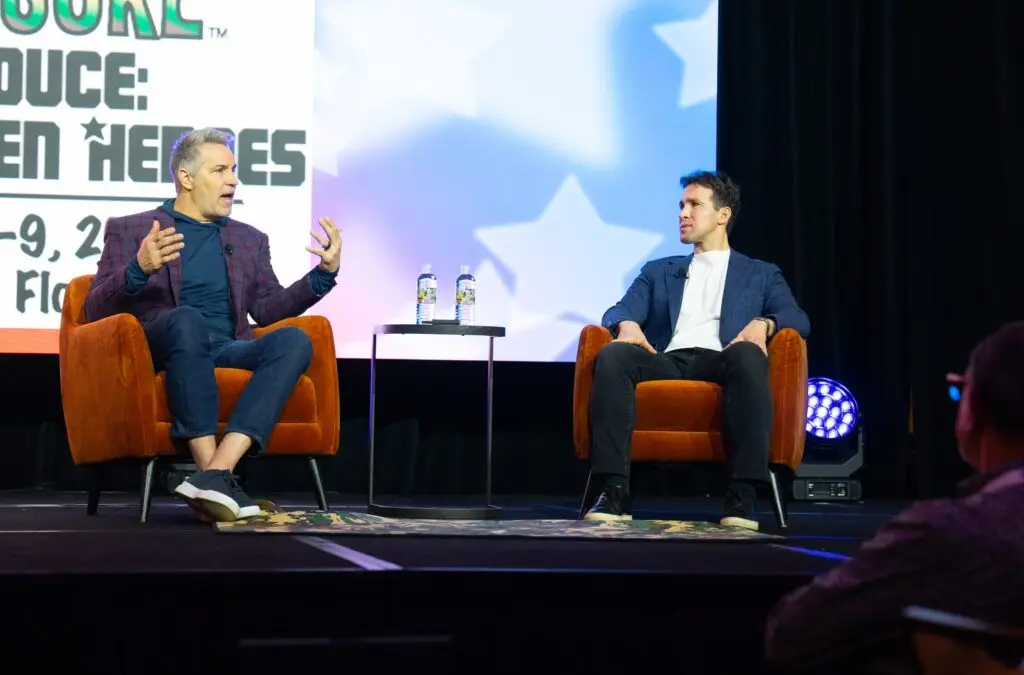

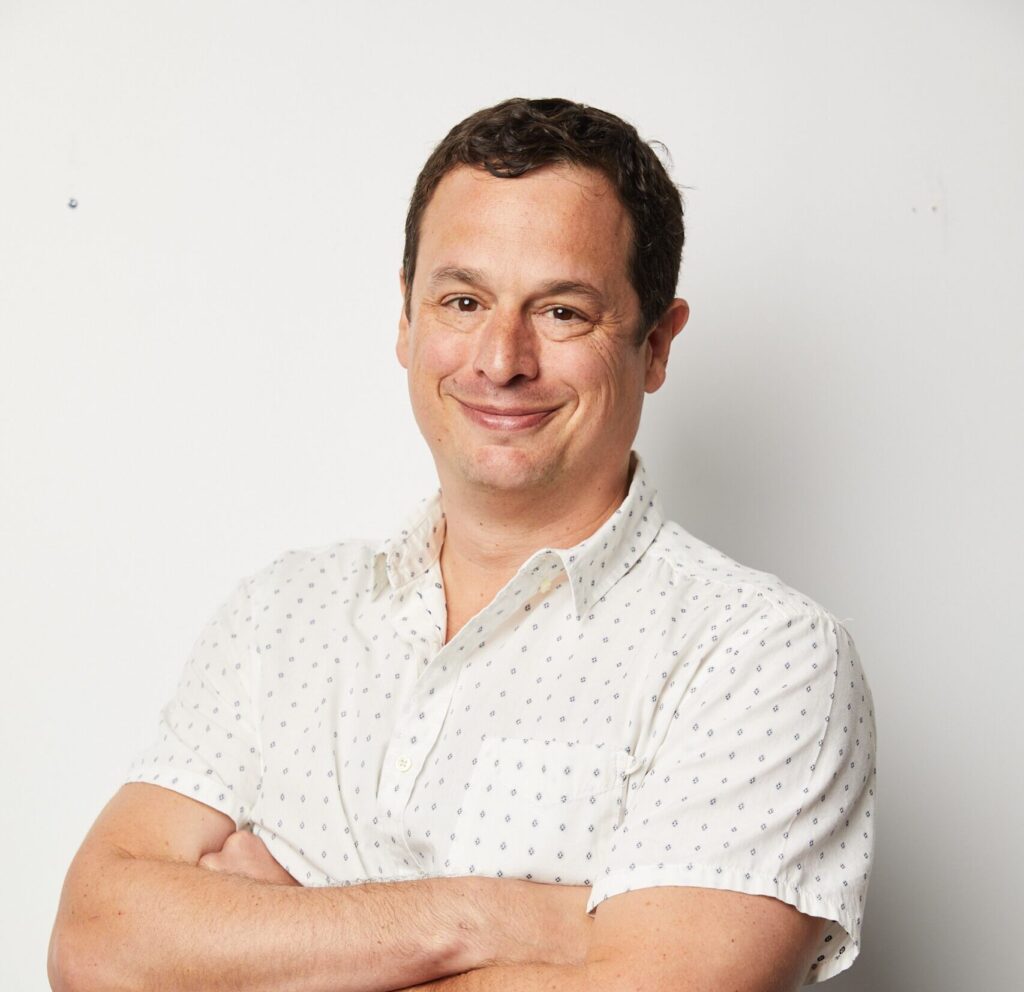
I recently interviewed Skybound Co-Founder and CEO David Alpert on my podcast, Thirty Minute Mentors. Here is a transcript of our interview:
Adam: Our guest today is the executive producer of the highest-rated series in cable television history. David Alpert is the co-founder and CEO of Skybound Entertainment and the executive producer of The Walking Dead. David, thank you for joining us.
David: Adam, it’s great to be here. It’s great to see you again. I always love our conversations.
Adam: I do too. I’m looking forward to this one. You grew up in New York on Long Island.
David: Strong Island.
Adam: Long Island, Strong Island. But now you’re on the West Coast, Best Coast. Maybe we’ll talk a little bit about your journey out west. Your experience as an entrepreneur goes all the way back to your time in high school selling comic books. Can you take listeners back to your early days? What early experiences and lessons shaped your worldview and shaped the trajectory of your success?
David: I grew up in an area. It’s funny to think now, but my neighborhood was filled with people that were all entrepreneurs of some sort or another, whether they were doctors or lawyers. They didn’t work for big firms. They had their own shingles. There were people that ran construction businesses, people that ran stores, manufacturing businesses. But it was all small mom-and-pop, even if they were successful mom-and-pops. But there were very few people in my neighborhood growing up that worked for the company, that were sort of vice president of sales at some place. They were the number one or number two at the firm, and it was an interesting place because that meant that everybody was in business. My next-door neighbor was an accountant, but he ran the firm, a small firm, like four or five towns, and so everyone was doing entrepreneurial stuff. I remember setting up a fruit and vegetable stand with my sister on the side of the road, selling fruits and vegetables to passing cars. And when we couldn’t get enough traffic because people wouldn’t stop, we would actually. Do you remember bang snaps? Those little mini firecrackers you’d throw on the ground and they’d just make a little bang. We would line the ground with bang snaps so cars would drive over them. They’d think they had a flat tire, and my sister was small and cute, and she’d run out and be like, “Oh, everything okay? Oh no, we’re actually selling corn. Would you like some tomatoes?” And it was kind of fun. We were always looking for things to do. There’s always an opportunity to try to find some business, whether it’s trading comic books or baseball cards or whatever it was. There’s always an entrepreneurial angle to pretty much everything you did. And I got very into comic books, and they kept raising the prices, and I could no longer afford to buy as many comics as I wanted, which made me very sad. And then I really was introduced to the idea by this place where I was buying my comics, who’s like, “Hey, well, if you buy three more comics a month, I’ll give you 10% off the cover.” And it was the first time that the idea of retail and wholesale as applied to comics occurred to me. And I was like, “Huh, that’s interesting.” I was like, “Well, what do you buy them at?” And turns out he was buying for 50% off. So I was like, “Well, that’s what I want to do.” So I basically became a comic book dealer to support my comic book habit, and I went around to all my friends. I said, “Look, if you buy from me, I’ll give you 20 or 30% off, depending on your volume. I’ll deliver it to your locker.” And I basically ended up buying my comics direct from distributors for 50% off. And I would basically drive around in my mom’s car, and we’d pick up the comics, take them to school, and bag them and put them in your locker. And that was sort of the way in which you got your comics. And then I was a swimmer, so I would take them to the swim team, and so I was able to access other schools through that. And by the time I graduated, I was selling about 6,000 comics a month, so it was a pretty robust business. And that was actually at the height of what they call comic book speculation. There’s a big investment bubble that was pouring into sort of alternative asset classes. Back then, we just called them collectibles. What did you learn from that experience? A lot. I really learned fundamentally all the intricacies with supply and demand. The old adage that a market could stay irrational longer than you could stay liquid or solvent was sort of a big one. We saw the boom-bust, which was really a critical thing. Once all those Wall Street bros started coming into my 13- to 14-year-old world of comic books, it was actually great for a moment because you had all this cash coming in, and all those resources that I thought were precious were now being valued as precious. But then you realize, hey, those Wall Street pros, they’re not here for the love of the game. They’re not here for the love of the art because, oh, you got Jim Lee’s new design or Rob Liefeld’s new design. They weren’t there for that. They’re like, no, no, I see quick asset appreciation that I could flip and sell to somebody else. And once those things popped, those guys left, and the comic book market, honestly, in some ways, it never really recovered from the early ’90s crash that came thereafter. So it was a fantastic lesson in entrepreneurialism, hustle, but the cold realities of market economics. I think it was a really, really strong lesson. My senior year, X-Men number one came out, and they made six different variations. Each one came in a plastic bag with a collectible trading card inside. And so customers who’d come to me would normally buy, let’s say, a copy or two of all the books that they loved. And I had a lot of people coming saying they’ll buy 20 or 30 of this book. So I sold more of that book by orders of magnitude than any other book because everyone thought, everybody thought, that was going to be the collectible that was going to be the thing that made them rich. Everyone thought this was the thing that made them rich, and it became the best-selling comic book of all time. I think it sold like a million and a half copies at the time, which was just massive. And that happened. And today, so 30-some-odd years later, that book is still worth, you could buy it in a comic book store for 25 cents because everybody bought it to collect it. No one was buying it, so there’s no scarcity. So you really learn the value of sort of how markets work. The thing that makes something collectible is that supply-demand, right? There’s a greater demand than supply. If the supply is huge, doesn’t matter how big the demand is, demand has to be exponentially bigger to make it worth something. And learning those lessons just young and the hard way, I think, has served me in great stead.
Adam: You went from comic book entrepreneur to captain of the swimming team at Harvard. You graduated from Harvard and went to law school.
David: So I went to law school in a weird way. I’d gotten a job in college. I ran the TV station. I was the captain of the team and president of, they call it HRTV, which is Harvard TV. And I wanted to go work in film and TV. And I got a job. There was a network called UPN back in the day, and UPN used to be owned by Chris-Craft and Paramount. And Chris-Craft felt like their owned-and-operated stations weren’t being serviced, so they put out this program where they were going to hire four kids, come in out of college, and sort of run these stations, learn all the different departments, and then go work at UPN corporate as a buyer to sort of service their needs. So it was literally my dream job. Everything I wanted to do. I applied, I got the job, and then at the end of my senior year, right before I graduated, Chris-Craft sold their share to Paramount, and my division and my job went away. So I was like, “Oh, what am I going to do?” So I decided that a lot of my friends now, when they graduate college, they just couch-surf, come out to Atlanta, we’ll figure it out, and I just didn’t realize that was a thing, so I didn’t do that. And so I basically went to law school because I love my parents, but I didn’t want to move back in with them. And so I basically went to law school for the housing.
Adam: Pretty innovative way of getting housing.
David: It was great. Lived in New York, had a great place. But I basically started an internet company my second semester while there, and sort of ended up building that. But I knew very quickly that law was not going to be for me.
Adam: How did you figure out what was for you?
David: I liked entrepreneurialism. I liked that hustle. I had worked at a law firm for a summer, and while there, I saw all these young kids building internet companies, and I felt this call like I was a dog wanting to go run with the wolves, and I felt like I was on the wrong side of the table. And so I decided, I was like, I have to go with that, right? Like that was, I talked a little bit, that was the neighborhood I was from. That’s sort of what I knew, what I loved. And even though I had tons of friends from other neighborhoods and had grown up in that much more corporate structure and that sort of big-firm mentality, I just knew that it wasn’t me. And one of my corny lines is that I’ve only worked for myself and I’ve had a joke for a boss. But it’s kind of true. And so it’s like I know me and I know sort of what an ornery cuss I can be. But I figured out how to live in it, even if nobody else can. I figured out ways to make it work.
Adam: I love it. You start an internet company. You live through the dot-com boom, the dot-com bust. How did you go from tech to entertainment? What were the keys to breaking into this competitive world, this competitive industry, and how did Skybound come together?
David: I always looked at law school as sort of my pause in trying to figure out a way to get back to entertainment, even though I never had a job in it. I’d been in school. But I always knew that was where I wanted to end up. At first, I thought I wanted to be a writer. Then I realized I’m not a very good writer, so that’s a problem if you want to be a writer. So I was like, where else can I work? And I was like, huh. I really think that as CGI and computers develop, that there’s going to be an opportunity to sort of take all these comic book and video game stories that I grew up loving. And I thought that the intersection of comics and games and film and TV was going to be a place where there’s going to be an explosion of media and opportunity. Now, today, that sounds very evident and obvious, but I’ll tell you, back then it really wasn’t. Sony, when I came to LA, had just started production on the Spider-Man movie, and they had a chance to buy all Marvel for $15 million, and they passed because they’re like, “Hey, we got the one good thing. Why throw good money after bad? We don’t need the rest of that. That’s all nonsense.” We all know how that ended up, but that was the attitude towards a lot of comics and games at the time in the film and TV business. And so, for me, I looked at it like, oh, you know what? I know there’s a group of people who are like me who grew up reading these things and playing these things, who want to see them on screen. And there’s people who watch a great movie on screen and they want to figure out how do you make that into a comic and a game. So I’m like, I can be the person who can help build bilingual opportunities there. And what’s funny is, within two months, three months of being in Los Angeles, I met two people, so this is 25 years ago, who I’m still partnered with today. One was Robert Kirkman, who went on to create The Walking Dead and Invincible. As you mentioned, Walking Dead, most successful cable television show of all time. Invincible is now the number one revenue-generating show on Prime Video. So, successful shows. And my other partner, Jon Goldman, ended up building, at the time, the largest independent game developer in the world before selling it to private equity. So I met those two guys within two or three months of being in Los Angeles. Met them, we all sort of shared a similar vision, but it was unclear exactly what we were going to do. I built out this management business, and we were like, “Hey, how do we figure out a way to do this?” And then when The Walking Dead came together, we had an opportunity to sort of build something where we could really build a company to capitalize on those things, where we figured, like, hey, this could be a Disney for a digital millennial. And that was really sort of the thing that we embraced in Skybound.
Adam: You mentioned that almost immediately after moving to Los Angeles, you meet Robert Kirkman, you meet Jon Goldman, you get to know them, you realize that you have a broadly shared vision. How did you go from that broadly shared vision to the highest-rated series in cable television history?
David: Yeah, there’s a lot of yada, yada, yada between there, right? I met him in 2001. The show came in 2010. So, met him in 2001. I met Robert at this convention in Chicago. At first, I thought he was a booth worker because he had a small publishing imprint, and so I went up and talked to him. And funny enough, I was working with this other Canadian company, and I had helped them put together Transformers comic books. That was something I’d helped them with. And so he saw my badge, which had their name on it, and I saw him working at a booth, and he was offering me free comics, which, love comics, love free. Those are two great things that taste great together. And so we started hitting it off and talked. And then I came back the next day, and I was like, “Oh, I read those books you gave me. Those were great.” And that’s when he told me that he wasn’t just the booth worker. He was actually the publisher, and he wrote those books. And so we became friends, and we stayed in touch. Just started talking. And then he calls me one day, and he goes, “Hey, I got this idea for a zombie thing.” I’m like, “Zombies? No, no one wants the zombie stuff.” “This is different. This is different.” I’m like, “Really? I think zombies are pretty tired.” He goes, “Listen, this one starts where every zombie movie ends.” “Like what?” And he goes, “Yeah, yeah. Every zombie movie ends one of two ways. Either everybody dies, or a group of people get away, and yet they’re scarred because they just saw their friends eaten, they saw their loved ones chopped up and murdered, and now they also happen to live in a world where they know that zombies are impossible. They’re real.” He goes, “That’s a horrible place to be.” He goes, “That’s where we start our story.” I was like, “Oh, that’s kind of cool. I don’t think we’ve ever seen that before.” And then he goes, “And then on top of that, I’m coming at it from the side. Everybody normally hits it straight on, really over the head.” He goes, “I’m telling a soap opera.” “A soap opera?” He’s like, “Yeah, yeah. Guy wakes in the hospital from a coma. He’s looking for his wife and his son. Finds them. Turns out she’s taken up with his best friend, and then as they started to reintegrate, turns out she’s pregnant, and the timing’s unclear whether it was his or his best friend’s.” And I was like, “Oh.” The whole thing’s just extra tense because there are zombies. So at any point that they’re having these arguments, the louder they get, more zombies can come and try to eat them. I was like, “That’s pretty cool.” So that was sort of the idea. That was sort of, I was like, “Oh, I think there’s something there.” And so he then published the book, which wasn’t easy. We had to work hard to get that book published, but he did because other people felt the same thing. They thought zombies were tired. In fact, he had to tell one of the publishers. They said, “Look, we don’t want to do a zombie book.” He goes, “No, no, no, no, no. It’s not a zombie book. It’s an alien invasion story. The zombies are here just to soften Earth’s defenses.” And the guy goes, “Oh, that’s pretty cool.” And so the book comes out, starts doing well. The guy goes, “Well, where are the aliens?” He goes, “I was just joking.” And the guy, to his credit, said, “You know, book’s selling pretty well, and people like it, and it’s doing great. So let’s pursue it that way.” We didn’t have the welcoming environment you would expect, but that took off, and then people instantly started calling to turn it into a TV show or film. But they wanted all the rights. They wanted everything. And we’re like, “That’s not what we’re going to do. We’re going to make sure that we preserve control and ownership of the rest of it, so that we can make games and merch and all that stuff.” And people are like, “No, no, we have to have everything.” I said, “Doesn’t make any sense because at that point, there had not been a video game based off of a TV show, maybe one Simpsons game. There’s no merchandising campaigns that have been based off TV shows. We can do this as a way to generate interest.” But it took a long time. So the book came in ’03, and we didn’t close the deal with AMC until 2009. The show came out in 2010. So it took a long time, six years of us saying no to people before we found the right home and partnership. But when we got that partnership, that’s what allowed us to say, “Hey, now we have an inciting moment to launch Skybound out of that.”
Adam: How were you ultimately able to find that right home, that right partnership?
David: This thing was really credit to Robert. The book just kept getting more and more successful. Sales, the beautiful up-and-to-the-right chart, where the numbers kept climbing month over month, and it just became a bigger and bigger thing in entertainment culture. Everyone was reading it. It was the book that people were passing around. It was just the talk of the town. If you were in comics, everyone was talking about Walking Dead, and they talk about the Walking Dead effect, and comic book stores were opening because of Walking Dead. It was a real cultural moment, and so all the TV networks thought there was opportunity there. So they’d all make offers and would say, “Look, this is our term sheet. This is what you need to do to meet our terms.” And they’re like, “That’s not how it works.” And I’m like, “I don’t care how it works. If you want this, that’s what it’s going to take.” Most people would hang up on me. I literally got told, a lovely woman told me, that I would never eat lunch in this town again. Just so you know, I am very well fed. And if anything, I’ve eaten too many lunches. I thought that was funny. I laughed because it was like a threat. I didn’t think people actually said that. I thought that was a stereotype of what people said. Anyway, but she said it to me. She later went on to produce a show with us, so it was fun. I quite like her now, but at the moment, I was like, “Oh my God, I think she just threatened my livelihood.” It’s very strange. But yeah, finally, someone was like, “Hey, look, why are we arguing with this? It will only matter.” This was a direct quote. “It will only matter if this is the most successful television show in cable history.” And from his lips.
Adam: David, there’s so much there that you shared that I would love to unpack. So many great lessons. Starting off with the importance of cultivating authentic relationships. We’re in a city with a lot of inauthentic relationships, and it’s not exclusive to Los Angeles. There are a lot of people out there who are out for themselves, interested in pursuing transactional relationships. But if you want to build something big, if you want to build something sustainable, look no further than the example that you just shared with your longtime business partner, where the two of you came together over a shared interest, came together over a genuine desire to try to advance something that you were both really passionate about. Came together over a friendship. It wasn’t a one-sided relationship. It was a genuine, authentic relationship. That’s the basis for building something truly successful.
David: I think about that a lot as I try to figure out what are the lessons I want to impart to my children, right? Like, how do you build out meaningful friendships? And I think it was, one, we saw the world the same way, that we came at it from very, very different places. I grew up in New York, went to Harvard and law school. Robert was from Kentucky, didn’t go to college, but he’s, I would say, one of the smartest, savviest business people I know. But we came at the world the same way. We saw the same opportunity. We had different words and different terms for it, but we saw the world the same way. And it was the same way with Jon. Jon was older than me. I was young and single. He was married with kids. But we all saw the world the same way. We saw the business opportunities there. We saw the chance to do something special. And the best part, though, was there really is a true friendship at the heart of it. So we have tons of disagreements. We’ll argue and hash things out, but we’ve never gone to a vote amongst us ever, and that’s 25 years of not having that. Where it’s not about not going to sleep mad. It’s like we work it out, and then we all go to sleep happy, because even if the situation is tense or sort of unpleasant, we get to a place where we’re able to put it all behind us and know that I’m not trying to get one over on them. They’re not trying to get one over on me. We’ll tease each other. We have plenty of fun doing that stuff, but we know that when we’re talking about work decisions and looking at the future of the business, that we’re all aligned and that we all want what’s best for all of us. But I also know on a personal note that 10 years ago, maybe nine years ago, I had gone through some health issues and ended up in the hospital for a while. And they were both there for me. And I don’t mean that figuratively. They both showed up and were there. They were there taking care of me, bringing me treats, all that stuff. That’s something you hope that you know, and you hope that you never have to figure it out. But knowing that someone literally has your back when things are going on, it gives you a peace of mind dealing with the stuff that’s pretty intense.
Adam: It’s very easy to be there for someone when things are going great, but where are you when things aren’t going great? Where are you, not in the high moments, but in the low moments? And when you show up for someone when they need you the most, when they’re at the bottom, whether it’s at the bottom professionally or at the bottom physically. In your case, you were in the hospital. That’s when relationships are built. That’s when relationships are cemented.
David: That’s right. Everyone wants to be there for the success and celebration, but only your real friends will be there when things are ugly and you need help.
Speaker 4: Experience Adam’s insights and inspirational message by booking Adam to appear at your company, on your campus, or at your next event. Adam’s keynotes and workshops on leading in today’s landscape, becoming your best self, and lessons learned from America’s top leaders leave audiences inspired and better equipped to excel personally and professionally. Visit AdamMendler.com to learn more and to bring Adam to your organization.
Adam: Something else that you shared, which is so important. You’re never going to get along with everyone all the time. That’s impossible. But how do you ensure that you’re able to cultivate relationships that are successful over time? You have a shared sense of trust. You have a shared sense of vision. You believe in the same place that you want to go. I want to go here. You want to go here. I trust you. You trust me. We like each other. We’re genuinely friends with each other. The key word: authenticity. You can’t fake any of this. You can’t fake whether you like someone. You can’t fake whether you trust someone.
David: I think that’s all real. I have plenty of friends that I can never do business with. One of the things that we adopt, we adopted from Jeff Bezos. He talked about the idea of disagree then commit, and Scott Galloway talks about don’t keep score in your relationships, and I find ultimately that’s the hardest thing to do. But if you could live that in your work life, where you hash it out, and let’s say you and I are fighting over the direction of this decision we’re going in, and we decide to back your plan. If it doesn’t work, I cannot say, “I told you so.” You have to feel that I am pushing for the success of your plan 100% because the success of your plan is my success, and the failure of your plan is my failure, and vice versa. And if you really believe that and work that, you’ll still have your wins and losses. But there’s not that bitter infighting. It’s the “I told you so’s” or “I knew better.” That’s the stuff that’s toxic, that destroys successful companies. It’s hard enough to be successful once. The thing that gets there is when people are keeping score. They’re like, “Aha! Oh, it’s my turn. When do I get my turn?” No, it’s not about turn. It’s not about fair. It’s about what’s right. And if we can get to a place where we think this is more right than wrong, because it’s not always obvious, that to me is sort of the clarity. And that’s ultimately for Jon, Robert, and I. We’ve been working together for 25 years in different forms, collectively at Skybound now for 16. We’ve had that where we’ve made great decisions. We’ve made some really stupid decisions. We won more than we lost, but we’re able to win because when we made that stupid decision, we all made that decision. We all backed it, even if it was my idea originally or Jon’s or Robert’s idea originally. It becomes all of our idea the second we endorse it.
Adam: And David, there’s a word that we haven’t used, but is underlying so much of what we’re talking about, and that is respect.
David: Respect and grace, right? It’s coupled with grace. If someone does something, you don’t jump to the conclusion, they did that to hurt me. If it’s something I didn’t like, I’m like, okay, or vice versa. Give me the grace to ask me, and I’ll explain to you why I did the thing I did, even if it seemed like it wasn’t the thing you wanted me to do. And the other way around, where Jon or Robert do something that I’m like, oh, that’s weird. I’ll pull him aside, like, “What was that?” And they’d be like, “Oh, this and this and this and this and this and this.” I’m like, “Oh, that makes sense. It wasn’t obvious to me in the moment, but now, thank you for explaining that to me.” And so you give them that grace, respect, but you give them the grace that they have a window to explain themselves, anything like that you would want for yourself. Because sometimes you have no window to communicate ahead. Like, I got to move now. That grace and respect to me is everything.
Adam: Was there a significant decision, either on the creative side or on the business side, where you and your partners really butted heads, but were ultimately able to come together and do exactly what we’re talking about? Say, you know what? Even though I was here and you were there, we’re all going to be right here together.
David: I mean, hundreds. I’m like, yeah, that sounds like a Monday. We have a great relationship. We have a great working relationship, but it’s like a duck, so calm and cool on top of the water, but underneath, all the feet are going like crazy. We’ll come to a great outcome. We’ll come to a collective agreement. But sometimes the only way you get there is you got to beat the shit out of it to get there. Sometimes you just have to own it and pound it and pound it, and it can get unpleasant. It can, but the stakes are huge. The stakes can be huge. And so when we’re working in a company now at our size, it used to be three of us, four of us, five of us. But we have a couple hundred of us. It’s a different thing. It’s not just our lives and our livelihoods. We have people who work with us and work for us, and we want to make sure we take care of them. And it’s a major responsibility. And so we have to make sure that we pressure-test that every step along the way.
Adam: How, as a leader, are you able to create an environment where everyone is showing up at their very best and pushing the team forward to their very best?
David: I mean, we work hard on fostering that culture. We’ve worked with a lot of great people who’ve come from other places who don’t have that culture, and some of them are able to embrace it. Some are not. But I think one of the things that I try to do to make that work is I try to own not just the victory and not just the success, but the failures too. There’s a book that we put out this year that I think is absolutely amazing. I love it. It was my idea. I literally helped incept it. It sold like six copies, and I think I bought five of them. And it’s a failure. I love the book. I would do it again. I would try to do it differently this time, but it didn’t work. It didn’t work for a lot of reasons. But I don’t then turn around and blame Robert or Jon. I don’t blame our editorial department. Failure is mine. And when they see that, hey, look, I hope that when I admit that, like, hey, this was my failure, this was my decision, my failure, and you know what? I’m okay. I’m still here. We can keep going, and I’m not punishing somebody for doing the thing that I asked them to do, or suggested they do, or heavily, heavily suggested that they do it. There wasn’t necessarily the pushback that this is not going to happen. So we try to sort of take responsibility and ownership of our own decisions and decision-making. And now, if I kept making all those wrong decisions, I would expect my partners to sit me down, be like, “Hey, look, man, you can’t make these decisions anymore. We either need to change the way you’re making those decisions, or we need to change you.” And that’s ultimately the process by which I want to run our business. We give everybody the opportunity and the grace. Everybody gets a mistake. No one’s perfect. You own it, though. You try to figure out what is not just the postmortem. What did you do wrong? What happened? What could you have done better? Why didn’t you do it that way? Why didn’t it occur to you? What was the thing? How do we make it better? And if we can’t fix the process, we ought to fix you. And that’s. But we start with process. If we can fix the process, great. If not, we have to fix the person. And that trickles down throughout the whole organization. Now, I don’t know that everyone in the organization, I don’t know that everyone believes this, buys in, lives it, but I know that our senior leadership does, and that’s really impactful to me. I’d like more people to do it, though.
Adam: David, what do you believe are the key characteristics of the very best leaders, and what can anyone do to become a better leader?
David: We have this sense of the virginal birth, and I mean this not in a religious sense, but the virginal birth of an idea, that it springs fully formed from the mind of an entrepreneur, and that she or he has this beautiful vision. It’s 100% formed, 100% perfect. All you have to do is sort of cleave to this magical birth and follow it, and everything will go right. I’m sure that’s happened at some point. It has not happened in my lifetime. Things start out, they’re messy, they shift, they change. And I think it’s important to acknowledge when something you’re doing is working, is not working, was working but no longer is working, the way that used to work great, now works kind of, probably going to work poorly tomorrow. How do you sort of adjust for that? There is a humility to say, “Hey, look, you know what? I was wrong.” And you have to have the space and the grace from your colleagues to be able to say that. So you have to create the space that you can say, “Hey, look, Adam, you’re wrong,” and you have to realize I’m not attacking you. That’s not coming at you personally. I would say, “Adam, you made this decision. That decision was wrong.” It’s not you. It’s the decision. Create that space, and then there’s the grace to be like, “Okay, great. What can we do to fix it?” And the best leaders, people find that, and they create an environment where other people can do their best. Because only one person can only do so much. If you can enable other people to do their best too, and those people then can spread it, that becomes the best environment. So what I’m trying to do is I’m trying to emulate those leaders who say take ownership, provide cover for the people they work with, but also create space for those people to operate to the utmost of their ability. That, to me, is sort of what the best part of leadership is: keeping people accountable, but giving them space to be responsible.
Adam: We spoke a little bit about the deal you cut with AMC. You were in the wilderness for a long time. You were told that you would never work in this town again. Not only was your livelihood threatened, but your ability to eat lunch.
David: At lunch.
Adam: What are you going to do if you can’t eat lunch? You’re only going to eat two meals a day. You could potentially survive on two meals a day, but I don’t know how healthy that is for you. You were ultimately able to cut this deal with AMC that allowed you to retain ownership and not only find a home for The Walking Dead, but the right home for The Walking Dead. And that is one of many deals that you have put together over the course of your career. What are the keys to negotiating? What are the keys to deal-making? What are your best tips on the topic of negotiations and on the topic of deal-making?
David: The key thing in any negotiation for me is understanding internal settings, going through and actually prioritizing in advance. So preparedness, right? I try never to do something just off the cuff. You need to research, understand what the market is. So you want to understand the market, even if everything you want to do is out of market. It’s like, you can’t break the rules, or you shouldn’t break the rules unless you know what the rules are. Understand where things are, what people are expecting. The deal that we did was groundbreaking, but I had to understand that I was asking people to deviate from the ground because to get that, I might need to give on some other points. They might need to go back and get wins elsewhere, which we were able to give them. So you have to understand what are the priorities. Is it about maximizing upfront money, backend money? Are you optimizing visibility or profitability? And there’s different models for that. And so really understanding your internal goals first and foremost, and having clarity on that, to me, and stack-ranking them, what can you live with? What can you live without? That, to me, is sort of where best negotiations can come from. Because then, once you’re in there, if you know these are my must-haves, these are the nice-to-haves, and these are, yeah, sure, would like them, and I’m not going to give anything up for them, then it becomes very easy. The hard part comes in actually going through and determining that. So you start with that, and then you start figuring out what are your philosophical justifications as to why these things are important if they’re out of market. If they’re in market, it’s very easy. Okay, look, this is market. This is market. This is market. Right? It’s a very easy response. That, to me, is how I try to approach it. I’m not saying I’m the best negotiator in the world. I like people getting along. I am probably overly conflict-averse in the beginning, but once I’m pushed into conflict, I am probably staying in conflict too long. So I try to find the balance between those things. So I’m constantly evaluating my own process of negotiating, deal-making, where my trade-offs are, and how I can sort of improve in that process. But the thing that I always come back to is understanding my own priorities. And then the other part is that before you actually negotiate, understand what your leverage is. You might have the beautiful set of priorities, but if you have no leverage, it doesn’t matter. So you have to figure out, what is the thing that gives you leverage? And the thing that I had on Walking Dead was Robert was willing to say no, and was willing to walk away. Whereas a lot of people would say, “Hey, look, man, I’d like a little money now. I’d like a little cash. I’d like a quick return.” And he was willing to say, tell them to walk away until they’re willing to meet our terms. And that was actually, really, that gave me tremendous leverage, even if nobody wanted the points. I was like, “Great, then you can’t have it.”
Adam: Understand your priorities, understand your leverage, and understand yourself.
David: And understand the market.
Adam: Can you elaborate on that?
David: You have to understand the market, right? If you’re selling a one-bedroom apartment, you have to understand what other similarly situated one-bedroom apartments go for. You might make an argument as to why this one-bedroom apartment is so special, why it’s so different. But if you’re selling your one-bedroom apartment and down the street there’s a mansion with a swimming pool and 10 square that’s going for the same price, you’re not going to get it. You’re misreading the market. But a one-bedroom apartment in Beverly Hills might be the same as, you go to Alabama, there might be a house that you can get for the same price. You might actually get a massive house for the same price. You have to understand the market. So it’s not just all one-bedroom apartments or all houses. You have to understand the local market, and then you’re trying to figure out how do you differentiate yours from others. But you have to understand the market to understand your leverage and to understand yourself because you’re like, “Hey, look, I don’t care what the market is. I’m not selling this unless I get this number.” Great, as long as you’re okay that you might not sell it.
Adam: And you brought up a really important word, which is differentiate. And when you were talking about your experience getting to know Robert Kirkman, getting to know his vision, bringing that vision into a shared vision, turning that shared vision into this historically successful television series, a big part of it was not only having a differentiated vision, but having a differentiated vision that he and you were ultimately able to clearly communicate. Because it’s one thing to have this great vision, but to be able to have a vision that is unique, differentiated, and that can be concisely communicated to the audience that you need to communicate it to, whether it’s the person who is going to be funding you, whether it’s the network that is going to be distributing your content, or whether it’s the audience that’s going to be watching what it is that you’re putting on television.
David: It’s just funny because when you’re saying this, I’m like, you need to not only identify those points, but you need to communicate those points. You need to identify those points of where we’re in agreement, what the priorities are. I find the best directors on movies and TV shows, they communicate their vision to every single person constantly, and as soon as they’re done saying what it is that they want, they start over again. Say it again. So you’re communicating to your director of photography. You’re saying it to your assistant director. You’re saying it to the art department. You’re saying it to props department. You’re saying it to wardrobe. You’re saying it to hair and makeup. You’re saying it to the actors. You’re saying it to your producers. The studio comes. You have to tell the studio. Now you’re about to set up the scene. This person’s getting it wrong. So you have to say it again. You have to say it again. You have to say it again. Every time that you feel like you’ve been able to articulate your vision, you have to do it 100 times more. And that’s a vision for achieving something, but it’s also a vision for negotiating. You have to identify and communicate and continually reinforce those messages because things will sort of evolve and mutate, and you have to sort of make sure of it. Yes, but also the thing I said before. Yes, and also the thing I said before, and also the thing I said before. Because if you don’t do that, I feel like people, the message, the understanding will drift.
Adam: David, what can anyone listening to this conversation do to become more successful personally and professionally?
David: It’s a great question. I think one of the most important things to achieve any of the things that I’m talking about, and I’m not saying that I’ve achieved this. I’m saying this is what I try to achieve, is honesty with yourself. Honesty with yourself about what you’ve done right. Honesty with yourself with what you’ve done wrong. If you say to yourself, “I’ve done nothing wrong in this entire situation. I’m in this massive conflict, and I have nothing that I’ve done wrong. I’m completely the victim.” I would say you need to start over again. Come back and look at yourself. And there’s certain situations in the world. You get hit by a car, you cross the street, get hit by a car. Fine, it’s different. But if you look at yourself, make sure that you’re acknowledging that. If you can be fully honest with yourself, it will help you in every situation when you’re going through, in terms of negotiating. It’ll help you in terms of figuring out what it is you also need to improve. I had a piece of pizza last night after dinner. I’m not gonna lie, I did it.
Adam: You did it.
David: I woke up this morning and I didn’t like the number that was on the scale. I came up with a whole bunch of reasons, and I was like, “Yeah, you had dinner, then you were done, and then you had a pizza. You had a piece of pizza, but it was good pizza. I like the pizza, but I didn’t have any wine last night. I should be fine. I worked out twice. It should be fine. I should be better.” I was like, “No, you idiot. Just admit it. Just admit it. Own it. You had the pizza. It was good pizza. It was leftover pizza. It had been good.” But anyway, I did it. But I had to fight that internal battle of, like, why in the world is this happening to me? I know, because I eat too much. That’s why it happened to me.
Adam: David, thank you for all the great advice and thank you for being a part of Thirty Minute Mentors.
David: Thank you for having me on. I hope that you try flour pizza if you haven’t. Excellent pizza. I think it’s underrated. Quite good. Anyway, no. Thank you for having me. It’s always great talking to you. I love our conversations. I love what you do. I love coming to speak to your class. I really like the way you look at the world, man.
Adam: I really appreciate the kind words. Right back at you. I can’t say that I’m a big flour pizza guy because I understand the ramifications of it.
David: I mean, that’s smart. You’re being honest. You’re being honest. I respect that.