

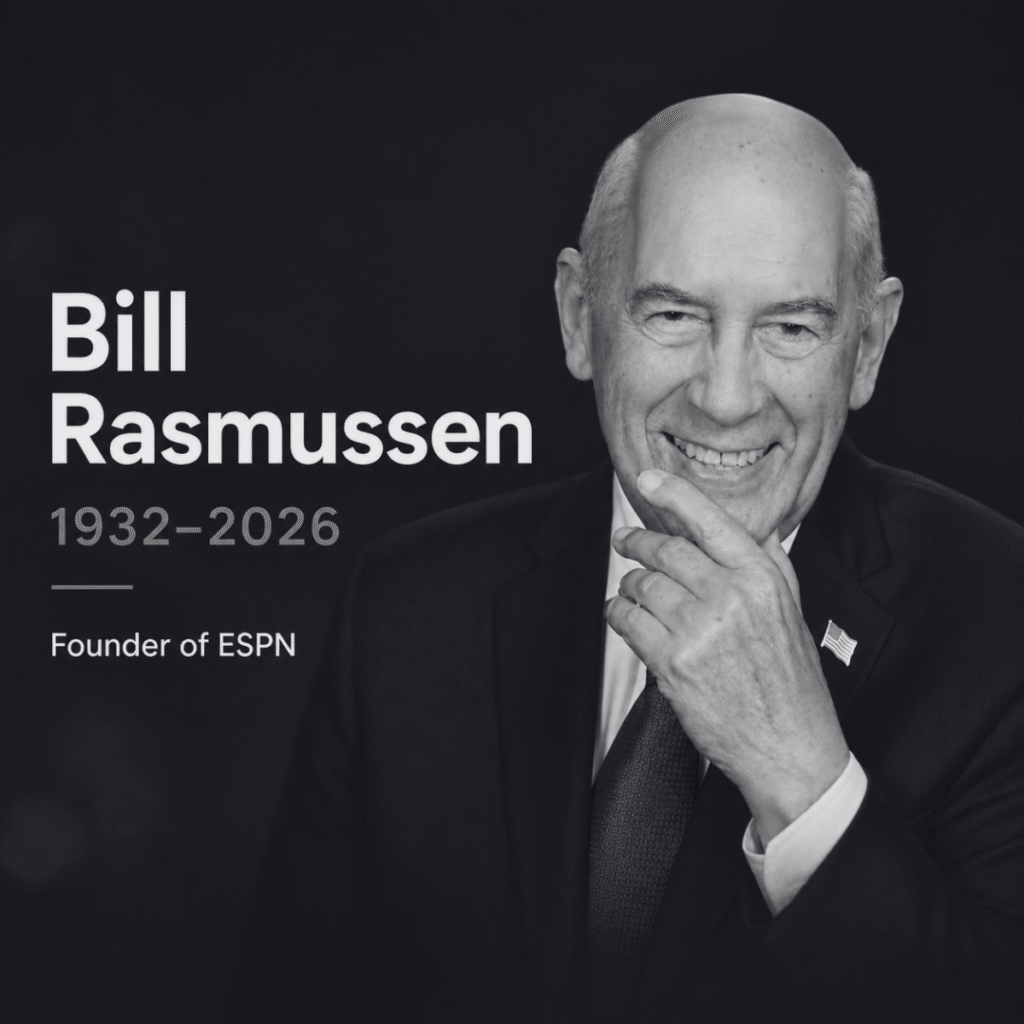
When I interviewed ESPN founder Bill Rasmussen on Thirty Minute Mentors, he was 90 years old and living with Parkinson’s disease. He was also still writing, still exercising, still speaking to groups, still thinking about what he wanted to accomplish next, and still as optimistic as ever. At one point in our conversation, Bill told me that he had made it to 90 and figured he might as well go for 100.
Bill passed away yesterday at the age of 93 from the effects of Parkinson’s disease. He changed sports forever. The idea he developed with his son Scott became ESPN, the first 24-hour television network devoted entirely to sports, transforming not only sports media but the way millions of people consume sports. But when I think back on my conversation with Bill, I think just as much about the person I had the opportunity to interview at 90 as I do about the company he created. Our conversation was one of the most inspirational I’ve had.
What made Bill so compelling was that the qualities behind his success were still so visible decades later. The persistence that allowed him to keep going when people laughed at the idea of ESPN was the same persistence he brought to living with Parkinson’s. The curiosity that helped him build something completely new was still there at 90. And the optimism that carried him through rejection was still shaping the way he approached each day.
You Only Need One Yes
Before ESPN existed, Bill had been working for the New England Whalers. He lost his job when the team fired its front office, and what followed was an idea almost no one believed in: a television network that showed sports 24 hours a day. In our conversation, Bill told me about walking into meetings where people laughed at him. They told him nobody wanted to watch that much sports and that there weren’t enough sporting events to fill an entire day of programming.
Bill kept going. “You can take endless nos. But only one yes.” That lesson applies far beyond entrepreneurship. If you’re trying to do anything ambitious, you’re going to hear no, and you’re going to encounter people who don’t see what you see. Some will have legitimate concerns. Others will dismiss the idea simply because it doesn’t fit what already exists.
One of the hardest parts of pursuing a new idea is distinguishing between useful feedback and rejection that simply reflects how unfamiliar the idea is. Bill was proposing something that had never existed before, so the fact that people had trouble imagining it was hardly surprising. If he had treated every no as proof that the concept was bad, ESPN would never have made it beyond the idea stage.
Rejection doesn’t necessarily mean you’re wrong. Bill understood something every entrepreneur, salesperson, and leader eventually learns: you don’t need everyone to believe in your idea. You need enough conviction to keep pursuing it and the persistence to find the people who do. ESPN exists because Bill kept going when plenty of people gave him good reasons to stop.
Turn Setbacks Into Starting Points
Bill’s career could have gone in a completely different direction after he was fired by the Whalers. Instead, losing his job helped create the circumstances that ultimately led to ESPN. Years later, as Bill dealt with Parkinson’s, I heard the same mindset in the way he described another, far more difficult challenge.
His neurologist told him that in addition to exercising his body, he needed to keep exercising his brain. One assignment was simple: wake up every morning and fill an entire page with writing. Bill started doing it and eventually decided that if he was going to write every day, he might as well write a book.
What stood out to me was how naturally Bill described that progression. He wasn’t presenting it as some grand lesson in resilience. He had been given something he needed to do, so he found a way to do more with it. Faced with a new limitation, his instinct was still to ask what remained possible.
That captured something fundamental about the way Bill approached life. A daily exercise became a book. A lost job became ESPN. We don’t control every circumstance we face, but we do control what we decide to do next. That ability to determine how you respond to setbacks is a critical part of developing the right leadership mindset.
Positivity Wasn’t a Slogan for Bill
It would have been easy for Bill to talk about positivity after building one of the most influential companies in sports. What made his perspective so powerful was hearing him talk about positivity at 90 while living with Parkinson’s. Bill didn’t pretend every day was easy. He told me directly that he had down days.
But when he spoke to Parkinson’s groups, he encouraged people to begin the morning expecting something good to happen, to exercise, and even to start the day by making the bed. His optimism wasn’t passive. It was something he practiced. He had simple habits that helped him approach the day with purpose rather than allowing his circumstances to dictate his outlook.
There is an important distinction between ignoring difficulties and refusing to be defined by them. Bill clearly understood what he was dealing with. But he remained focused on what he could still control: his attitude, his activity, his curiosity, and what he could contribute to other people.
When circumstances changed, he looked for what he could still do. When he faced rejection, he kept asking what he could try next. When Parkinson’s restricted parts of his life, he kept exercising his body and his mind. At 90, he was still moving forward.
Stay Curious and Never Become Complacent
Throughout our conversation, Bill kept returning to six letters: ABC and NBC. For him, they had a meaning completely unrelated to the television networks: always be curious and never be complacent.
Curiosity played a central role in the creation of ESPN. Bill listened when sports fans wanted more coverage. He learned about satellite technology he initially knew almost nothing about. He kept asking questions about what could be possible instead of limiting himself to what already existed. Complacency would have killed the idea before it ever had a chance.
That combination of curiosity and a willingness to act is especially powerful. Curiosity alone can produce interesting ideas, but ideas only matter when someone is willing to pursue them. Bill asked questions, learned what he needed to learn, and kept moving even when the answers weren’t obvious and the people around him were skeptical.
And he never seemed to view curiosity as something reserved for young entrepreneurs or people at the beginning of their careers. Listening to him at 90, it was clear that he still viewed learning as an active part of his life. Success hadn’t given him permission to stop growing.
Near the end of our conversation, I asked Bill what anyone could do to become more successful personally and professionally. His final advice included the words that had guided so much of his life: “Always be curious and never, never be complacent.”
Remembering Bill Rasmussen
I’ve interviewed hundreds of leaders, and Bill Rasmussen was one of the most inspirational people I’ve ever had the opportunity to interview. He had every reason to spend our conversation looking backward. He had created ESPN, changed an industry, and lived an extraordinary life. Instead, at 90, Bill was still looking forward.
That may be what I remember most about him. Bill’s accomplishments were extraordinary, but he didn’t speak like someone whose most meaningful days were behind him. He was still writing, learning, exercising, encouraging other people, and thinking about what came next.
There are countless lessons to take from the story of ESPN: think differently, persist through rejection, embrace innovation, and believe in an idea before everyone else does. But the lesson I took from Bill himself was even broader. Keep finding reasons to move forward, regardless of where you are in life or what circumstances you face.
Bill changed sports forever, but his example reached far beyond sports. I’m grateful I had the opportunity to learn from him, and I’ll remember the way he approached life long after I remember any individual lesson he shared.
Stay positive. Keep moving forward. Keep asking questions. And never become complacent.
Rest in peace, Bill.