
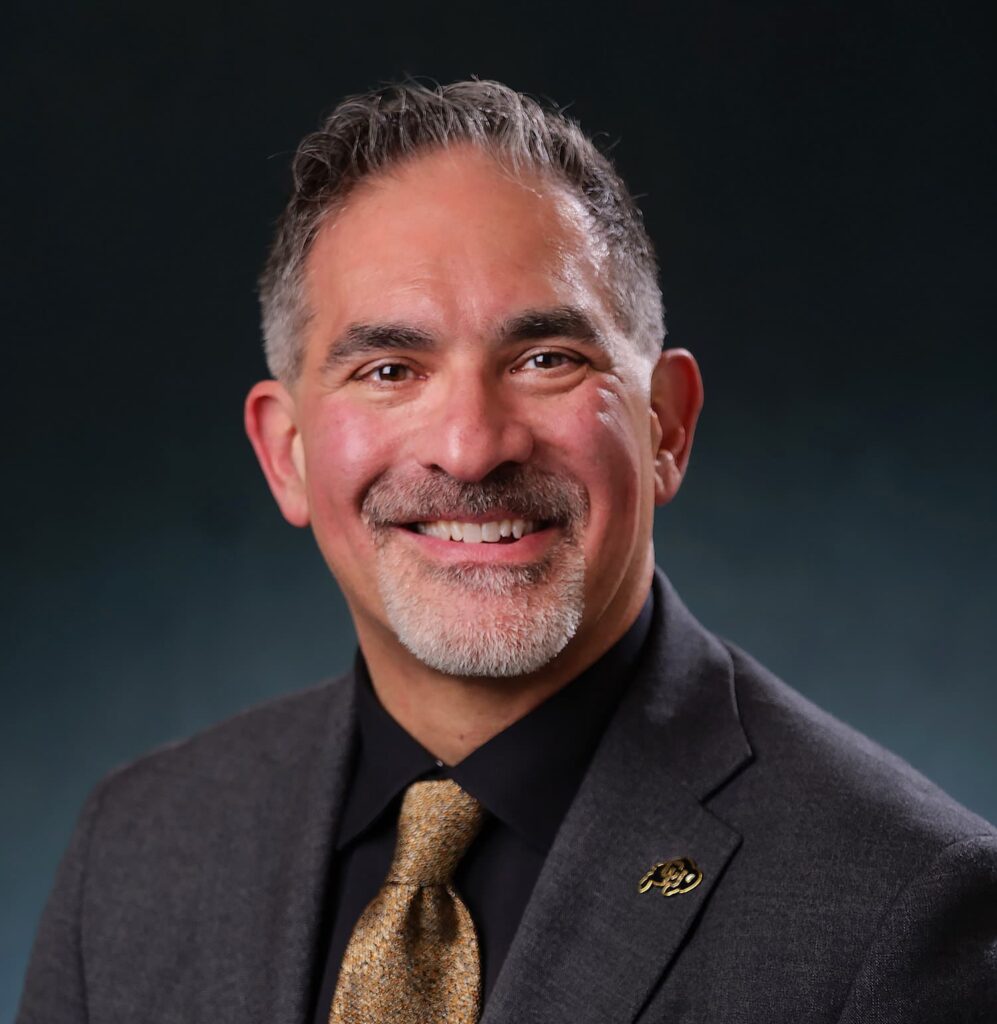
I recently went one-on-one with Dr. Justin Schwartz, Chancellor of the University of Colorado Boulder.
Adam: You have an unusual background for a chancellor of a major university. You’re a nuclear scientist. How did you go from nuclear scientist to university chancellor, and what are the best lessons you learned along the way?
Justin: I got my undergraduate degree at Illinois, then went to MIT for grad school. My whole family had been in higher ed. My mother, father, and stepfather were all academics, so it was natural for me to go in that direction out of grad school. I never really thought I would go down a leadership pathway.
I went through a couple of positions and got to the point, I don’t know, maybe 15 or 18 years ago, where I felt like I had accomplished a lot of the things I set out to do in research and teaching. I became more and more interested in public impact and how higher ed translates into real life and societal issues. I decided to make a change and became a department head. That’s the entry-level academic leadership role where it’s easy to go in, do it for a bit, and then go back to faculty or see where it takes you next.
I was department head at NC State for eight years and started feeling like the bigger things I wanted to do required a bigger platform than just being a department head. I ended up moving on and becoming dean of engineering at Penn State. It’s a really big school with a really big College of Engineering. I enjoyed five years in that leadership role. There was a leadership change on campus, and I got asked to be provost. I did that for a couple of years and really wasn’t looking to leave or move into another role at that point.
But CU Boulder was a place I’d always had my eye on. It was always on my radar as a great university, a great place to live, and a really good cultural match for the things that were important to me. We’re one of the flagship universities in the country for advancing sustainability, not just in research, but on campus and in translating that work into communities and trying to develop solutions around the globe. It seemed like a natural fit, and here I am.
As much as I’d like to say it was all planned out, it wasn’t. My stepfather, a psych professor, used to say, “Never trust an administrator, and anybody who wants to be dean won’t be good.” So maybe I’m a latent, spiteful teenager at this age, doing exactly the opposite of parental advice. But I’m loving it. It’s a great job.
Adam: What do you believe you did that allowed you to stand out and differentiate yourself in a very competitive industry? There are plenty of people trying to get jobs at prestigious universities. Once they get those jobs, they’re trying to get tenure. Once they get tenure, they’re trying to advance and rise. And if they’re going down the administrative pathway, they’re trying to get to the very top. You’ve gotten there. What have you been able to do that has allowed you to get there?
Justin: In a nutshell, years ago, a colleague talked about the idea of managing his career. I heard the phrase and thought about what that meant for me. Every time I’m going into a new position or thinking about a new position, I have a few fundamental questions I ask myself.
One is, who’s going to be my mentor? Mentorship isn’t only for the young. It’s for every stage of one’s career. Even in this role, who is my mentor? Who do I look to? Who do I talk to? Who’s there to guide me? Mentorship isn’t about how to do what somebody else did. It’s about someone helping you actualize who you want to become. So asking who my mentors were going to be at a particular place was an absolute must-have.
The other question I would ask myself is, if I make this move and this is the last place I ever work, can I be happy here for the rest of my career? Because if the answer is no, you put yourself in a mode where you’re trying to get things done while perpetually looking to get out. If you’re looking to get out, you won’t succeed in what you’re doing. It’s really important that you can embrace where you’re going and embrace that institution, no matter how long you’re going to be there.
The corollary to that is, are the things I’ll be able to achieve in this next role going to prepare me for the roles I may want next? Becoming a department head at NC State helped prepare me in a great way to become a dean at Penn State. It might not have prepared me to do other things. So I’m looking at how I’m setting myself up for options down the road. It’s very specifically about creating options rather than following a narrow path.
If you have only one path in mind, there’s a good chance you’re not going to go down it. How many people do you know who graduate college and say, “Here are the five steps I’m going to take in my career between now and when I’m 60,” and actually do that? Probably none. So it’s about making sure you’re putting yourself somewhere you can succeed and creating options, plural, for whatever you do next, while also being in a place where you can be happy forever.
Adam: Justin, I love that advice. What I love about what you shared is finding the balance between the now and the next. If you’re only focused on what’s happening next and you’re not focused on what’s happening now, you’re not going to be able to get where you want to be. To your point, you have one foot in and one foot out, and you’re not going to excel in your current role. Excelling in your current role is ultimately what helps you get to that next role.
Justin: Exactly. That’s why it’s really important that you love and embrace where you are, because you’ve got to wake up every day committed to what’s right there and then.
Adam: How can you figure out where the right place for you is to be? We’re all different. We all have different interests, backgrounds, and personalities. You work with students of all backgrounds and personalities. How do you get to that place where you can figure out, this is where I want to be, this is where I should be?
Justin: There are two fundamental pieces to that. One is you have to constantly be learning about yourself. I hate the phrase “you have to know yourself” because that’s sort of static. You yourself will change over time. The place that’s right for you in your first job may not be right for you in your third job. That’s also where mentorship comes in. What a good mentor helps you do is think through, process, and articulate what you value and what it is you want to accomplish.
You made the point about tenure. It’s very easy for an assistant professor on the tenure track to articulate, “I want to get tenure.” I actually tell our incoming tenure-track faculty, particularly when I was dean or department head, “I don’t want you worrying about tenure.” I know they will. It’s easy for me to say that, but I don’t want that to be their front-and-center concern.
I want them thinking about how they’re going to be an outstanding teacher in the classroom. How are they going to inspire and influence students? How are they going to do world-class research and publish and disseminate it? I want them doing the things, not focusing on the little road sign along the way that they’re going to check off. If you do all the things, tenure takes care of itself.
The other thing I would tell incoming assistant professors in engineering is, “I don’t want your mindset to be getting promoted to associate professor and then getting promoted to full professor. I want you thinking today about how you’re going to get into the National Academy of Engineering.” I know they’re probably not going to, because only about 10% of the people who should be in are in. But I want them to elevate their expectations of themselves and aim that high, because then all these other things seem small and will take care of themselves.
The people who heard that message are the ones who really did the best because they weren’t worried about, “How many papers have I published this month?” They were focused on the big things. The thing that made them want to go into higher ed wasn’t the checkboxes. It’s the big impact. It’s the great research. It’s the engagement with students. It’s seeing your students grow. I think this applies outside of higher ed as well. When people go into a career, they need to be thinking, what is the profound impact I may be looking to have, and how do I build toward that?
Adam: Justin, what you shared is a lot of what a great leader does: steers the people they’re leading toward what really matters. Is it the minutiae? Is it your title? Is it the grind of the day-to-day? What really matters? It’s getting to the why. Why are we here? Why are we doing what we’re doing? If you’re working at a university, you’re working at a university for a reason. You could be working somewhere else, but you decided to work right here. Why? As a leader, it’s about reminding the people you’re leading why they’re here and what really matters. Maybe you think this is what matters, but let’s dive a little bit deeper. What really matters? Beyond that, it’s about challenging the people you’re leading to understand, who am I? What am I really capable of? So many people set limitations on what they can do, and the job of a leader is to remove those limitations and help the people they’re leading get to a place where they have confidence and belief in themselves. They have confidence and belief in what’s possible for them in a way they didn’t have before.
Justin: One of my early-career mentors used to get asked, “Why are you so successful? What is it you do?” All he would say, and it drove the reporter crazy, was, “I hire great people and I get out of their way.”
That goes back to what we were talking about earlier, focusing your time on the things only you can do. If you hire great people and get out of their way, then they can do the things only they can do, and that frees you to do the things only you can do.
Once you embrace and really understand your own why, why are you in that position, and then understand the why for your institution, all those little things start to make sense. Why is higher ed here? Every business and every higher-ed institution has its own mission. Once you understand that, all those things that seem mundane or bureaucratic make sense.
Why am I writing a syllabus again? Because it’s important for the student experience to understand what’s in the class up front. Writing your syllabus no longer seems like something you’ve just got to do every semester. It becomes part of meeting that mission.
Adam: A core leadership philosophy central to how you lead is something I heard in an interview when President Obama was in the early days of his presidency. I believe it was on 60 Minutes. As a leader, you want to figure out, what am I and only I capable of doing? If it’s something anyone else on my team can do, they should do it. My time should be spent on what I and only I can do. [Before our interview] that’s what you shared with me about how you approach your job, how you approach your day, and how you lead.
Justin: That’s exactly right. It’s funny because the Obama story I go to is the other end of the leadership spectrum. It was a conversation he shared, I think in one of his books or his memoir, about one of his first conversations with Secretary Gates. Remember, he kept Bob Gates on as defense secretary.
In one of their first meetings, he asked the secretary, “What should I know that I haven’t asked you?” I quote Secretary Gates’s answer all the time. It’s that at any given moment, somebody somewhere in the federal government is screwing up. What’s really going to be important is how you react to it and how you deal with it.
We’re not as big as the federal government, but having that mindset is important. Part of supporting your team, whether it’s your immediate leadership team or anyone on your staff, is recognizing the humanity in all of us. Somebody somewhere is going to be messing up. How do we react? There are two aspects to the reaction. One is, how do we fix the mistake? The other is, how do we react to the person who made the mistake? Often that’s professional development and training. Where did we fail them that they made the mistake?
Then there are other cases where it’s, okay, maybe this is the right person in the wrong job. There are obviously different ways you have to approach those situations. But whether it’s a higher-ed institution, the federal government, or a large corporation, it’s really just a collection of people who are hopefully aligned in their mission and their goals and know their role in that mission.
It doesn’t matter if you’re a pyramid-based org chart, matrix management, or a mix of the two. It doesn’t matter if you have a flat org chart or a deep one. It’s just the way you’re describing people’s roles. Ultimately, it’s always just a collection of people in a large organization.
Adam: What changes as a leader as you rise within an organization and acquire more responsibility? You’re no longer leading a department. You’re now leading the university.
Justin: I think the most interesting thing, if I reflect back on what’s changed, is that when you’re a new academic professor, even as you go from assistant to associate to full professor, you’re teaching, doing your research, and doing service. In everything you’re doing, you are the unique expert.
The more you move up in higher-ed leadership, the less you are the expert in anything you’re doing. You become a department head. When I did, there was research that faculty in my department did that I didn’t fully understand because they were in a different subarea. You become dean, and I’ve got 13 departments. How well do I, as a nuclear engineering PhD, really understand what someone in biomedical engineering is doing? I don’t even like the sight of blood.
Then you become provost, and all of a sudden I’ve got engineering under me. I’ve also got arts. I’ve got humanities. I’ve got social science. I’ve got law. I’m not an expert. You become less and less the expert in the things you’re overseeing.
Here I am, with a PhD in nuclear engineering from MIT, and someone in my reporting channel is Deion Sanders. I don’t know anything about how to be an All-Pro, best-in-class cornerback. Obviously, like everybody else in the country, I know everything about being a football coach.
I don’t know anything about how to lead a police department. I don’t know how to lead residence halls on a day-to-day basis. I’ve got to have great people sitting around me, like my head of public safety and my senior VC for operations, who have deep experience in public safety and law enforcement. They help me understand what I need to understand for those things to succeed.
The people on our comms team you’ve been talking to, I’m sure they’ll tell you that I think I’m an expert in comms, but I’m not. I always tell them, “Here’s what we should call this,” not because that’s the marketing thing we should go with, but because I know it’s such a bad marketing slogan that it’s going to motivate them to come up with something better. It’s a running joke we have.
So what is my role in that space? My role in our comms enterprise is this: talking to you. But there’s 99.9% of all the comms and marketing work that I could never do. It’s the same in athletics. Everybody knows Deion Sanders as CU’s football coach, but we’re one of the top women’s lacrosse teams in the country. I’m watching our lacrosse games saying, “What’s happening?” I don’t know the rules, but that’s just as much a part of my portfolio as the football team is.
Adam: What you’re sharing is applicable regardless of where you’re leading, whether you’re leading at a university, in a business, or in any kind of nonprofit. The higher you go, the less you are an expert, and the more you’re responsible for managing people, functions, and areas within your organization where you have little to no expertise. What then becomes your job as a leader? Let’s use Deion Sanders as an example. He’s the highest-profile example. What are you responsible for as a leader in your relationship with Deion Sanders?
Justin: There are basically two things, and of course there’s an athletic director between us. But I still interact with Deion and the new athletic director. Fundamentally, no matter which unit you talk about, there are two things. One, I have to make my expectations clear. Two, I have to make sure I’m doing everything I can to give them what they need to succeed.
When I do my annual reviews with my direct reports, I have a little thing I ask them to fill out. It’s basically three parts: What did you accomplish last year relative to your goals? What are your goals for next year? And then the most important part, what do you need from me to succeed? My job is to make sure that every unit on my campus can reach its absolute maximum potential year in and year out.
Adam: And then it’s on you as a leader to surround yourself with the people who can go and execute on that, because as we talked about before, you don’t have the bandwidth as an individual to execute on all of it. But when you build the right team and have the right people in place, that’s where it all happens.
Justin: And that execution piece is important. We talk about the hierarchy of vision, objectives, strategy, and tactics, but fundamentally, the other piece is effective execution, operational efficiency, and efficacy.
The way I often articulate it to my team is there’s an old Taoist proverb: “Action without vision is a nightmare. Vision without action is a daydream.” We have to have both. One of my roles, of course, is to provide that vision. But it’s also the deans’ role to provide vision for their colleges, the institute directors’ role to provide vision for their research institutes, and the athletic director’s role to provide vision for the athletic department.
The visions have to align. The missions have to align. But then there is the action piece that has to support actually making it happen.
Adam: You’re leading at a moment, and it’s a long moment, but it’s a moment of change and transformation. Higher ed, like just about every other industry, is going through significant change and significant transformation. What are the keys to leading change and leading transformation?
Justin: CU Boulder is in our 150th year this year. We’re celebrating our 150th year, and what I keep reminding people is that over 150 years, we’ve of course evolved in many ways as society has, but our fundamental mission hasn’t changed.
One of the most important things for a large organization is to keep people focused on our mission. Why did you choose a role in higher education? To educate students, to advance their lives, their careers, and their prospects. To advance research that’s truly going to be life-changing for people in Boulder, in Colorado, in the country, and in the nation. Creating new knowledge, disseminating new knowledge, that’s exciting stuff.
It’s very much a service organization. People talk about wanting to pay it forward. Higher ed fundamentally is a pay-it-forward organization. We are here for the impact that the students we have today are going to have in the future.
I don’t know when that might be. Some of them are going to have an impact within a few years. Others are going to be astronauts. We’ve got a number of former astronauts, and that might take 10 years. Others are going to start companies, and their successful company might not start until they’re 45.
We’ve had 11 unicorn spinoffs. A unicorn spinoff is over a billion dollars in capital. That didn’t happen overnight. One of the founders of a recent one has been with us for about 40 years. He didn’t create that in his first year as faculty. It’s taken a lot of time.
A lot of what we’re doing is investing in the future. As we go through industry-wide conversations, anxiety, changes, and everything else, we have to remind people that the fundamentals of what we’re trying to do aren’t changing. Keep focused on that, and we’ll navigate the changes as they come. But we’ll stay true to our mission, stay true to our values, and stay true to ourselves. Then we’ll succeed.
Adam: You mentioned the importance of investing in the future. How, as a leader, do you do that? How do you figure out what the right investments are to make today, recognizing that leadership isn’t just about winning today, but also about winning tomorrow?
Justin: That’s one of the most important questions for higher-ed leadership because one of the things that differentiates us from so many other industries is the number of different timescales we have to think about at the same time.
We just started the second week of the semester, so people are spending a lot of time thinking about this semester. Who’s teaching what? Where are they teaching? How’s fall enrollment going to be? What are we doing for student success? Is the dining hall reopened? Are there road repairs in the city that are going to block traffic? All those tangible things have to be managed.
We also have to think about which faculty are leaving. What areas are we hiring in? What are the teaching needs for the next three years? What are the research trends for the next 10? We hire faculty who may last for decades. How do we think about who we hire now to balance those different kinds of needs?
Then I’ve got to think about where I spend millions, perhaps, on a building renovation versus taking that building down and moving that unit into another new building. We have a chemistry and applied math building under construction right now. I’m probably not going to put a lot of money into renovating existing chemistry labs if they’re going to move out. But three years ago, my predecessor had to think about whether to put money into the chemistry labs knowing we’re hoping to build a building that’ll be open in four or five years.
We have to think about that timeline. Then we have to think about all the business aspects. What’s our debt capacity? How does it affect our budget? How are we setting tuition over the next few years? What’s the relationship with the state legislature, and how’s that going to impact us? We’ve got all these different timescales to think about at the same time.
Right now, we’re actually in this rather unique moment. Truly, this isn’t braggadocious. This is fact. We have the longest-standing history in developing quantum science of any university in the world. We have three or four Nobel Prizes just in that field, and that dates back 20 or 30 years of research. We were doing quantum before it was called quantum.
I think about quantum today. I think about our leadership role in sustainability and climate today, and so many other areas where we lead. Those go back decades. One of my jobs right now is to ask, where am I investing in new things so that 20 or 30 years from now we’re bragging about the things we’re world-class in that I got started today? I won’t be in the role, but how do we think about investing today for those longer-term things?
That’s one of the fun things in higher ed, asking what the big human challenges are that we need to think about and how we invest in them today for long-term impact. So I’m thinking about three weeks, three months, three years, and 30 years, all within the course of an afternoon.
Adam: Justin, what you shared is so interesting. Regardless of where you’re leading, in any organization, you’re responsible not only for the next quarter or the next year, but if you’re a great leader, you’re responsible for the health of your organization going forward, period. It’s not just about figuring out how we’re going to be as competitive as possible today, but what we need to do to be as competitive as possible tomorrow. To your point, it requires vision. It requires figuring out, five years from now, 10 years from now, 20 years from now, what are the things that are going to matter then that might not necessarily matter today, and what do I need to do as a leader to plan accordingly? I love the piece of advice you shared about balancing vision and execution. You, as a leader, need to have vision, whether it’s your vision as a visionary or someone else’s vision that you adopt and are able to translate and get the rest of the organization to buy into. Without vision, what is anyone going to follow? But then it’s all about execution. That’s at least 90% of it.
Justin: That’s right. Absolutely. Adding to our complexity, of course, is that we need to be thinking about what society will need in terms of employees and citizens in the future, and what today’s 10-year-olds will be interested in eight years from now. It takes a while to build up a new academic program to fill a societal need, and we also need to think about what students are going to want to do.
We’ve seen this massive shift in the last couple of years in student interest in, say, computer science. Just a few years ago, it was really hard to get enough faculty to teach all the students who wanted computer science. Now, all of a sudden, people say, “AI is taking over coding and programming,” so students are going somewhere else.
That’s a pretty unique, rapid transition. We don’t see that quick of a switch often. But we have to think about the skills and needs our students are going to have and what’s going to attract them down the road. Again, that’s one of those multi-year things we need to think about.
What are the skills? What are the needs? First and foremost, I think the human-related skills. They’ve always been important, but people are reawakening to just how important they are. That’s true for professional success and personal success in life. We think about every aspect of our students, so those things go together.
What I find interesting right now is that the soft skills are hard. There’s so much momentum against people developing those skills naturally, yet they’re going to become more and more important going forward. We’ve got this four-or-so-year window to do our part in that space.
Adam: What do you do? How do you develop soft skills in an environment where soft skills are under attack?
Justin: It’s a challenge. We encourage and support our faculty to think about the pedagogical changes that would help in that space. My engineering advisory board for our School of Engineering Applied Science talks about the need for engineering students to have that exposure, so it’s something we think about throughout.
We think about how we harness AI as an effective learning tool rather than a learning replacement. I feel we have the responsibility to prepare our students to live in and succeed in a world with AI. We need to think about AI as a tool, not a solution, and how we integrate it into their educational experience in a way that prepares them for that world.
There are a lot of facets to it. We have a Be Involved Fair where all the different clubs and extracurricular opportunities show up, and we constantly encourage our students to go there and meet people.
One of the things I tell our incoming first-year students, one of the few pieces of advice I give them, is go try something you’re sure you’re not going to enjoy. You know you’re not going to like it. Maybe you just affirm that you don’t like it. Maybe you learn something new about yourself and think, “Wow, I really do like line dancing.”
Whichever outcome you have, you’re going to meet people you wouldn’t have met otherwise. That could be the piece that’s life-changing. It’s not the fact that you do or don’t like line dancing. The people you met doing it could be the thing that stays with you for your life. To me, that’s an indirect way of saying, go meet people. Don’t just live in your electronic world.
Adam: As you’re sharing that advice, Justin, I’m going back to my time in college and thinking about how college provides this incredibly unique environment where we have the opportunity to meet people. We’re around people who are the same age as us. We have relatively limited responsibility. We have places we get to show up to that are a few minutes away from where we’re living. This club, this activity, it’s at our fingertips. Then when you get out of school, you have to work harder. But the same advice applies. If you want to develop your soft skills, develop as a human being, and ultimately develop the skill set you need to succeed in today’s landscape and tomorrow’s landscape, it goes back to that same advice. It goes back to getting out of your comfort zone, getting out of your shell, trying new things, meeting new people, and putting yourself out there. Don’t show up with the mindset that you know exactly how this is going to work out. Recognize that so much of what we learn, and the process of learning in general, requires the humility to appreciate that I don’t know what I don’t know. When I show up to an environment with an open mind and an eagerness to learn, that’s where the magic happens.
Justin: Exactly. I haven’t gone line dancing yet. There’s a place I pass every time I’m going to and from Denver called the Grizzly Rose, and I’m determined to get there on Sunday night when they have line-dancing instruction. I’m going to try it. It’s not something you do growing up just outside of Chicago, but it looks like fun.
Adam: Let me know how it goes when you do that.
Justin: All right. If you’re in Denver, maybe I’ll take you too.
Adam: I’m not familiar with the Grizzly Road or with line dancing.
Justin: Grizzly Rose. Yeah, that’s the name.
Adam: Grizzly Rose. Excuse me.
Justin: Rose, yeah. Look it up. The next time you’re in Denver, you’ll get yourself a cowboy hat. We’ll go.
Adam: I’ll be honest with you. The last time I was in Denver, I stayed within my comfort zone and went to Coors Field, which was incredible. Really beautiful ballpark. I had such a great experience there.
Justin: Of course. You’re a baseball fan.
Adam: Love baseball, and I’m a big Angels fan. The Rockies are one of the few teams that are just as bad as the Angels, so we can relate there.
Justin: I’m one of those diehard Cubs fans. Grew up my whole life with them.
Adam: Okay.
Justin: So I really wish the Angels had signed Albert Pujols about 10 years earlier. That would have been great.
Adam: We did, actually. His name was Mo Vaughn. So I’ve been through that all too many times. I actually did an interview with Joe Maddon talking about reversing the curse.
Justin: Joe Maddon got engaged about one mile from my office.
Adam: Wow!
Justin: Where he used to play ball. If you read Tom Verducci’s book about that season, it gives Joe Maddon’s life history. He used to play ball in Boulder at a minor-league park. He’s got a connection to Boulder, so I’ve got to try to close that gap. Joe, if you’re listening, come on football.
Adam: Along the lines of what we’ve been talking about, Joe Maddon shared a great story about how he got into coaching. He said he was working at a liquor store. He was out of baseball. He was a minor-league catcher and not a very good one. He retired as a player and essentially washed out. He got a call over the holidays while working at this liquor store from a scout for the Angels who remembered him as a player and remembered how hard he worked. The scout asked, “Would you be interested in coaching?” He saw something in Joe Maddon, and it speaks to a couple of lessons we’ve been talking about. Number one is the importance of a leader seeing something in you that you might not necessarily see in yourself. Number two is the importance of not really knowing where the next opportunity is going to come from, focusing on excelling at what’s in front of you, and letting the rest take care of itself.
Justin: That story of him getting that call when he’s working at the liquor store reminds me of the scene early in the movie Major League when they call the guy to be the manager and he’s selling tires. He’s like, “Hang on, I got a guy on the line buying some whitewalls.”
Adam: You know what? Charlie Sheen would actually be a good addition to our bullpen right now. He’s probably more effective than half the relievers for the Angels this year. If Charlie Sheen is listening, maybe actually, Charlie Sheen, getting a little bit off subject here, his real name is Carlos Estevez. Carlos Estévez, one of the best relievers the Angels have had for a while, was traded to the Phillies. Before the Angels, he was with the Rockies. He and Charlie Sheen have become buddies over having that same name.
Justin: Really? That’s great. That’s funny.
Adam: It’s kind of funny how things work out. You mentioned that students have shifted away from computer science. Where have they shifted to?
Justin: Mechanical engineering remains huge, but in general, engineering here is oversubscribed. It’s really competitive. Business is too. At most large state universities, the school of business is where students coming out of their teens are trying to get in. We have students who go into exploratory studies hoping to get into business or engineering. Those are really popular.
Psychology is really popular. Those are, I think, ubiquitous interests among our students. They see where the career paths are and gravitate toward that. We don’t really have others that are deeply struggling. We would love to see more students go into the College of Education because we need more teachers in society. There’s been a drop in some of the foreign languages, but interest in Spanish remains truly robust, which is great.
We’re a comprehensive university, and I say this all the time: we’re committed to that. Here’s where we get back to the challenge of timescale. We need to balance that immediate-demand mindset with what societal needs are going to be long-term.
I always go back to this when I explain it to people. After 9/11, 25 years ago, within a couple of weeks there was a realization that we had a massive shortage of Americans who spoke Arabic. There was a huge need, but those language programs hadn’t been thriving. A lot of places shut them down, and all of a sudden, whoa, we need people who speak Arabic.
I’m extremely resistant, and there’s no pressure in Colorado, but when I see peers saying, “Well, we’re going to get rid of some of our language programs,” it makes me nervous. We don’t know what that need is going to be. The idea that the need to communicate across cultures is decreasing doesn’t make any sense to me.
That’s one of those complicated balances we have. To me, one of the strategies is to offer students more minors. It’s not just, I’m taking that as a major or I’m not taking it. Let our students have a little more flexibility in choosing how to get recognized through a minor or a certificate in a way that’s not at the same level as the major, but really speaks to intellectual curiosity and breadth of skills that are important.
We have a degree in our College of Music that’s the business of music because we know there are a lot of students who love music. They want to have a career in music, but they’re not going to be the one at the mic. There are huge opportunities in that space. The music industry is booming. It’s just very different than it was 30 years ago. So how do we prepare them for that? It’s about matching interest with where an industry is going.
Adam: What you’re sharing is really interesting for a variety of reasons, including the fact that when people make decisions, they often neglect the unintended consequences of those decisions.
Justin: Well, I hope I don’t. But yes.
Adam: No, I don’t mean you. But oftentimes individuals make decisions, leaders make decisions, and using the example you gave about cutting language offerings, I literally just spoke to a leader at another university who was talking about how German is going to be cut because there aren’t really that many students who study German. So, okay, we only have eight students who study German. This doesn’t make economic sense. But what are the unintended consequences of cutting German? To your point, is there some line we can walk? Can we achieve what we want to achieve without destroying things we might not realize we’re destroying?
Justin: Your point is spot on. One of the most important things for a leader to be aware of is that when you build the team around you, you need intellectual and experiential diversity so that when you make a decision, it gets a 360-degree perspective. When you’re talking about an idea, it gets that perspective.
If I tried to cut German, I’d be dead because my senior vice chancellor for strategic initiatives, my right-hand person, is German faculty. But there are times when I’m sitting with my executive committee, and it’s me plus eight, and I’ll say, “I’m thinking about doing this,” and they all look at me like I’m out of my mind. Then I don’t do it.
If I’m sitting alone, the number of mistakes I’ll make will be really high. But if I have eight really good people around me who come from different backgrounds, some academic, some from government, some from finance, some focused on student life, some in comms, they’re going to be the ones who raise the flag and say, “No. This is the unintended consequence. If you do that, let’s think about another option.” The adage “it’s lonely at the top” is something you’ve got to not let happen.
Adam: What’s interesting is that we see this all the time in corporate America, where a company either makes a really bad decision or doesn’t make a decision at all, doesn’t take action where it should. When you look beyond the surface, you realize pretty quickly that if there was someone in the room who understood the group being affected, that decision would have been made very differently, or a decision would have been made to prevent the catastrophe and disaster that wound up occurring. To your point, it’s about preventing problems before they happen. It’s about having the right people in the room and having people with an extremely broad set of backgrounds and experiences, appreciating that I might be the leader, I might be the person at the very top, but I have a lot of blind spots, as we all do. The only way I can account for them is by surrounding myself with a diverse team of people.
Justin: I read a book recently. I’m struggling to remember the name of it or the author, which is totally embarrassing, especially as an academic. But it’s so on point, and it cracks me up.
She was working high up at Apple, and Steve Jobs was furious because he had made a bad decision. She said, “Well, we told you that was a bad decision.” And he said, “Yeah, but your job was to convince me.”
He literally blamed them. I would never blame my team for me making a bad decision, but that was his mindset. One of your jobs on my team, when you know I’m doing the wrong thing, is to convince me that I’m doing the wrong thing and stop me from making a mistake. Because we’re all focused on the success of the company, not respect for the org chart.
I thought it was a little extreme to be mad at them, but it was a funny story. It was funny enough that she remembered it and put it in her book.
Adam: How, as a leader, do you create an environment where people are able to get to that place where they’re comfortable showing up every day, ready to challenge the leader, ready to speak their minds, and not afraid of the consequences of saying something that might be uncomfortable or put the leader in a position where they might be uncomfortable?
Justin: Especially coming in from the outside, first and foremost, I had to be very mindful of that as an objective. I didn’t just say it once. I said it often. Knowing my own style, I often will say, “Okay, this isn’t a decision. This is brainstorming. Tell me where I’m wrong.” I’ll often say, “I’m a big baseball fan, so if I’m three for 10, I’m in the Hall of Fame. Help me identify the seven where I’m wrong.”
Coming from an engineering background, brainstorming and ideating is just natural. I know that often people sitting in a room hearing the leader talk think anything I say is now the thing. That’s the mandate. That’s what we have to do. And it’s like, no, this is brainstorming.
The other thing that’s really important is to reinforce it. Anytime you make a mistake, you talk about it at the meeting. You say, “I made this mistake last week. I apologize. This is on me. How do we fix it?” Own the mistakes. Even if you own 10% of it, you own 100% of it. I’ve had people whose personality is to say, “No, no, no, no. It’s on me.” No, it’s not on you. I made the decision. It was wrong.
You have to show that that’s something you’re comfortable with. I’m most uncomfortable with the idea that I’m never wrong. Don’t tell my wife this, but when people are never pushing back or evolving my ideas, that’s when I get worried that people aren’t telling me, “This isn’t the way to do it.”
I’m looking for people who are willing to do that. I look for people who used to work for people who would push them and who they would push back with. My senior vice chancellor for operations was the chief operating officer for the city of Denver. Two positions before that, she was essentially in that same role in the city of Chicago under Mayor Emanuel. I would ask her, how did Mayor Emanuel set expectations for feedback and conversations? How did you bring your ideas forward?
I want to know how people are really going to stand up. I tell them I could hire eight sycophants a lot cheaper than eight experts. I’m not paying them to tell me yes. I’m paying them to say no, or how about this, or why don’t we try it this way, or have you thought of that, or no, this is the issue and you’re focusing on the wrong thing.
All of those are important conversations. The other thing I tell them often is, remember the number-one most important thing for effective collaboration is the ability to disagree. If you’re not disagreeing with me, then you’re not bringing anything. It’s not saying you have to disagree just to disagree. But if you agree just to go along, you’re not bringing anything to the table.
And it was Radical Candor by Kim Scott.
Adam: I love it, Justin. Is there anything else you’d like to share?
Justin: I guess two final essential leadership thoughts. One, don’t take yourself too seriously. Two, no matter how bad your day was, your dog is there for you.
Adam: What if you don’t have a dog?
Justin: Get one. Or something equivalent, right? Someone, some being. When you go home, it doesn’t matter what your day was. All is good. You’ve got to have that perspective. You’re going to have bad days. You’re going to have great days. Things are never as great as you think, and they’re never as bad as you think.
Adam: Does a goldfish work?
Justin: To each his own. Who am I to judge?
Adam: What about a buffalo?
Justin: I love ours. We have a live buffalo, our mascot Ralphie. She’s awesome. They’re not that cuddly if you’ve seen videos that have been out lately, but they are awesome animals.