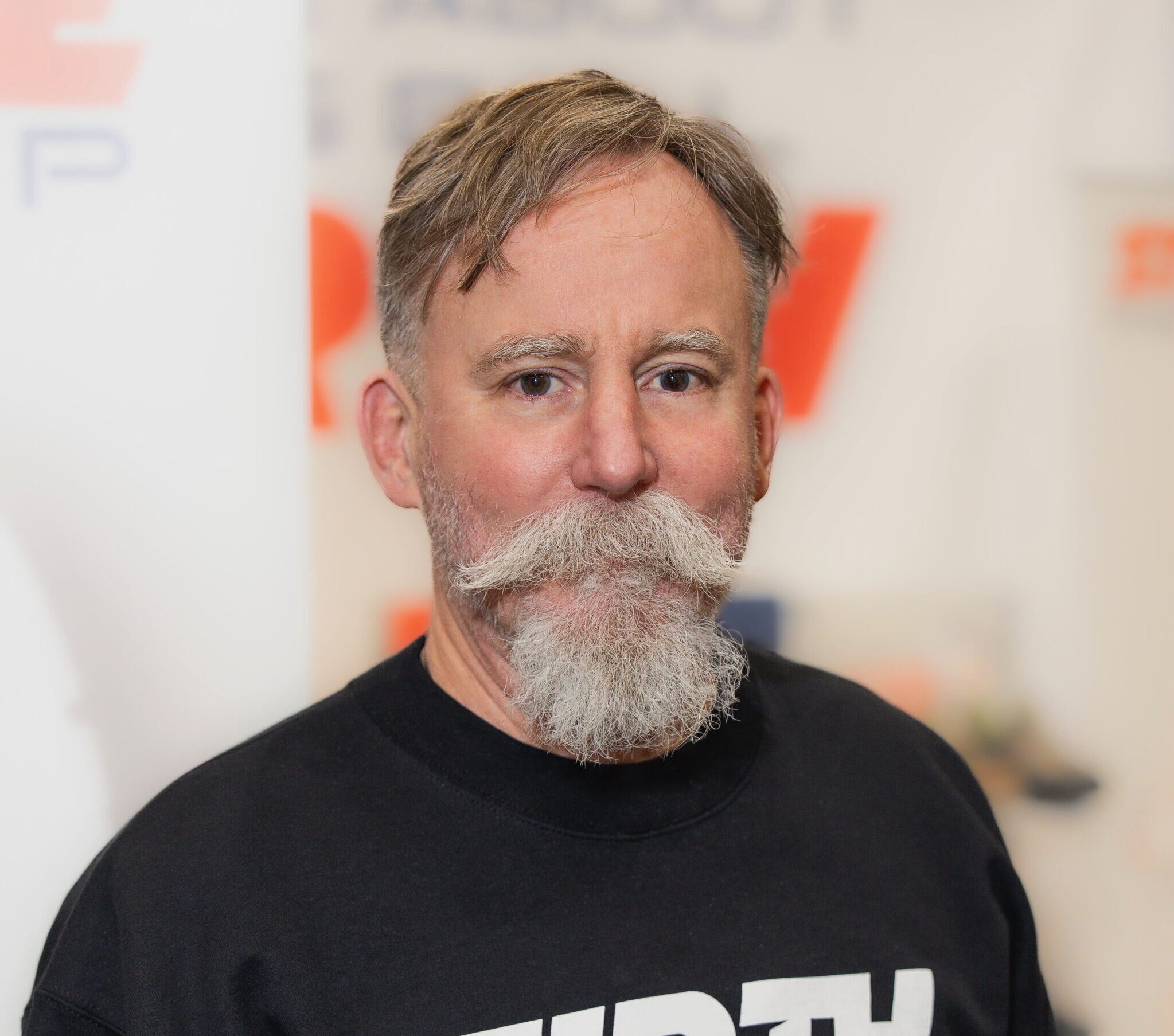


I recently went one-on-one with Farid Vij, co-founder and CEO of Citizen Health
Adam: Thanks again for taking the time to share your advice. First things first, though, I am sure readers would love to learn more about you. How did you get here? What experiences, failures, setbacks, or challenges have been most instrumental to your growth?
Farid: I started my career at a small bootstrapped startup- no fancy VC funding, no free lunches, 80+ hour weeks on well below market salary. I joke that it was before startups became “the cool thing to do.” Scarcity breeds innovation and teaches you a lot. We built up a $30M revenue business from scratch in 5 years, clawing our way every step of the way. My first boss said something then that has been the throughline for me: in chaos lies both danger and opportunity, and those who change the world only see the opportunity while others focus on the danger. I’ve spent my career since chasing things that are hard but worth it. Because where many see danger, I always try to see opportunity, and it’s served me well!
One more personal milestone in my healthcare journey was when my father-in-law was diagnosed with a highly metastatic head and neck cancer and given a very poor prognosis. I had the network and experience in healthcare to fight to find alternative treatment options and experts willing to work through the personal nuances of his care – and it was still riddled with challenges. Researching experimental treatments and trials, reading publications as if I were a researcher to understand what options to propose to the care team, navigating bureaucratic processes to try to get a second opinion…it felt impossible. Ultimately, we were able to find an experimental protocol that left him cancer-free, but it was another reminder of how poorly the system was set up to help patients that didn’t neatly fall into a “known” protocol.
Not everyone has the time and expertise to do that for their family, but I did see firsthand how advocating for his care became the single most important factor in navigating a complex disease. Every patient in our health system deserves that type of support and care.
Adam: How did you come up with your business idea and know it was worth pursuing? What advice do you have for others on how to come up with and test business ideas?
Farid: After seeing my co-founder Nasha Fitter’s daily battle managing her daughter’s ultra-rare condition, we realized that having a dedicated advocate is a privilege that needs to be democratized.
Because of the work I had already done to build an advocacy-centric approach at Ciitizen when we were focused on cancer, and then witnessing Nasha’s network in the rare disease community, we already knew there was a huge amount of demand for the type of company we wanted to build, and we had a built-in network of beta testers and people who were willing to provide feedback. Caregivers and patients are navigating medical appointments, insurance, school, government entitlements, and are eager to accelerate research into their diseases. By centralizing medical records, insurance denials, entitlements, and combining those with the lived experience of rare disease groups through symptoms and questions they share, caregivers and patients can have a better idea of what to expect and how to navigate care. By augmenting that process with AI, we can take the skills of a human advocate and amplify support to a new level of proactivity.
For anyone testing a business idea, skip standard focus groups and go directly to the people actively struggling with the problem to see if they will use a basic version of your solution. Even today, I talk to multiple families every week directly as nothing is as effective as seeing the reality they face day to day.
Adam: What are the key steps you have taken to grow your business? What advice do you have for others on how to take their businesses to the next level?
Farid: We focused intensely on establishing a reliable, patient-centered foundation, which led us to secure a $30 million Series A funding round last August to scale our tech.
We have also been deliberate about expanding our partnerships with patient advocacy groups and patient advocates. We built 125+ patient communities and partnered with 100+ advocacy groups. These groups are often the first place families turn when they are diagnosed, and they’re leading advocates for new research and therapies. They have been essential to making sure that as we scale, patients stay at the center of our work.
True growth requires transitioning from working inside the daily operations to building repeatable, trusted systems. To take any business to the next level, you have to hire brilliant people, give them true autonomy, and stay fiercely focused on your core mission. And that’s something you hear often, but you have to balance that with stubbornness in chasing your vision. Healthcare in particular has a lot of what I call “trap doors” – opportunities that seem obvious to chase but quickly detract you from your goal.
Something Ben Horowitz says always sticks with me: “If your team is not disagreeing with some of your key decisions, you’re not doing your job because decisions they agree with are things they’d do anyway, so what’s your value?” You have to maintain the courage to push for what you believe is the right destination – the “what and why” – but you have to let others figure out the “how” because they have expertise you just can’t replicate.
Adam: What are your best sales and marketing tips?
Farid: There are three key lessons I have learned from the go-to-market work I have done across all my companies. First, less is more. You cannot sell someone on something they don’t need or desire, and if you are selling a lot, you aren’t marketing things well…and if your marketing isn’t working, you probably don’t have the right product. That isn’t an easy admission to make, but even at Citizen, we recognized that difficult reality and did the hard things to tear down the product and start over. Without that courage, we wouldn’t have the success we have today.
Secondly, you don’t sell people; people sell themselves. People focus on talking about the benefits of their product or solution – that’s the wrong approach. Whether you’re in consumer or enterprise, you should spend 80% of your time articulating the problems and challenges your customer faces. Show that you get it, that you understand it deeply, that you’ve thought of second- and third-order things they may not have, but it immediately resonates. People buy from those who get it, and conveying that is done by deeply understanding challenges, not by pushing the benefits of your product. I believe this religiously.
Thirdly, focus on building champions. Don’t focus on scalable approaches, large deal sizes, or all the other things that you feel you have to chase. Your customers will be your best marketers and salespeople. Better than you ever can be because they, by definition, aren’t paid to sell your product – they are authentic in doing it. So, focus on the market segments where you can build those champions, and you can outsource the selling to the customer. You will never find a more powerful force for growth, and most of the time, doing this requires highly non-scalable approaches, high-touch, and deeply understanding the customer…you’ll feel you’re going too slow and “how will I scale,” but recognize they will do that part for you once you convert them.
This applies more to our business than any. I can’t tell a rare disease family how my product will help without understanding their day-to-day, what they face, where things break. That’s what we spend our time talking about. Our patient advocacy partners who hold deep trust with communities have become our sales and marketing channel: 50%+ of our revenue comes through introductions they make, and patients find our product because their community advocates for it.
Adam: What are the most important trends in technology that leaders should be aware of and understand? What should they understand about them?
Farid: The most significant technological shift is the rise of agentic artificial intelligence, and as a company building an active AI advocate, I believe it will fundamentally redefine patient care because it enables empowerment of individuals that the system was not built to do. Leaders need to understand that AI is not a tool to replace the human element, but rather a teammate that can automate some of life’s burdens so people can focus on high-value care. AI will not replace humans, but I do believe it will replace humans that don’t embrace it. It’s the ultimate companion to supercharge you, and it doesn’t take much to see that.
AI Agents, if they can be effectively scaled and managed, will change daily life for ordinary Americans on multiple fronts. Right now, they live more in the AI-native, tech-native world, but we are a part of the first wave of companies making that tech accessible to anyone, regardless of tech fluency. And I am squarely in the camp that AI is a multiplier for the human – it is not a replacement. This is a big misperception we have to put into context. Jobs and roles will evolve – yes – but that’s different than humans being replaced outright.
Adam: In your experience, what are the defining qualities of an effective leader? How can leaders and aspiring leaders take their leadership skills to the next level?
Farid: Great leadership relies on maintaining a balance of deep empathy for your team and absolute clarity on where the organization is headed. When people feel valued and understand exactly what success looks like, they will naturally do their best work.
There are 3 things I try to focus on:
1. Missionaries over mercenaries: we are an ambitious company, and I want everyone here to do exceedingly well financially and personally. But that cannot be why you are here. You have to be here for the mission and for the work because missionaries have their own engine and drive to the outcome for the mission; mercenaries optimize for the wrong thing. And it is role-dependent… you may want your salespeople to be more mercenary as it is by nature value-driven, but in the early days, they too should be coming to your company for the mission, not the dollars.
2. Keep a high bar: this is the easiest thing to slip, and I have been victim to this myself. It’s easy to keep mediocre performers because they do care about the mission and your empathy goes too far. But remember your role is to support the overall team and mission, and keeping folks around that hold others back or slow us down does not help others. Everyone is owed clarity and honesty, so make the hard decisions quickly and make them with empathy. Don’t mistake making hard decisions with empathy with “empathy means you don’t make hard decisions”. It will sink you.
3. On execution, defer to your team: another one that I also fall victim to as any passionate founder does, but constantly work on. You hire people because they are better than you at that role or function. They have novel ideas. They have expertise. Your role is mapping the vision and strategy, jumping in as soon as you see the company straying from that, and building a high-performance team. Your job is to optimize for that team, remove the distractions, and make the hard calls when needed. It’s not to try to do their job. Much harder said than done, but what I have seen the best leaders do very well.
Adam: What is your best advice on building, leading, and managing teams?
Farid: Hire for cultural alignment and shared passion because you can easily train someone on technical skills, but you cannot train them to care about the mission. Once you have the right team in place, manage them by defining clear outcomes and giving them the autonomy to reach those goals. And hire people who have their own high bar. For the best performers, their own expectations and engine keep them firing on all cylinders; not external management. If you are having to push someone to be ambitious or drive quality or work hard…those aren’t trainable qualities in months…they are generally untrainable or take years to change. And remember to celebrate the small wins along the way to build long-term loyalty and keep morale high.
Adam: What are your three best tips applicable to entrepreneurs, executives, and civic leaders?
Farid: First, prioritize the user experience by constantly finding ways to meet the patient, customer, or citizen where they are.
Second, stay curious and treat continuous learning as a daily necessity to avoid falling behind.
Third, build a resilient support system of trusted peers who can offer objective advice when things get difficult. Fourth, make the hard decisions because it’s your job.
Adam: What is the single best piece of advice you have ever received?
Farid: Focus all your energy on what you can control and none on what you can’t. The best fighter of stress is action. Act on what you control, ignore the rest. It will shock you how that resolves itself because most of what you think will happen or could happen based on exogenous factors almost never does – we create that perception for ourselves!
Adam: Is there anything else you would like to share?
Farid: The story that always stays with me is my co-founder Nasha’s daughter, who has an ultra-rare condition called FOXG1. Ari noticed that her seizures had crept up 25 percent, something even Nasha, as an expert caregiver, couldn’t clock day to day, and had a summary ready for the neurologist before the appointment even started. That matters and made a critical difference. We need to move to a world where we can do that at every turn of care, and that’s the whole point of what we’re building: not another app, but something that actually acts like a teammate when you need one most. That’s the type of nuanced, always-on support we want to bring to everyone.