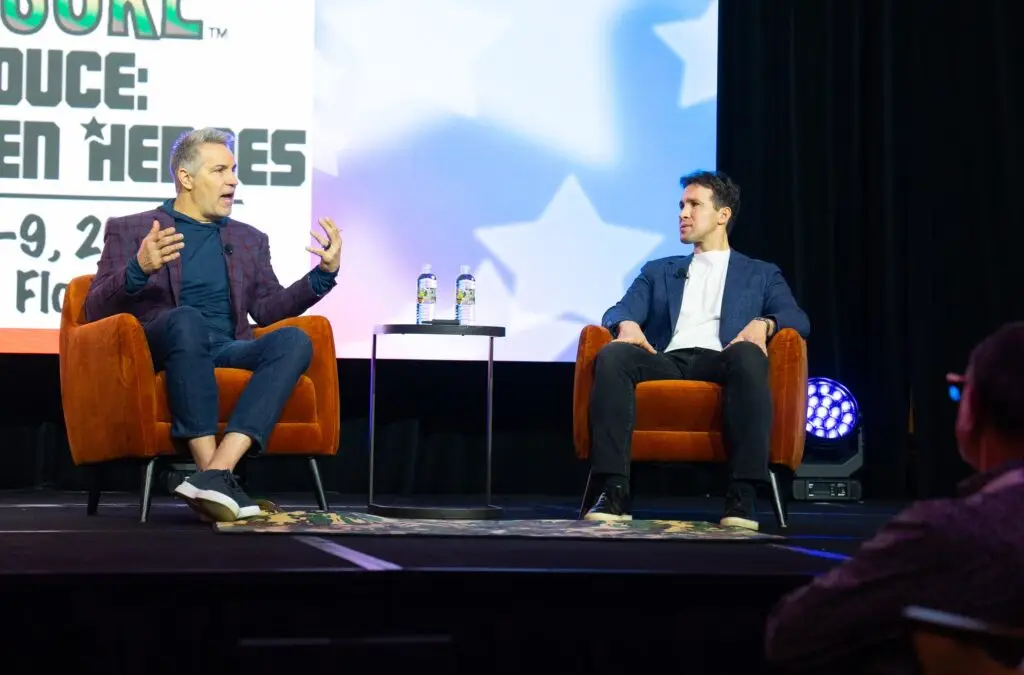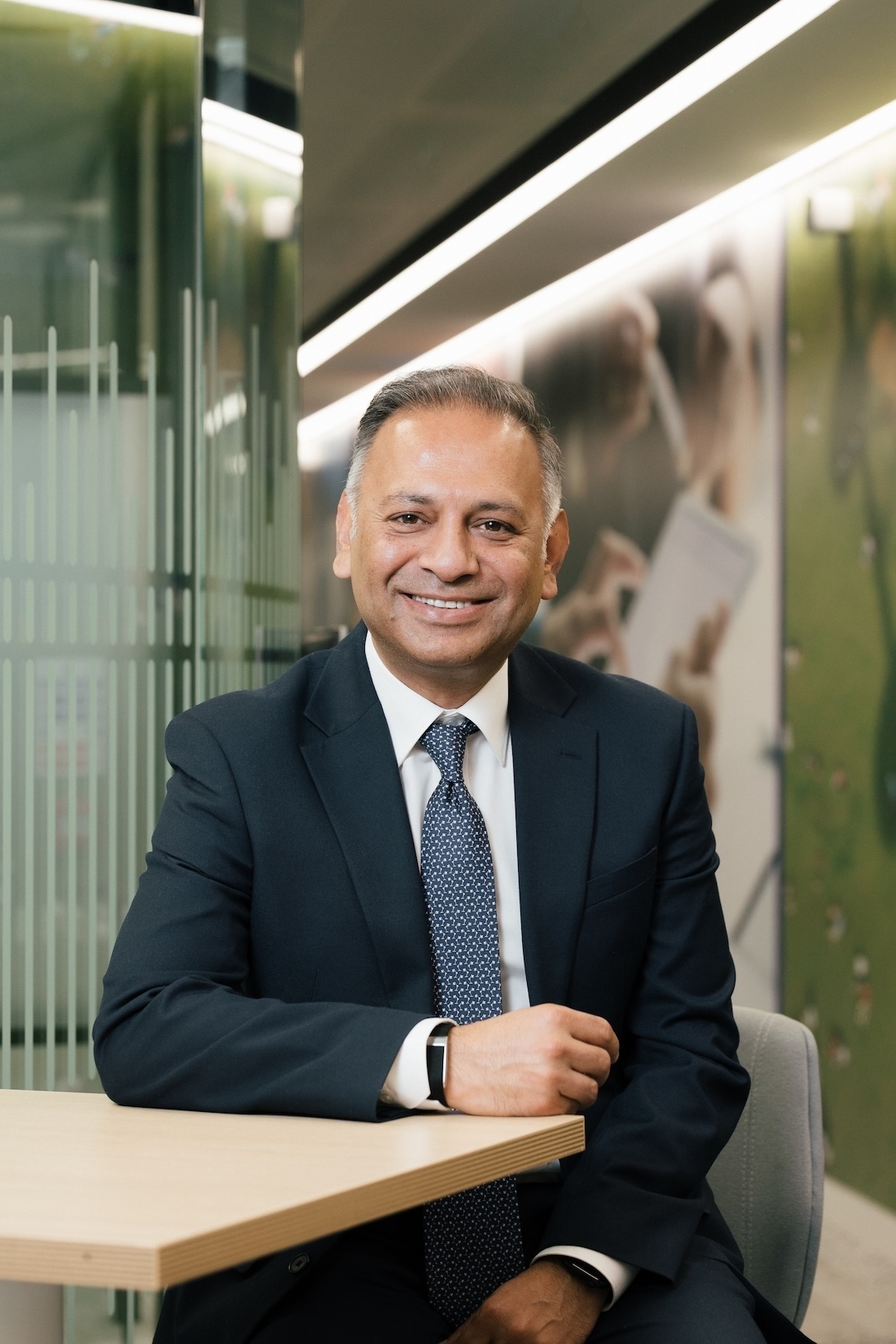


I recently interviewed Guardian CEO Andrew McMahon on my podcast, Thirty Minute Mentors. Here is a transcript of our interview:
Adam: Our guest today is a Fortune 500 CEO and the leader of one of the largest insurance companies in America. Andrew McMahon is the CEO of Guardian. Andrew, thank you for joining us.
Andrew: Thank you, Adam, for having me.
Adam: You grew up on Long Island, and you grew up back in the days when every morning we would wake up and go outside and grab the newspaper and read the newspaper. And if you lived on Long Island, in those days, many of the newspapers were delivered by you. Can you take listeners back to those days, your early days? What early experiences and lessons shaped your worldview and shaped the trajectory of your success?
Andrew: Sure, I’d be happy to share some of that. It’s great nostalgia to think back on how my career started, first delivering what we used to call the PennySaver that was in a plastic bag that went on the garage door handle, because the newspaper routes were quite competitive to get, which obviously paid a lot more than the PennySaver. But the newspaper route that I had was called the Daily News, which is still a paper here in New York. It’s a morning newspaper as opposed to Newsday, which was an afternoon newspaper. That meant it had to be delivered before I went to school in the morning. That meant it was pitch black, getting on a bicycle, filling the bike basket up with newspapers, and then riding miles around. It wasn’t obviously all Long Island. Miles around the neighborhood, putting the newspaper underneath the front doorstep. So you had to park the bike, get off the bike, bring the newspaper, put it under there, then get back on your bike and go to the next house. And that concluded with sort of weekly stopping at those homes and then asking for the 35 cents or 50 cents, depending on if they got it all week or only during the week or just the weekend, how much they owed me, which often led to either them giving you exact change or giving you a tip on top, or telling you, “I have no money now. Can you please drive your bike three miles back here tomorrow, and I’ll have money?” So learnings from delivering newspapers, I would say Long Island weather could be either really beautiful or could be quite terrible, and that terrible weather could either be rain, snow, sleet, and the beautiful weather would be nice temperature, low humidity. And lessons learned from that, other than how to ride a bike in snow, would be we can’t always forecast. We sometimes have to plow through things that get thrown at us and things that we can’t really avoid. We have no control over. So as a kid, I had no control over the weather or what I was going to ride my bike in, and today I have no control over many things like geopolitical skirmishes around the world, interest rate moves, market shocks, etc. And that taught me a little bit about resiliency, backup plans, and really planning for some of the unexpected.
Adam: I love that advice. I love that early lesson. What can you control? What can’t you control? And when you spend your time and your energy and your focus on what you can’t control, you’re going to be a lot less successful at all the things that you can control.
Andrew: Yes, and I think that recognition of what we can control versus what we can’t control is critically important, and then planning for the uncontrollables that might happen, the probability that they might happen or not happen, helps us then make much better informed decisions of where we’ll take risk and what risk we do take.
Adam: So when you think about those two buckets, the things that we can control compared to the things that we can’t control, what are the most important things that we can control that we should focus on, and what are the most important things that we can’t control that can significantly impact us that we should prepare for, and how should we prepare for them?
Andrew: Let’s start with the controllable ones that we all have in different businesses that we run and our careers, right? So we can control the choices that are right in front of us. Okay, what customers do we want to serve? What products do we want to build? What risk are we going to take from an investment side? And making those decisions from a personal perspective, we can control what jobs do we want, what kind of companies do I want to work for, what industries do I want to be in. We actually have more control than I think many people always appreciate. We have choices in front of us of picking and choosing where we work. The second thing, personally, is we could also determine how we work and how hard we work. And I’ve often at least encouraged my kids to say the one thing you can control in work is you can outwork almost anybody if you wanted to, and that is something that we have in our control. And I’m not trying to push everybody to work their tail off until they collapse, but that is something. And I think throughout my career, be it starting with newspapers to where I am today, the one thing is that I’ve always taken work seriously. I parse up the time of work and how diligently I do work and how much I do work, but very consciously also when I don’t work and what time I leave for personal renewal, call it, and so forth. So that’s the controllable pieces in all our lives and so forth. The uncontrollable things are mostly things, again, for me, in running an insurance company, market financial risks, cyber risks, something probably a risk for us for many decades coming here. Cyber risk, which we all face. There’s not a lot I could do about all the people and the bad actors out there conducting these nefarious things, but I could take a lot of action to try to defend ourselves on cyber risk, programs in place, educational pieces for both clients and our own colleagues within the company on how we best defend against that. And so, defensively, we do lots of shock testing here on financial risks and looking at if another global financial crisis-type situation would happen, what does that mean for us? How do we immunize ourselves from it, or at least blunt that thing? Running through scenario testing and shock tests for any type of risk that we don’t really have control if it’s going to happen or not happen, I think, is also really helpful and informative. And those are things we can do about those things that we can’t control.
Adam: Andrew, you shared a lot there that I would love to unpack. Starting off with the fact that you mentioned that work ethic, something that we all can control, has been a key differentiator for you in the success that you’ve been able to enjoy throughout your career. What else has allowed you to stand out? What have been the keys to rising in your career? What can anyone do to rise in their career?
Andrew: A couple things. One is obviously, as I mentioned, work ethic and diligence to work and work itself. Two, an impact orientation of almost keeping my own self-score of each week of what I have accomplished. And I got into this habit of doing that on a Monday and a Friday, of writing lists and then checking off the list by Friday. And I just found that cadence of an impact orientation of saying, “Hey, I’m just getting through stuff. Here’s the stuff I’m producing.” It becomes noticeable to lots of other people then in your career, and that’s how all of a sudden it led to other roles and other jobs as people became aware of that. And then the last one I would say, I was going to say lack of shyness, but it’s not necessarily lack of shyness because I would say that I’m a bit shy, but more of a confidence to, as I’ve had ideas throughout my career, starting right out of school, I always shared those ideas, and I wasn’t hesitant to share those ideas. Or if I had a question, I would ask the question in a meeting, even though I was maybe the most junior person in the meeting. And then if I had an idea, I would propose that idea or ask why not. And then if I was curious about something and learning, I would just go and shadow people and talk to them. And, “Hey, can I talk to you about your job? I was just curious about what you do.” And I think that combination of those things, then lots of people, I grew this network of people from their jobs. They would then call me, “Hey, we have this role. We think you’d be great for it.” And I guess the last thing was then you take chances and take some of these roles that I never really thought I would have. Like I did a small stint in human resources at one point at GE, and I never thought I’d work in human resources, but it actually opened my eyes up to a lot of stuff. I think it’s given me a great appreciation for human capital and the processes around human capital. And frankly, I don’t think I think the way I think today about human capital if I didn’t have that small stint in human resources back then. So taking a risk of taking some of those jobs that then come your way builds up a track record that got me here.
Adam: Oftentimes we see people who have made it to the very top, and from the outside we look at them, and our initial assumption is they followed this very linear path to get to where they are. They did this, and they did this well, and they did this right, and then they did that, and they kept climbing and climbing and climbing. And the reality is that very few, if any, people ever do that. The path to success is nonlinear. There are zigs, there are zags, and it requires taking chances, taking risks, doing things that are outside of your comfort zone. You mentioned that you worked in HR. You never thought you would work in HR, but that was an opportunity that came up. You took it, and it helped you expand your horizons. It allowed you to broaden your skill set, and it helped you get to where you are today.
Andrew: My formal education was originally in computer science, which is interesting in itself. Part of the reason I didn’t really pursue computer science after college was a frustration, frankly, and boredom with programming itself and what it was back then. And I think where technology was helping businesses in the early ’90s versus where it is today, frankly. So I came out of school, really went to a management training program, which really broadened my perspective on lots of different functional businesses. Then went into finance and, as I said, HR and business development and other things. I find myself now with this amalgamation of lots of experiences, including my formal education, in a time in an industry that’s enriched with massive amounts of data, massive amounts of decision-making, both on investments on the asset side and frankly on the liability side, which is a perfect time to actually reapply computer engineering and AI to a very old industry. I mean, our company, Guardian, is a 166-year-old company founded in New York City in Manhattan in 1860 down off of Wall Street, and in many ways, the life insurance industry still has some processes and practices in place that are quite antiquated from a contemporary perspective. But technology today, and where the industry is going, and particularly Guardian’s going, really makes me excited about what technology can bring to this industry, and frankly, all the way back to our policyholders and consumers in particular on these.
Adam: When you follow a path that you think is the path that you need to take to get to where you want to be, and it’s the straight and narrow path where you do this and that will help you get to here, which will help you get to there, which will help you get to there. A byproduct of going down that road is that you have a very narrow set of experiences, you have a very narrow worldview. And by taking the opposite approach, by studying computer science and then working in finance and working in HR and doing this and doing that and going where opportunities take me and trying different things, you walk away with a holistic perspective, with a much broader view that becomes essential as a leader.
Andrew: I agree 100%. When I came out of school, undergraduate, I worked at GE for seven or eight years or so, while the CEO was Jack Welch, who really subscribed to career pathing at GE of doing multifaceted, multifunctional people, moving them around, moving around both industry, but then also function. One, it was innate in me, natural to try to do lots of different things. I think I’m an entrepreneur at heart. I was going to do entrepreneurial things right out of school, and then I saw this training program, and I said, “Well, I really don’t know that much about accounting and finance. I wonder if I could learn some of that at GE, and if I can understand some of that early on in my career, then I could always go back and do entrepreneurial things.” And what I found at GE, and I found the rest of my career at the couple places I’ve been, is you can do that. It didn’t necessarily have to be at GE or under Jack Welch’s reign of his thinking, but you could do that. Part of doing that for me was articulating my career ambitions with others. And that articulation, some of that came from, there’s a book called What Color Is Your Parachute? That book on careers. What I took away a bit from the book is I liked entrepreneurial things, which kept saying, “Well, should I start my own business? This and that.” But if you decompose the entrepreneurial piece of it, I like to do lots of different things. And so as I started doing lots of different things at large corporations throughout my career, that led to lots more different things that people would say. When I articulated that out to some of my mentors and people along the career journey with me, they could have been managers or associates or colleagues on the side of me. When I articulated out to them, they would always then come to me like, “Hey, have you ever thought about this? Maybe you could do this. By the way, I saw an opening there. Hey, so-and-so’s looking for somebody to help them do that.” And that speaking about that a lot, that articulation really got a bunch of supporters around me going, “Hey, think about this. Think about that.” And a lot of the opportunities probably would have never come up if it wasn’t for me opening myself up to others on what I want to do, which was basically a bit of, “Hey, I’m just looking to do different stuff too.”
Adam: I love that. And going back to what you shared earlier, not being afraid to ask questions, not being afraid to approach people and learn from them, not being afraid to share what you’re thinking, what you’re feeling, whether it’s an idea you have, or whether it’s what you want to do with your life, what you want to do with your career, how you think you can be most valuable, how you think you can be most fulfilled.
Andrew: I think that sharing piece of it does create a vulnerability for all of us. I don’t necessarily feel that vulnerability, but I understand it. And so the vulnerability being, as I share some ambitions or aspirations with people, if I don’t meet those, am I a failure in their eyes? What I have found in that sharing, most people will be very helpful to you and help you shape it. If it’s maybe not perfect, they’ll help you shape it into something that’s better. Like, hey, for instance, you’re not going to catapult yourself from a 22-year-old to be CEO tomorrow, likely at a very large company. And I never articulated the ambition to be CEO at a large company, but what I did articulate was, which I thought was more practical and was helped shaped by somebody, was maybe you should have an aspiration to be a general manager. A general manager has a diversity of experiences in their purview of managing a P&L and having marketing and human resources and all the different functional areas, and seemed much more achievable than an aspiration to be CEO. Where I see some students today, younger students coming out of school saying, “Oh, I want to be CEO. What’s the best path there?” And I think you have to really go back to say, what do you really enjoy doing? What are those aspects of it? And are there stepping-stone jobs to actually get you that experience set to then just be CEO?
Adam: I’ll ask you those questions. What do you enjoy about being CEO? What do you not enjoy about being CEO? What are the biggest misconceptions about being a Fortune 500 CEO? What would you like to share that you think people might not otherwise understand?
Andrew: Yeah, being CEO, there’s lots of enjoyable parts of it. In particular, and it’s a double-edged sword, but the most enjoyable part of it is you set the strategy, you set the tone and culture. You shape it for the future. And for my business, for the business that I run, we’re owned by the policyholders. I’m working for them in their best interest, trying to run the best company as possible, but with a vision and really shaping something that has societal benefit for me now. The double-edged sword of it, I feel the weight and the pressure of that also at the same time. So we’re a very large company with lots of people’s capital and promises that we made on all the different insurance policies that we sell them and manage their assets and so forth. So that’s a weight here that you go, hey, listen, I want to make sure I’m doing the best thing possible. There’s lots of other benefits of being CEO that I’m sure everybody listening can imagine what they are, but the weight of, you know, there’s lots of different decision-making things that come along that get difficult. And I would say right-sizing the organization is difficult, personnel decisions are often difficult, certain complexities in claims and policies and this and that. Some of the things are heart-wrenching, even though they might be very clear-cut, and so those are more difficult things that often get elevated, depending on the seriousness of it and the scale and scope of it, to the CEO’s office.
Adam: You mentioned the pressure that comes with the job. How do you deal with that pressure?
Andrew: Dealing with the pressure of the job needs to be a really conscious effort that lots of people have to make in all their jobs today, and that conscious effort is how I do it. It’s really trying to parse as best as possible what’s downtime and what’s work time. And I know with electronic communications now, it’s sometimes more difficult for many of us to separate that time since our phone is on us at all times and can buzz and get messages and emails, etc., from anywhere you’re at. But it’s a conscious effort that I try to make to separate time to actually have downtime to relieve some of that pressure, and that could be anything from golfing to swimming to spending time with my family, which they may not agree with, which I try not to be distracted with the phone. But frankly, back to the CEO role, it is a 24-hour, seven-day-a-week thing. It’s not like you could say, “Hey, listen, this is my nap time, and so, you know, I can’t be bothered with that topic right now.” So that just doesn’t fly. A board typically wouldn’t deal with that very well.
Adam: So you mentioned that one of the most challenging aspects of leading at the highest levels is that as the leader, as the ultimate decision-maker, you’re faced with a number of extremely difficult decisions. What is your approach to decision-making? What are your best tips on the topic of decision-making?
Andrew: So decision-making, really for me on very difficult, tough decisions, I really try to take the time to reflect and discern both if there’s a right or wrong. Those are easier for me, but lots of these fall into gray areas, and really to sit back and reflect on it, not necessarily make decisions right on the spot. If I have some time to make that decision, to reflect on it. And if I have enough time to do it, even use my board members on an individual basis, not necessarily as a board, for counsel and advice, and other senior executives here as well. And I think I have found that taking the time to make the most difficult decisions, if you have the time, if you’re in crisis mode and you don’t have the time to make the decisions, what I try to do is surround myself with my closest, most trusted kind of confidants on our team here, and get feedback on the fly to make those decisions in crisis modes.
Adam: Andrew, what do you believe are the key characteristics of the very best leaders, and what can anyone do to become a better leader?
Andrew: Values are first and foundational for me on that. So a person’s integrity and their values and what they hold up, so we just use that as foundational. From there, an impact orientation, as I was explaining earlier, is really key. Intellectual curiosity, the ability to ask questions and challenge habits. And in lots of large companies, what I call them habits, there’s lots of processes and procedures that get in place, but those need to be challenged. Oftentimes, I want people challenging those, not just doing what we’ve done because we’ve done it for 20 years and, frankly, it’s worked. But is that still the right thing to be doing today? So an impact orientation, intellectual curiosity, and then challenging habits would be things I look for. From an experience perspective, certainly depends on the role, of how much experience they’re bringing to this. Obviously, it’s often very important, but with the speed things are moving and what I call the abundance of intelligence in our hands now with AI and ability to access information, there’s a bit of this raw athlete and curiosity, the ability to ask questions and a real energized way about driving change. That’s going to continue to be really important in profiles of successful senior executives.
Adam: And Andrew, a couple of key themes as you’re talking about the keys to successful leadership are the same themes that are essential to success in your career. You spoke about impact orientation, and as you were talking about impact orientation earlier on in our conversation, something that was really interesting to me was when you were talking about not only having the mindset of showing up every day focused on making impact, but going a step further and measuring your impact. What am I actually doing? And not only am I interested in getting results, but am I getting results? And what are the results? When you understand what you’re doing well, what you’re not doing well, then you know what direction to go in. What should I do more of? What should I do less of?
Andrew: Yeah, and that’s why I have found that writing down what you want to accomplish and what your intended results are, then going back and checking them and saying, did I accomplish it and did I get those intended results, really creates a discipline that just continues to create a flywheel of every day. You’re just putting more points up on the board, if we want to use a sports analogy. Where people fall short at times is very few human beings I’ve ever met don’t want to create positive impact. We’re all hopefully wired that way, but there’s lots of people that aren’t creating positive impact, even though their intention is to be. And I do think it does a bit boil down to a self-reflection thing. Okay, how are you spending your time? If you have an intention to do the following, how did you now spend all day, all week, the month, whatever? And how long should it have taken you? And I think writing it down is one accountable way to create accountability to yourself. Sharing it with a colleague, with your manager, with a department, with a team is another way to do that, which even creates more accountability because if you’re vocalizing it out loud to everybody and say, “Here’s what I want to accomplish this week,” they will probably be prodding you along the week to say, “Hey, how’s it going? Did you get that done? Did you get that done? Did you get that done?”
Adam: Everyone out there has goals that they’re trying to achieve, whether it’s in their personal life, in their professional life, or both. And the bigger the goal, the harder it is to achieve. And one of the keys to achieving any goal that is of any kind of size or substance is setting micro goals. What are the steps that I need to take along the way that will help me get to where I want to be? What are the smaller, achievable mini goals that will allow me to get to this big aspirational macro goal? And I love what you shared, not being afraid to articulate both, not being afraid to articulate, look, this is where I want to go. This is my North Star. Whether it’s I want to be a general manager, I want to be a CEO, I want to get this done this year, and then figure out what do I need to do each day, each week, each month to help me get there. It’s really hard to achieve success without defining success. Once you define success, it’s a lot easier to get to where you want to be.
Andrew: I 100% agree, Adam. And the interesting thing for me, I’m not sure how often both as individuals, teams, departments, companies often articulate their future success. What does that look like? And for us at Guardian, what we’ve tried to do here is try to not take a short-term view. We obviously have annual planning, like everybody else, and operating plans that go out three years and this and that. But we’ve also anchored on to try to bring everybody along on a vision to say we’re going to have something we call Journey to 30, which was a five-year vision that we came out with in 2025, into 2030. A five-year vision for where do we want to go as a company, and that articulation of that, we boiled it down into some high levels on our purpose and mission, but how do we measure that? The underlying measures of those things of making progress. And we did that and really rolled it out. The leadership team was a lot of the energy behind rolling it out in order to get everybody to think about the steps and the things that they do on a daily, weekly, monthly, annual basis that attach to some vision in the future, so they know where we’re going, as opposed to somebody way in the company that says, “I just know I do this small task, but I have no idea how this fits into the vision of where we’re trying to go.” For me, it’s been an excellent cultural change and shift for us as a company. And I knew when that was really taking hold, when people in the organization started to refer to this Journey to 30, as we call it, as not the company’s Journey to 30, but much more about it was our Journey to 30 and the Journey to 30. And they were really referring to how their work fit into the Journey to 30. And for me, it really became a proud moment to say that now we’re starting to, as a very large company, really start to operate as one, as a team. And I’ve used this metaphor in some meetings. Think about a school of fish, and when a school of fish, if you’ve seen on some of these nature shows on TV, when these giant schools of fish move and sweep, and then some attacker shark comes in there, and you can see the school of fish opening up and then coming back together. How do fish do that, and how could we do that? They actually do that by sending small micro signals to each other, which tell them to turn left or right, or stay or move off in fish schools and shoaling for fish. We have lots of ways to communicate to each other. We can communicate through Teams. We can communicate through phone calls. We can communicate through emails. We can communicate face-to-face. We can communicate over Zoom. There’s so many different ways to communicate. Yet fish schooling seems way more effective sometimes than these large companies going off. So, long-winded way to get back to this setting that vision of where we’re going, I think, is really important for both organizations, to teams, and then individuals. Because if you don’t really have a goal of where you’re going, it’s hard to actually then start to set each of the small micro steps or micro tasks, as you said, to actually get there, because you don’t know where you’re actually going.
Adam: And when you define success in a way that is clear, that is tangible, that is real to everyone involved, to your point, Andrew, you are able to engender a sense of purpose that might not have otherwise been there. Someone who might not have necessarily understood why I’m doing what I’m doing now understands the meaning behind the work that they’re doing every day, and what a difference that makes in terms of their performance. What a difference that makes in terms of their job satisfaction.
Andrew: Yeah, I agree. I would say for us, there was one other dimension here that we had to overcome, and this is probably true for many. We were actually very strong, so we weren’t a company in crisis. We weren’t in a turnaround situation. We have very strong financials. We have very strong ratings. We have very strong dividends. We have great customers, great loyalty. Our field force, our colleagues, were all good. And so, setting a new vision, a vision of the future, which requires lots of lifting and changing and implementation of things to get there, there was something we had to overcome here. And I think changing a successful company is probably more difficult than changing one that’s in a crisis mode, because crisis modes, and I’ve been at companies in crisis modes, crisis modes create almost an automatic environment and excuse, actually, to do stuff and change. When you’re successful, you’re saying, “Wait, we’re already successful. Why are we changing?” You really need an inspirational vision of the future of why this will actually be better and what we’re trying to, back to our discussion on risk, why we’re trying to mitigate risk that may be coming at us in the future that we don’t even know about.
Adam: I want to hit on both of those topics. I want to touch a little bit more on risk, but before I do, I want to dive a little bit deeper on what you just shared because everyone today is trying to understand, how do I lead through change, and how do I lead change? How do I lead and drive transformation? And in some cases, as you mentioned, it might be easier than in others. If you have your back against the wall, then you know that I have no choice but to do this. But when you don’t necessarily realize that you have to change, it can be a lot harder to change. What are the keys to leading change, leading transformation?
Andrew: So, a real clear articulation of aspirations, our ambition, and then the context has to be shared with people. And that context of why change or why that aspiration or ambition is really, really important. And for me, that context has been the world, as we all know, is changing so fast right now. And between technology, consumer preferences, needs, generational differences shifting, geopolitical, it feels like the change is just accelerating. And frankly, that acceleration of change and technology accelerates the number of risks coming at us, and those risks are all targeting us or could make us extinct and threaten a company’s existence. And so, if you’re not changing, if you’re not adapting, I like to use simple examples of the last decades or so. Right, all of us now, if we go and order something online, we all expect it to be at our house kind of the next morning, and some of us that same day. And we go online and order something, it’s like, “Oh, it’s going to be here in a week.” You’re like, “Wow, that’s terrible. Like, how?” But if you go back several years ago, it was like, you know, it’d be two weeks, three weeks. You’d get something if you were online. But we’ve all been programmed to change this way, and instant gratification or whatever it may be. All our consumers are changing that way. All our competitors are changing that way. And so, if we don’t change, regardless of how successful we are in our companies and this and that, you run the risk of being extinct at some point. And that extinction point. The other thing that I’ve always said is, in order to grow, you need to be changing and adapting to the marketplace. And growth, I like to always ask people: Have you been at a shrinking company? And have you been at a growth company? Which one’s more fun? And it’s not a lot of fun to be at a shrinking company. It’s a lot more fun, a lot more opportunity to be at a growing company.
Adam: As the leader of a life insurance company, risk and risk management are right at the heart of your business. And you spoke about the importance of understanding and combating cyber risk, understanding and combating geopolitical risk, understanding and combating the risk of the status quo. More broadly, what is your approach to risk management, and what are your best tips on the topic of risk management?
Andrew: There’s a couple different aspects in looking at risk and how we get comfortable on the risks we take. First is really a fact base behind risk selection, and do we really understand the facts behind it to actually understand that risk? The second piece of it is, okay, in the tail scenarios, if we have a bell curve of outcomes on this risk, in those tail scenarios, how bad is it, and what does that mean for us in the company, and how can we mitigate those tails if they’re extremely bad? And if we can’t mitigate those tails, that’s a risk that we’re not willing to take. And so we talk about and use probably plagiarized things from other companies about one-way-door and two-way-door decisions. One-way-door decisions, we just got to be really, really buttoned up on and make sure that that’s not fatal risk-taking, that in some scenario it could be fatal. And the two-way-door decisions, we need to create a culture where we’re accepting these two-way-door decisions because we know we could always go back through the door the opposite way and unwind that risk if it actually starts to go the wrong way.
Adam: Andrew, what can anyone listening to this conversation do to become more successful personally and professionally?
Andrew: Balancing personal and professional life first is really important for everybody here, and really deliberately, when you look at your calendar and how you’re scheduling your calendar, where you’re spending your time, and how do you help disassociate your brain time and downtime away from work? Because I think you can totally get burned out if you are 24 hours a day trying to problem-solve every single thing that you have at work. That’s one for me. Secondly, focusing on how I spend my time, the impact orientation. Am I getting the results out of spending the time on work? Really diligently tracking that. And I think as I’ve gone through it and seen others do this, as you are tallying up impact every day, other people notice that, and that really starts shaping and developing your career. You just keep doing the same thing of tallying up, tallying up, and people just giving you bigger problems to solve because they know you’re just going to keep tallying up the points and solving those problems or creating the opportunities or whatever your position is. And so that’s the simplest advice I can give. But keeping that curiosity to ask questions, not be shy. There’s more ideas that I’ve heard as I encourage newer-career people, encourage them to voice their ideas. There’s more ideas that come out of there. You go, “That’s a really good idea. Why don’t we go pressure-test that one?” Because the diversity of experience as we put on teams, be it experience in life, be it experience in socioeconomic environments that we’re in, be it experience from different communities that we lived in or come from, that diversity of experience creates ideas that we would not come up with individually. And I think collectively those experiences come together, then shape it into real market-viable options and solutions. And so we just need to encourage that culture. People are always open to other ideas. Obviously, there’s a time and a place for these things also. But I would encourage people to just don’t be shy.
Adam: Andrew, thank you for all the great advice, and thank you for being a part of Thirty Minute Mentors.
Andrew: Thank you for having me.