

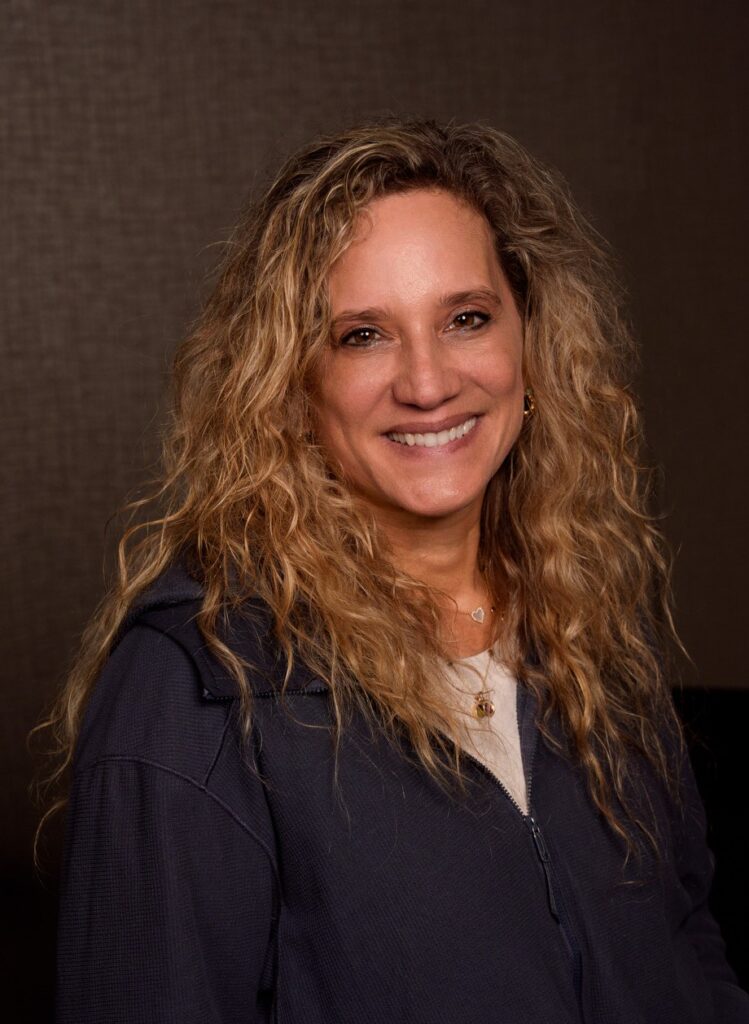
I recently went one-on-one with JC2 Ventures partner and Emmy Award-winning technologist Yvette Kanouff.
Adam: Thanks again for taking the time to share your advice. First things first, though, I am sure readers would love to learn more about you. How did you get here? What experiences, failures, setbacks, or challenges have been most instrumental to your growth?
Yvette: Thanks for having me, Adam. I always enjoy sharing insights and learning from our industry colleagues. I started my career in a deeply technical role. As a mathematician, I worked on radar algorithms for pattern recognition at what is now Lockheed Martin. It was fascinating work, but many of the great tools for coding and mathematics we have today did not exist, so all preprocessing, centroiding, and more had to be done from scratch. It was an excellent experience that gave me an appreciation for everything happening behind the scenes of today’s seemingly simple, easy-to-use products. While working as a mathematician, I realized very early on that I loved innovation and technology transitions. So instead of relying solely on existing methodologies, most of which were based on Fourier transforms, Gaussian noise reduction, and more, I decided to try new algorithms and techniques. Although sometimes frustrating (many longstanding algorithms remain incredibly effective, including those used in modern AI), a mixture of existing algorithms and new techniques proved to have good results.
After working in radar engineering, armed with math, programming, systems, and scripting skills, I went on to the media and cable industry. Few people had a computer at home, smartphones did not exist, and television was the main connected device in each household. So, my goal, alongside an amazing team of people and companies, was to make programming available on demand. It was incredibly innovative and transformational, but we had a lot to do. No metadata specs existed, digital encoding was still at MPEG-1, and the work required collaboration with everyone from movie studios to encoder and modulator companies. The outcome of this work helped lay the foundation for the DVD, content delivery networks (CDNs), MPEG transport, video on demand (VOD), streaming and more, and earned our teams multiple Engineering and Technology Emmy Awards. From there, I went into worldwide networking, helping lead and build some of the world’s largest and most complex networks. So many of today’s data centers, chipsets, software and hardware environments build on earlier innovations, from on-premises data centers to cloud infrastructure, neoclouds, AI data centers and connectivity.
My career has been fun, Adam. You ask what setbacks and challenges I’ve had. There have certainly been many, but I’ve never found it particularly useful to dwell on them. It’s not worth the time to list every failure or instance of skepticism and resistance to change. Those experiences only make us stronger. I’ve never stopped working on transformation and innovation, and I’ve made lifelong friends along the way. I’m also very fortunate to have received some wonderful awards and recognition, including multiple Emmy Awards, a Lifetime Achievement Emmy in Television Engineering and Technology, and recognition from Forbes 50 Over 50, the Cable Hall of Fame, NCTA Vanguard, Wonder Woman, and IEEE Engineer of the Year, among other industry honors. But those came years after the work and were not an expected outcome. I’ve had many fabulous ideas that never saw the light of day or received any awards, so although these honors are amazing and humbling, they were never the goal at the outset of the work.
Adam: What do you look for in companies you invest in? What are your best tips for investors and for entrepreneurs?
Yvette: We are quite specific about what we look for in companies. The most important factor is the CEO. What is their domain knowledge? Do they have the ability to recruit the best talent? Are they open to mentorship? Do they have strong customer relationships? The CEO relationship is key to us, and we have regular sessions with our CEOs, John Chambers, and various teams across the company. We spend a lot of time helping our startups succeed, and therefore the CEO relationship needs to be collaborative. We also look for companies that are thinking around corners and developing disruptive, market-changing solutions. Investing in something “better,” “cheaper,” or “more efficient” is great, but this is not what we look for. We want something that is going to be a market disruptor. Of course, we want our investments to have the ability to become number one or two in the market. Being one of many is not our goal. So, ultimately, we’re looking for market transformation with a differentiated solution and a great CEO.
As for tips for investors, this can be difficult to generalize. Some investors are seed-stage funders looking for great ideas, whereas others are looking for established success. I do think that a key factor is a focus on people. Great cultures make great companies, and a good culture can sustain a startup through tough times. Relationships are also important in establishing and retaining customers. A startup can have a superb product, but another company can outdo them with a mediocre product and great customer relationships and support. Customers want to know they can trust a company, so building that trust through both the product and the culture is important.
Adam: In your experience, what are the key steps to growing and scaling your business?
Yvette: I think these change depending on the stage of the company. So, I’ll start there. Knowing what stage you’re in and what it takes to reach the next stage is a good starting point. One mistake I have seen is companies becoming stagnant because they continue doing what worked yesterday, when those approaches may not be right for tomorrow. Obviously, finding the right market fit is critical. And closely related is having the right product. This is not just about an ideal customer profile (ICP) and minimum viable product (MVP). I’ve rarely seen a startup in which the original product idea was the final successful product. Being flexible, understanding your customers’ needs, recognizing what is working (and what is not working), and ensuring customer outcomes are what we all need to focus on. It’s easily said, but sometimes we can be proud of what we’ve built, reluctant to change a product, or simply not listening closely enough to the market, competition, and our customers. Having a sharp focus on product, customers, and their evolving needs is critical for a startup’s success.
Another important point is ease of use. We can get caught up in our own knowledge and create complexity. I’ve seen startups spend so much time trying to get a potential customer to understand the value of a product. A product needs a clear, easy-to-understand story and a straightforward implementation process. Having a short and effective proof of concept (POC) is more valuable than one might think. Long sales cycles, complicated setups, and delays in demonstrating value can bring a startup to its knees. I’ve focused a lot on culture, so why not mention it again – it’s that important. Keeping the right culture with a focus on fun, collaboration, doing the right thing, and embracing change is more worthwhile than I can articulate. Pricing is also a tricky topic. Both underpricing and overpricing can be tough. SaaS pricing models are facing increased scrutiny, but pricing based on tokens, usage, or outcomes brings its own challenges. Experiment with pricing early to find what customers value. Use your advisors and mentors wisely. Maintain financial discipline and be careful with capital. Remember: your customers, your relationships, and your ability to retain them are critical.
Adam: What are your best tips on the topics of sales, marketing, and branding?
Yvette: I’ve mentioned sales and relationships a lot in this interview. Strong relationships, customer retention, and delivering value are very important. There are some standard approaches to sales, such as defining a clear ICP and focusing on a sales funnel, then executing on it with sales development representatives (SDRs) and various roles throughout the funnel lifecycle. I don’t discourage this approach, but it’s very important to track not just the number of deals per stage, but also the time spent in each stage and the factors that affect each stage’s success. Only through detailed visibility and open-mindedness can we find out where things may be going wrong. Understanding and adjusting the product, branding and messaging, pricing, process frustrations, and more is critical for startups. I promise there will be many areas which need an overhaul or at least tweaking throughout the process of establishing a new product or entering a new market.
Marketing has transformed in recent years, and the key to branding and marketing is reaching the right people with the right message and having clear visibility into what’s working and what’s not. Marketing can have little success without the support of the broader organization. When a message doesn’t resonate, it may warrant internal discussion and action. The most successful marketing teams have a strong backing internally. Listen to what they’re learning. Those insights are valuable. I also think that knowing when to engage partners and how to enable and empower them is critical. The right partnerships, introduced at the right time, can make a meaningful difference. One last thing to mention here: Many companies pride themselves on being “sales-oriented” or “engineering-oriented.” My advice is to ensure strong collaboration and culture across the company. A company’s focus has to change, sometimes leaning more heavily into customer needs, security, finance, innovation, or more. The more connected teams are, and the more employees feel heard, the better a startup can adapt and grow.
Adam: What are the most important trends in technology that leaders should be aware of and understand? What should they understand about them?
Yvette: I have to say that the answer has changed throughout my entire career. There is never just one trend, but keeping an eye on all trends is absolutely critical. Business models, customer trends, technology shifts, governance, geopolitics, security and trust, compliance, strategy, capabilities – the list goes on. Is there a technology trend today that doesn’t have implications beyond technology itself? I think the most important thing leaders need to understand is that everything around us is shifting so quickly that we must remain open, educated, and aware – always. Look at what’s happening with the software development lifecycle (SDLC). The shift toward an AI-driven development lifecycle (AI-DLC) is well underway, with many companies still scrambling to get their arms around lifecycle control. If we don’t pay attention to changes in the market, technology, governance, and more, and if we aren’t prepared to adapt when needed, we risk allowing other companies to surpass us.
Adam: What do you believe are the defining qualities of an effective leader?
Yvette: There are many books written on this topic, and for good reason. I’ve always believed that a leader needs to deliver results and inspire followership, enabling others to achieve results as well. I believe strongly in culture, integrity, accountability, vision, nimbleness, kindness, learning quickly from failure, good communication, team success, customer success, and more. Instead of getting into a long discussion and stories for each, I’ll say that a leader needs to get results and have followership. Outside of that, ensuring the right culture fit is critical.
Adam: How can leaders and aspiring leaders take their leadership skills to the next level?
Yvette: Good question. I think this depends on your career level and situation. I spend a lot of time mentoring others, and one career challenge that I see aspiring leaders struggle with is “how to be seen.” Humble people don’t necessarily want to brag or show off their work, but they still want opportunities to stand out. This is where understanding your personal brand, learning how to engage with others, and building strong communications skills comes in. But one thing that has never led me wrong is to lift others up. By highlighting the work of your team, you elevate yourself too, but in a more meaningful way than simply promoting your own accomplishments. As you advance in your career, lifting others up becomes increasingly important, and it not only defines your own leadership – it creates a great culture, builds followership, and it is … well … fun.
Adam: What is the single best piece of advice you have ever received?
Yvette: Be yourself. I have always tried very hard to follow this wonderful advice. You can move up, succeed, make money, and achieve whatever goals you have, but it’s very hard to do so without being true to who you are. Sometimes there is great pressure to fit in, but never stop being true to yourself and your values.
Adam: Is there anything else you would like to share?
Yvette: I think there is a great need to give back. Of course, it’s important to focus on your own goals and your career, but every time you achieve a milestone, there is someone else you have the opportunity to help. This can be a child, an aspiring college student, a manager working to become a director, or a CEO working to become a board member. I am very grateful for what I have, and it’s my honor to be able to help others. I hope those who have achieved success recognize the importance of sharing what they’ve learned, not just through mentorship, but with true sponsorship by actively advocating for others and helping create opportunities for them to succeed. Thanks again for having me and for asking such engaging questions, Adam.