

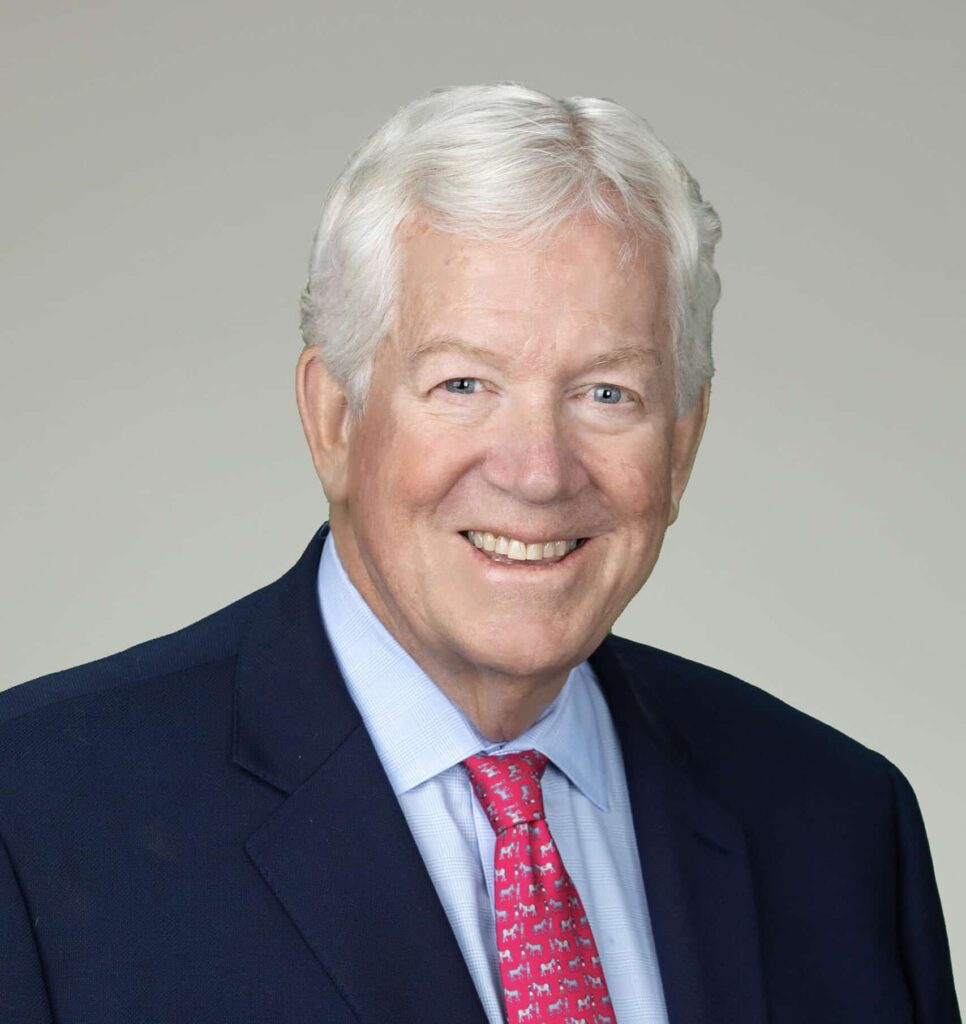
I recently went one-on-one with Jim Ellis. Jim was the CEO of Porsche Design and the dean of the USC Marshall School of Business and is the author of the new book A Journey of Insights.
Adam: 25 years ago today, you and I met, and we met in your classroom. It was the first class that I ever took in college. Now everyone knows how old I am. It was the first class I ever took as a college student, and I remember the first words that you told us. You said, “I have good news and bad news. The good news is this is going to be the best class that you are ever going to take. The bad news is this is going to be the best class that you are ever going to take, so it’s all downhill from here.” And you weren’t wrong.
Jim: It was a great experience for all of us, and we all grew together at the same time. It was wonderful.
Adam: What got you to that place? What got you to that moment, to that classroom?
Jim: When I was in about the 27th year of my business career, my dear pals at a Young Presidents Organization dinner said to me, “You need to do something more global.” And I said, “What does that mean? And do you make money when you do something global? What is global?” They said, “Go figure it out.” And they gave me 30 days to think about what I would do. The question they asked me was, “If you had a clean sheet of paper, what would you do for the next 25 years of your life?” Interestingly enough, at the time, I was just turning 50, and I said, “Well, I think I’d rather be a professional golfer, but I’m not going to make any money doing that, so I think I better change gears.”
They said, “We’re going to give you 30 days, and you come back and answer that question.” And if you think about it, that’s the kind of question you answer when you walk out of undergraduate school at age 22. It’s the same question. What are you going to do? You’ve got a clean sheet of paper. So I said to them, “Well, I really don’t have a clean sheet of paper because I’ve got a wife and five kids and mortgages and tuitions and all kinds of stuff. But if I had a clean sheet of paper, what I would do is take the 27 years of experiences I’d had in business, and I would share them with people who were going to go through the potholes and speed bumps that I’d gone through, such that maybe those people wouldn’t go through those same potholes and speed bumps. They could go around them. And I would share them in one or more of four ways: teach, speak, write, or consult.”
One of my friends just jumped up. He said, “Great, go do it.” I said, “Whoa, whoa, whoa, stop! I can’t teach. I don’t have a PhD, so I can teach at a high school, distributive education, and be a high school golf coach. I can speak, but what’s my topic? I was a retail guy. I was a marketing guy. What am I going to talk about? Who’s going to listen to that? They want to hear Deepak Chopra talk about East versus West existential whatever, or Stephen Covey and the Seven Habits of something or another, or watch Tony Robbins walking on hot coals. I don’t have a shtick like they did. Mine’s kind of boring. And then write? There are 66,000 books written every year. Who’s going to read my book? And consult? I don’t mean to denigrate anybody who’s listening, but consulting is for people who can’t do it. If you can do it, you do it, and if you can’t, you tell people how to do it.”
So I said, “I’m not going to do any of that stuff.” And they said, “No, you have until December to get it done, because that sounds like a very cool path.” And they put a lot of heat on me to do that. I went home that night, and I wasn’t going to do it. I told my wife about it. She said, “I think you ought to do that.” I said, “What’s that?” She said, “I don’t know. You’ll figure it out, but I think you’d enjoy it.”
The very next week, I was having breakfast with a guy, and one of the things that I’ve always done in my career is when somebody invites me to breakfast or lunch or a meeting, I’ll say yes if I can possibly make it happen. I start with yes. And I started with yes, and I said, “Okay, let’s have breakfast.” He said, “You know, USC is looking for a marketing professor.” I went through the whole thing about not having a PhD, and he said, “Yeah, but you have an MBA, and it’s all about teaching.” I said, “Well, I’ll go interview. Why not? Sure, I’ll go interview. That’d be kind of fun.”
So I went to USC and interviewed with three professors, which I didn’t quite understand. Why doesn’t the dean interview me? Why do professors interview me? But I found that that’s normal. The next day, the department chair called me and said, “You’re the only one they want to hire.” And I said, “What?” So in early 1997, I taught my first class and went from there, and it just was a rocket ship. I loved it. I loved being in the classroom. I loved being with young minds. I loved learning what they were thinking and where they were going and what they wanted to do. It kind of turned my whole life around. I found a passion that I really, really enjoyed and had an opportunity to help a lot of young people get their careers jump-started. So that’s kind of how I got there.
Adam: I love it, and I love the challenge that your group posed to you. We think about different moments in our lives. We were college students once, and we felt like we had the world ahead of us and we could do anything. But why can’t we do that at any moment in our lives? Why can’t we take ownership, take control, take a step back, and ask ourselves: What is holding us back? What’s stopping us from doing what we really want to do, from doing what we’re meant to do?
Jim: I think if you do that and you get yourself in the position where you’re doing exactly as you say, Adam, what you want to do, what you really feel like you’re passionate about, you’re going to do a better job, and it’s not going to be work. It’s just going to be fun. You’re going to enjoy it.
I never went to school one day saying, “Oh my God, I don’t want to go down here.” Every day, I was so excited to get there, as a professor and as a dean. It wasn’t a job. It was just plain fun. It took me until I was 50 years old to find my passion because I loved being a CEO of companies. That was fun. But as it turned out, I wasn’t as passionate about it as I was about academics and institutions and teaching young people, helping young people. Not even teaching, just helping them get jump-started in their own careers. And so it was a real treat for me to be able to do that. It was a pleasure. Loved it.
Adam: How can anyone, regardless of where they are in their life or where they are in their career, figure out what it is that they are truly most passionate about?
Jim: The thing that helped me there a lot was to have a group of friends sit around. I’ve done this a number of times with people, and I actually will take someone and say, “Okay, Adam, come on. You want to figure out what you’re passionate about. Take four or five of your friends. Let’s go have dinner with them, and I’m going to set the tone and say Adam needs to figure out where he wants to be in 20 years. You guys know him really well. Your agenda tonight at dinner is to listen to Adam talk about what he loves, and then give him feedback on what you’re hearing. Help guide him to think about where he could go to get this path started.”
I’ve done it a number of times. And I would say to these people, “This is your friend. Your agenda tonight is your friend. It’s not you. It’s your friend. Let’s not talk about how much money you’re going to make because the money will follow, and it follows all the time. If someone’s really passionate about something, the money will follow.” Start off that way, and then let’s see where it leads.
I think you just have to think about it as a blank sheet of paper. You can’t count the fact that you need to make X amount of dollars for rent and X amount of dollars for car payments. You can’t think about that. Not right now. Let’s just figure out, if I could do anything, what would I do? How would I get there? What’s the path I need to take? Do I need another degree? Do I need to go apprentice with somebody? Do I need to go to another part of the country or another part of the world to learn about it?
I had a student who came to me who had a passion for coffee. Coffee. What does that mean? He said, “I want to make the best coffee in the world.” And I said, “Okay. Then number one, you need to go where they grow the best beans in the world and find out how that works. How do the beans get roasted? How do the beans get shipped? How do the beans get transferred into coffee grounds to make the coffee? You’ve got to learn the whole process.” The guy’s actually done it. He’s not doing that as a career yet, but he will. And I think that’s the key: How do you really uncover your passion and everything that’s around it to make that into a career?
Adam: And when you think about the example of the last chapter of your professional career spent in academia, you’re spending an enormous amount of time on campus, whether it’s in the classroom, in office hours, or, when you were dean, sitting in your office and being outside of your office with all the stakeholders that you’re working with. You’re raising money, talking to students, talking to professors, talking to alumni. You’re out and about. This isn’t a job. This is a life, and you can’t do that unless you love it. You can’t do that unless you’re deeply, deeply passionate about it.
Jim: You’ve got to be really passionate about it because it consumes your time. As my wife would say, when we’d sit down and look at the calendar, we’d do calendars for a three-month period of time. I’ll never forget one time she said, “Man, this is great! Your October is going to be great.” I said, “What do you mean?” She said, “Well, you’re going to be home two nights in October for dinner.” I said, “Is that a record?” She said, “Yeah, that’s a record. The most you’re ever home now is one night a month.”
You just can’t think about it like that. You just have to pour everything you’ve got into it. I’d get up in the middle of the night with thoughts and try to get them written down or get them into my phone so that I’d remember them the next morning. Because invariably, you wake up and you have a brilliant idea, and if you don’t write it down or talk to your phone and say, “Hey, remember this for me,” you’re going to forget it when you wake up in the morning. But you’ve got to take advantage of ideas that you have and move forward. You just can’t dwell on the past. You can’t dwell on negativity. You’ve got to be positive in your thought process all the way down the road.
Adam: And I love the example of the student who is passionate about coffee. You’re not really sure what that even means, but if you have a passion about something, and in this case it’s coffee, you’re going to spend all of your waking hours diving deep into that passion. You’re going to figure out, well, what do I need to know? And it doesn’t feel like work. If you have a job and you’re punching the clock and you’re worrying about lunch and you’re worrying about when 5 o’clock or 6 o’clock is going to roll around, you’re not going to be great at it. But when you’re doing something that you love, when you’re doing something that you’re great at, when you’re doing something that you know allows you to make a positive impact in the lives of others, you can wake up first thing in the morning and jump out of bed. And the minute you hit the pillow, you’re excited to wake up the next morning and get at it the next day.
Jim: It’s exactly right. It’s a very free feeling that you have. One thing that taught me a little bit about it, I remember when I had a job, and I was in my boss’s office, and we were talking about five-year plans. I said, “Why do we even do five-year plans? The world changes so fast. Why do we have to do five-year plans? I mean, look at all these ones on your bookshelf. Have you ever looked at those five-year plans from five years ago? Of course not.”
I remember walking out of his office that day saying, “I don’t want his job.” And as soon as I knew I didn’t want my boss’s job, I knew it was time to leave. It was time to go. When you don’t want to continue progressing in your own career within that organization or that industry, it’s time to go. You’ve got to go figure out something else. And the sooner you make that decision, the better. The easier it is to leave.
I always said, don’t leave until you have another job, just because you could get out there and you don’t have much negotiating power. But in today’s world, people understand that, and they go, “You know what? I get it. You didn’t like what you were doing. It’s time to move on, and I’ve got an opportunity here that I want to present to you, and you may like it.”
So you’ve got to try and figure out: Who am I? What are my strengths? What are my weaknesses? And you have to be brutally honest with yourself. What am I good at? What am I not good at? And then, what could I do to satisfy my passion? Given those strengths and weaknesses, I may have to come up with a partner. I may have to find somebody who can help me. I’m not very good with numbers. I’ve got a great idea for a business, but I’m not good with numbers. I’ve got a great idea about how I can find money, but I don’t have a good idea about what the business should be. So there’s a lot of yin and yang here that you’ve got to figure out.
But number one is, who are you? Know yourself. I talk a lot about that in the book. Know thyself. There are people who were presented with the opportunity to run for president of the United States, and they said, “I don’t have the charisma to do that,” or, “I don’t want to expose my family to that kind of scrutiny.” And yet they had an opportunity to be asked. How cool is that? To be considered as someone who could be president of the United States, and then say, “I don’t have the charisma.” And I heard that from one guy. So you really have to understand yourself. And those guys really understood themselves very, very well, knowing full well that’s not what they wanted to do.
So many times, we start doing things we don’t want to do because we think we’re going to make a lot of money. Too many times, people graduating from school would say to me, “I want to be an investment banker.” Why? “So I can make a lot of money.” That’s the wrong idea. That’s what you don’t want to do. You want to be an investment banker because you want to help people put businesses together with money. You want to be able to bring people together in a manner that’s going to be successful for everybody, not so you can make more money. That’s the wrong answer.
Adam: I love the example that you shared of the person who you wrote about in your book, who was approached about running for president but realized that he would not have made a good president and he wouldn’t have enjoyed going down that road. I’ve seen that over and over and over in so many of the conversations that I’ve had with so many top leaders who I’ve had the opportunity to spend time with. A very recent example that jumps out to me: I was recently talking to a friend of mine who used to be the chief data scientist for a Fortune 50 company, and he left that job and wound up taking another job. Long story short, he was the CEO of a tech startup, and he hated that role. He hated being a CEO of a tech startup, and he didn’t realize how much he hated it until he was the CEO of the tech startup. And now he is the CTO. He’s the chief technology officer. He spends his time building tech, creating product, and working on the vision. But he’s not the CEO, and he has a CEO who he loves, and he loves his job exponentially more than he did when he was CEO. I’ve had him come in and speak to my students, and he’s told my students the last thing you want to do is get a job because of the title, get a job because it sounds prestigious, get a job because you think that’s what you need to have because other people are telling you that’s what you should have. To your point, Jim, do what’s right for you. Do what’s best for you. Not what other people are telling you to do, not what you think you need to do because that’s going to check some box or scratch some external itch. Do what is right for you.
Jim: It’s exactly right, and it takes a lot of guts to step down from a CEO job to be the CTO and say, “I’m not cut out to be that number one guy. But in reality, there’s somebody here who’s better than I am.” How great is that for him to have been able to do that, and then to say to the CEO, “I’m here to help you. My job is to do the CTO work. You’ve got to deal with all the stuff that I didn’t enjoy.” You’re going to be happier when you can do that. You’ll be a lot happier when you can do that.
We weren’t all cut out to be leaders. There are a lot of people who really would be better as followers than they would be as leaders. And you’ve got to understand yourself. Who are you? What do you like to do? And once you figure that out, boy, it’s a whole lot easier to get going on that path. It’s great.
So know yourself. Get on that path. Understand that there’s going to be risks, going to be rewards. What are the rewards that you’re going to get? Are those rewards that you really want? If the reward is money and you’re not so hung up about money, that’s fine, because a lot of people don’t take a job for money. They want to go work with animals, or they want to go work with art, or whatever. Great, terrific. Do it. We need that. And again, there’s a freedom that comes with thinking that way.
Adam: You alluded to the fact that there are two paths that one can pursue and be really successful pursuing either of those paths professionally. One path is the individual contributor path, where you’re not leading people, you’re not managing people, you’re managing yourself, and you’re responsible for producing at a very high level. But you don’t have to worry about having to deal with other people beyond your actual output. And then the other path is the path of a leader. How do you figure out which of those two paths is right for you?
Jim: That’s a tough one because, in many cases, you’re not going to know until you get in the seat. You won’t really understand whether you’re a good leader or not until you get into that position. And many times, people strive to be in a leadership position, but they don’t really think about what it entails. Really, what is leadership? You need to be a great role model. You need to be a great listener. Leaders are great listeners. Are you a good listener? Are you a good learner? Because leaders are good learners.
Their job is not just to take an organization and move forward. Their job is to look out five years, 10 years, 20 years, 50 years. Where should this organization be positioned, and what’s the vision I have as the leader for this organization? You may not have that kind of vision. That may not be who you are or what you want to do. And part of the problem is you have to then motivate people because leaders take you places you never thought you were going to go. They have the ability to do that. Can you do that? And if you can’t, step aside and let somebody who can do that and has an ability to be visionary do it.
They used to use the example of Bobby Fischer. He was a great chess player. Why was Bobby Fischer a great chess player? Because he could see 30 moves down the road. He wasn’t just looking at the very next move. He was thinking, “What are the ramifications of these moves that I’m about to make 30 moves down the road? Can I win this game?” And a good visionary can understand that and can see down the path that others can’t see. And we know we’ve seen these leaders. We read about them. We hear about them. Some of them are very, very different than we are. Is that something we want to do?
I remember when I was in my role as dean, they always used to talk about baseball and the guy who was hitting for a really high batting average. How are you doing that? And he said, “I can see the seams of the fastball as it’s coming at me.” I had that vision one night for myself in my dean’s job. I said, “I can see where we’re going. The seams of that fastball have all of a sudden slowed down, and I can see them so clearly. I know exactly where this school needs to go, and now my job is to get it there.”
And that was a real eye-opening experience. That one night, I woke up the next morning and thought, “I got it. I know where we’re going.” And it’s hard to have that kind of vision. Many people don’t have the ability to do it. I was lucky. I could see it, but it took me a while too. It wasn’t something that just came naturally. I had to work at it, and you make some mistakes, and there are bumps along the road, and there’s going to be failures. There’s no question about that. But once you can see clearly where you want to go, then your job is to get your organization to help you go there.
Adam: Ted Williams supposedly was able to see the seams of the fastball, and when I was in high school, I couldn’t even see whether it was a fastball. I could barely even see a changeup, so I struggled at the plate. I was good in the field, but at the plate, man, I just tried to hope and pray the pitcher threw four pitches outside of the strike zone, and if one of them hit me, even better.
Jim: Yeah, I couldn’t hit a curveball, so it was fine. I got it. But when you can see that ball coming and it looks like it’s coming in slow motion, that vision that you have for where you’re going to put it is exactly the kind of vision that leaders have when they’re running organizations. And you can see them, you listen to them talk, and you can just hear them exude that vision that they have for their organization, which is great.
Adam: And the second half of that equation: the best leaders have great vision. The best leaders are able to take great vision and translate it, communicate it in a way that is actionable, in a way that others are inspired to act on.
Jim: Absolutely right. That’s where inspiration comes from. And many times, the inspiration, interestingly enough, comes when the leader sits down with someone at the receptionist desk or the warehouse guy who’s unloading the boxcars and says, “What can we do better?” And that person tells them, “Well, we could do this better, and we could do that. Our system here is bad, and we’re not handling our customers very well here.”
All of a sudden, that starts to help the leader gel his vision better because his people have been asked and included in the process. What should we be doing? Companies change overnight because of that. And a good leader knows he can communicate, but he also needs to have them communicate with him. So it’s got to be a two-way street of communication.
Adam: Something that you brought up earlier on in our conversation, something that is a key theme of your book and one of the most important characteristics among the very best leaders, is listening. What can anyone do to become a better listener?
Jim: There’s a test that I had to take as a final exam when I was in business school, where I had to call somebody in who I knew, but not particularly well, and spend 45 minutes with him. I was allowed to ask one question in 45 minutes. The only other thing I could do was say, “Oh,” “Ah,” “Mmm,” or repeat the last phrase he said.
So I called this guy in, and he came in. I said, “Tell me about you.” That was my only question. I’ve got 45 minutes where I can’t talk about me at all. And the problem we have when we’re talking to people is we’ll say, “How was your party last night?” And you’re telling me about your party. I can’t wait to tell you that mine was better. I’m thinking only about mine because you’re telling me about yours. I’m going, “Wait, mine was way better.” That’s not listening. Listening is just shutting off thinking about yourself and listening to what the other person is saying to you, and a good listener does that.
So after 45 minutes of this with this guy, and it was a final exam, I was sweating. I said, “I’ve got to even get a drink of water.” And my classmate was there because he was grading my listening. Did I do a good job? Was I an active listener? And this man turned to him and said, “He’s really a great guy, isn’t he?” He didn’t know anything about me. I was asking him questions about himself and having him talk about himself. And we like to talk about ourselves. And the more you actively listen, the more you learn.
Well, I learned so much about this guy. There were times I wanted to come right across the table, grab him by the collar, and say, “You’ve got to get help. You need to get help, pal. You’ve got to get help.” He had a drinking problem. He had a drug problem. He had girlfriend problems. He had job problems. But I couldn’t do that. My job was merely to listen. And I think at the end, he heard himself say, “I have a drinking problem. I have a drug problem.” I think ultimately he cleaned himself up because he finally admitted it. My job was just to listen.
So practicing listening is something that’s really important, and to do that is hard. It’s not easy because you have to actively listen, not talk, not think about yourself, but put yourself in that person’s shoes. Listen to what he or she has to say. It’s really hard.
Adam: You shared so much there that I love. The very best mentors, the very best leaders, have a lot of wisdom that they can share. That’s one of the reasons why they’re in that position to mentor you, to lead you. But what makes a great mentor a great mentor, what makes a great leader a great leader, isn’t their proclivity to step in and tell you what to do, because they don’t do that. It’s their proclivity to step back and listen and give you the space, give you the room, to allow you to get to a place where you can figure out what is right for you. The best mentors don’t tell you what to do. They teach you how to think. And how do they do that? By getting to know you, by listening to you. The best leaders don’t walk into a room intent on speaking. They don’t walk into a room intent on demonstrating how much they know, proving themselves. The best leaders walk into a room intent on learning. And how do you learn? By listening.
Jim: Exactly right. You’re so right in that you’ve got to figure out what all the impediments are in my way to get this vision implemented, and the only way I can find out those impediments is listening to people talk about them, so I can think to myself, “Okay, that’s an issue we’ve got to work on. That one we can get through. That one we can’t.” And you have me listening to these people to make yourself a better leader.
You do that with mentors. Go to your mentor and just say, “I need to be a better leader.” Let your mentor ask you questions about what you think a leader is, what you think a leader can do, what you could do as a leader, what job you want, where you want to go, what you want to do. And let that person, your mentee, talk to you. All of a sudden, in many cases, they talk themselves into their own position, as opposed to you ever telling them what to do.
The last thing you should do in those situations is say, “You should.” You might want to say, “Have you thought about this? Have you considered this?” And let them then ruminate on that and think about it. A good mentor doesn’t say, “You know, you really should be a blank.” How do you know that? That’s for them to figure out. So you’ve got to help them figure that out. Really important.
And it’s important to have mentors throughout your life, people you talk to, people you can sit with and say, “Hey, I’m thinking about this. What do you think about this? Is this a good idea?” Using other people as sounding boards, I think it’s so important to have someone that you trust to use as a sounding board for your ideas or your thoughts or your issues. We all have problems. There’s got to be somebody who can help us work our way through those problems.
Adam: And zeroing in on the point that you shared and what we were talking about, just how important it is for a mentor not to tell their mentee, “Do this. Do that.” If you tell your mentee to do something and they do it and it goes poorly, then they’re going to blame you, as they should. And if you tell your mentee to do something and it goes well, well, they didn’t learn anything because they had no ownership in the process. They were just following your direction.
Jim: Exactly right. You have to let them find their own answers, help them come to their own conclusions, and they’re going to take ownership of those conclusions without question. And then they will take ownership of their direction, and that’s really where you want to help.
Adam: How can anyone find a great mentor? How can anyone cultivate a successful mentor-mentee relationship?
Jim: That’s a great question. The first answer I will give you is you don’t walk up to someone and say, “Hey, will you be my mentor?” That doesn’t work and never happens. Basically, it’s building relationships with someone that you trust, and trust becomes a really, really important piece of a mentor-mentee relationship. You have to trust the mentor, and the mentor has to trust the mentee, that he’s telling the truth, she’s telling the truth. There has to be that kind of trust, and it takes time.
You don’t just say, “I’m going to schedule a 10 o’clock appointment and we can discuss you being my mentor.” That isn’t going to work. In my case, it was students who would come in to see me. “Can I come and see you next week?” Sure, come anytime you want. And the more we talked, the more I understood them, the more I could help and say, “Have you thought about this? Have you thought about that?”
It doesn’t happen in the first meeting. Never happens in the first meeting. And in many cases, that’s hard because someone you want to mentor you who is a leader of an organization doesn’t have a whole lot of time. But once they see that you’re trusting their judgment, they’re going to make the time for you if they feel that they can help you, and they feel you can really give something back to them. In many cases, you can. So it takes time to build those relationships. It doesn’t happen overnight.
Adam: A key theme throughout this conversation is the importance of building relationships. What are the keys to building successful relationships?
Jim: Number one is trust. Number two is honesty. Number three is giving of your time. A mentor gives time. Someone who’s building a relationship, it just takes time. Blind dates take longer than one time. You’ve got to build a relationship. And what are some of the pluses and minuses of me versus you, and how do we mesh? How do we view the world? Do we see it differently? That takes time to determine.
Whenever anybody would come into my office, I would just ask them, “Tell me about you. Where did you come from? What kind of business was your dad or your mom in? What did they do? What did you learn from that? What did you not like in terms of what they did?” And many times people say, “I want to find a balance in my work and personal life.”
I always felt I was out of balance, and that wasn’t so good. But that was just because of who I was. In many cases, you can’t go looking for balance because you’re going to get passionate about something, and you’re going to be totally out of balance.
So I think that the more you’re honest and trustworthy and trusting, the better off you’re going to be in any kind of relationship. And the mentors will see that. They’ll see that you are not trying to take advantage of them in any way. You’re just trying to build a relationship, and you’re trying to get their help, and that’s really important.
And people are willing to help those behind them, more willing than most people would ever guess, if they have the time. Time’s an important piece of this whole thing because it does take time. But if they see that, they’re going to give their time if you’re willing to give your time to talk a little bit about what you’re trying to do.
Adam: You brought up the word balance, and you brought it up within the context of work-life balance. But I actually want to use that word and take it in a different direction, which is when you were working at USC, and you’ve had a number of different roles at USC, but you were the dean of USC’s business school for over a decade, you had to balance all kinds of competing relationships, all kinds of competing interests. Stakeholders wanted this thing, which conflicted with the interest of that stakeholder who wanted that thing. You had to deal with professors. You had to deal with alumni. You had to deal with students, with donors. You name it. Administration. You’re dealing with people above you, below you, to the left of you, to the right of you. How, as a leader, do you navigate the inevitability of managing all of these competing demands among competing stakeholders?
Jim: Well, that’s a great question because time is really, really important. Your time is important, and you need to know what you’re trying to accomplish and where those people that you’re talking about, the stakeholders, can help you. In the case of donors, that took a lot of time to build relationships. On the other hand, I needed to raise money because I needed to put programs in place that our students could take advantage of. Therefore, I had to spend a lot of time trying to build those relationships.
Professors used to say to me, “How much money did you raise today?” I’d go, “Hey, I’m not walking around with my hand out. Okay, I’ve got to tell the story.” What’s the story? What’s the vision that I have for the institution? And I’d have to do the same thing with the people above me, the people below me, the people on the left and the right, as you say.
I would tell students that, “Look, I want this to be the best business school anywhere.” And I many times would say, “You’re getting a better education than they get at Stanford, at Harvard, at a lot of places. Sure, they have good names. That’s great, but you’re getting a way better education because yours is a lot more practical.” And that was important to me, that I would bring in the real world as well as the theoretical world.
And I had to convince people that what we were trying to do at USC Marshall was really the best thing for them, and it was the best thing for the university. It was the best thing for the alumni. All of a sudden, I want to make your degree worth that much more. And that was my job, to try and make it worth that much more, so you would contribute back to the school in terms of your time with students, with graduates, and in terms of your money.
And many times, as a young person, you have way more time than money. As an older person, you have way more money than time. So there are a lot of different opportunities here, but it did take time. And there’s only 24 hours in a day, so you’ve got to prioritize how you spend that time. And you would gently have to say, “You know, I’d really love nothing more than to have lunch with you, but I can’t. I’ve got to do this.” And people would understand that. As a leader, you have to prioritize your time. You’ve got to figure out a way to prioritize it.
And it was funny because my assistant, who was just absolutely incredible, I couldn’t have done the job without her. She would many times say to me, “I’ve got to quit scheduling you. I can’t do this anymore. You don’t live up to the schedule. Invariably, you’re running 10 minutes late because you ran into a student walking across campus who stopped you and said, ‘Hey, could you help me on this?'” I mean, yes, that happened a lot. Or I’d be late getting away for a lunch date, and I’d say, “Would you call and tell them I’m running 10 minutes late?” “I know, I already did.” She would understand that.
And there were times when she’d come in and say, “Okay, I quit. I’m not doing your calendar anymore because you’re trying to cram too much in.” And then she came in one Monday morning, and she said, “I feel much better about your calendar.” I said, “Why?” She said, “Well, I went to the Ronald Reagan Presidential Library, and there was a replica of the Oval Office of President Reagan, and there was his calendar, and he had an appointment every three minutes. You only have an appointment every 15 minutes. I feel much better now.” And she said, “You just have to help me keep you to that 15 minutes.” I said, “Okay, I’ll promise you to do that, and we won’t ever get to three minutes.”
But she felt much better that she could at least deal with a calendar like that as long as I lived with it. But time is really something that can get away from you if you don’t watch it.
Adam: How do you keep your meetings to a place where they are efficient yet effective?
Jim: I think what you have to do early on is, when you schedule a meeting, say, “Look, I have a hard stop in 30 minutes. I have a hard stop in an hour,” so that you set the expectations right away that whatever we’re going to talk about, and I don’t necessarily know why you’re coming in to talk to me, I’ve only got 30 minutes, or I’ve only got 60 minutes, whatever it might be.
Once you set the expectations, then the other person knows, “I’ve got to get my story out. I’ve got to get my ask out. I’ve got to get it out. We don’t have an endless amount of time here.” And in some cases, we never get to it, and they go, “Wait, I need another 10 minutes.” I go, “I’ve got to run, but can we reschedule and let’s pick that up another time?”
And they may have the same thing. I mean, I’m trying to raise money. My day’s wide open. I want to keep talking to you until you say, “Yes, I’ll give you the money.” But they say, “I’ve got time issues,” and you have to be respectful of that. And so we need to set our expectations, and then we need to live within those expectations.
Adam: What about situations where you’re dealing with stakeholders who have opposing interests? So a student or student group might want this, and alumni might want that, or donors might want this, and professors might want that, for example.
Jim: Well, it happens a lot. There are times when donors would come in and they’d want to set up a program. “I think you should do an undergraduate concentration in something.” And I’d go, “You know, that just doesn’t fit where we’re trying to go.” “I’ll give you some money so you can put that program in place.” But if it doesn’t fit the vision, I’m not going to take the money from you. Just because you’re going to give me some money to set up a program doesn’t necessarily mean that we’re going to do it, because it has to fit the vision, and you’ve got to make sure that’s the case.
Again, that’s where the clarity of your own vision comes into play. You know where you’re trying to go. You know how you’re trying to get there. Now you need to find those people who will help you get to that point.
If you use your example of student protesters, you’ve got to sit and listen to what they have to say. And at the end of the protest, they all could be sitting in your office protesting, and you go, “You know, guys, I have a wife and kids at home who are waiting for me for dinner. I’ve got to go. Is that okay? We’ll pick this up later.” And you be respectful. But at the same time, they’ve got to be respectful that you’ve got other parts of your life you’ve got to attend to.
And again, it’s great communication. You just have to be a good communicator. You don’t want to get into an adversarial situation. You want to be listening to what they want, and you want them to hopefully be listening to what you want, and see if you can come to some kind of mutual agreement. It doesn’t always happen, but you’ve got to be able to take the time to make that happen if you can.
Adam: You brought something up which is really interesting. One of the most underrated skills among the most successful leaders, and this is something that I share all the time, is the ability to say no. We, as leaders, are likely in a leadership role because we like people. We like being around people. If you don’t like people, you’re probably not going to be in a leadership position for very long. You’re certainly not going to be a successful leader. So there’s this selection bias, in a sense, that you’re leading people because you like people. And when you like people, you’re going to be predisposed to want to say yes to people. But when you say yes all the time, as you brought up, you’re never going to be successful in accomplishing whatever it is you want to accomplish. And the most successful leaders, at some point along the way, learn how to say no. But how do you say no? There are different ways of saying no. You can say no and completely piss off the person who you’re saying no to, or you can say no and the person across the table from you can be friends with you and can actually understand you better. And that no can actually be a source of taking that relationship to the next level if it’s communicated in the right way.
Jim: So my problem is I would always start with yes, and I would explain that I’m going to start with yes. I’m going to see if this is something that is feasible within the constraints that my vision or my institution has set, or I’ve set as my own vision, and let’s talk about it. If I get to no, I’m going to tell you it doesn’t work. But I will start with yes because I want to be open-minded and listen to what you have to say.
And many times people would come with these just outlandish propositions. And yet, on the other hand, if we listened and talked about it and communicated, we got to a conclusion that maybe this would work. We might be able to do this.
One of my great examples was when we had been doing really well sending students abroad, and I remember saying to our key academics, “What does globalization 2.0 look like? Do we send them abroad for a semester, for summer? What do we do?” And I said, “Why don’t you guys come up with something? Help me out with an idea that is global in thought, that when I go to a donor and say, ‘Here’s what we’re trying to do,’ the very first words out of their mouth are, ‘Oh wow!'” And I said, “Give me a wow. Take your time, guys.”
Well, the very next morning, the senior academic in the business school comes in. He says, “Okay, I’ve got your ‘Oh wow!'” I said, “You’ve got what?” He says, “Yeah, I’ve got it. Let me explain it to you.” He had been having a barbecue with a former colleague of his. They’d been students together at the University of Chicago, and he says, “I think what we ought to do is have a degree-granting program where you spend your freshman year at USC studying business. Your sophomore year at a university in Asia. We’ll pick one. Hong Kong University of Science and Technology is a great institution. Let’s do that. Your junior year, you’re going to spend at Bocconi University in Milan, Italy. Your senior year, you’re going to be able to go to any one of those three institutions. You pick it. And at the end of those four years, you will have spent time in three universities on three continents, and by the way, you’re going to get three degrees, one from each of those universities.”
And I listened to that, and the very first thing I said was, “Oh wow. Yeah, we’ve got it.” It took three years to institute that. We were the only ones that ever did it, and it was a great idea that could have been shelved very easily. There were so many impediments and speed bumps and potholes in the way. For example, the country of Italy required that every college student in Italy had to take a class on the economics of Italy. Well, that’s not exactly a class. That’s about a 10-minute discussion, and we had to get that waived, and we did. We got it waived. And there were some requirements that China had with Hong Kong. We got those waived.
And all of a sudden, you’ve got 45 students every year signing up for this incredible program where you’re studying in three different parts of the world. And the job offers that came into these students were unbelievable from multinational corporations because, in many cases, people don’t want to move. Well, these kids had already proven that they would go study in Hong Kong and then go study in Italy and then study in the United States. They’d already proven that, so they didn’t have to tell someone, “Well, I’ll move.” They already proved they would move. So it was a program that we started with yes, and we made it happen, and it was a huge success, and has been.
Or a master’s in business for veterans, for all these vets coming out of Iraq and Afghanistan and all the wartime situations, but they weren’t prepared for a job. We helped them get a master’s in business that was specifically tailored to them, and they are huge successes in the things they’ve done. They became entrepreneurs. They didn’t think they had an entrepreneurial bone in their body, and they became entrepreneurs. It was great.
So kind of starting with yes, then see if you can get creative to stay with yes. Or if it doesn’t work, get rid of it. I was an old retail buyer. You learn something in retailing very easily when you’re a buyer. If it doesn’t sell, mark it down and get rid of it. Well, you can do the same thing with a degree-granting program. If people didn’t sign up for it, get rid of it. Shelve it. It’s done.
USC had a situation where there were nine students studying German, only nine majoring in German. At some point in time, you’ve got to acknowledge we don’t need a German department. We don’t need to be spending money on professors teaching German if there aren’t students signing up for that. How many students will sign up for AI versus German? A lot. So let’s go. We’ve got to start doing degrees on AI, degrees on data analytics, all the important things that are taking place in business. We have to have our students trained and ready to go in those different environments.
So you start with yes, and then you think about it. You might get to no, and it’s fine because you can’t afford everything. You can’t afford to do everything, and you don’t have time, and it doesn’t fit your vision. Then you gracefully say, “That just doesn’t fit what we’re trying to do. That may be good somewhere else, but it just isn’t good for what we’re trying to achieve.” You just have to gracefully say no. And ultimately, if you explain it properly, what your vision is, they’ll go, “Okay, I get it. I don’t want to invest in something you’re not going to do.” You’ve got to let them down gently, but explain it.
Adam: What are your best tips on the topics of marketing and branding?
Jim: Well, the key is, and I spent a number of years, as you mentioned way earlier, with Porsche Design. At that point, Porsche was the strongest brand name in the world, and it was a very, very strong brand. Why? Because the product had integrity. It had quality. It was creative. They did things that others didn’t do, in many cases. Really important.
And I think in building a brand, it’s all about putting that central integrity in there and the quality into the product or the service that you provide. That’s very, very important. And the same thing with marketing. You’re trying to build trust with your customer. Don’t tell them you’re going to do something you can’t do. Don’t tell them your product does something that it can’t do. Be very honest and forthright with what you’re telling them, and if it’s something that you can’t live up to, don’t talk about it. Do not say something you can’t live up to in terms of what you can deliver. That’s really important in terms of branding.
Adam: You’ve taught, you’ve led, you’ve influenced generations of students and students from across different generations. And a topic top of mind for many people in today’s workplace is generational leadership. How do we work with individuals across different generations? We have people of all ages in the same workplace. What advice do you have? What have you learned? What can you share?
Jim: You’re right. Generational leadership is really important. Generations change, and one of the things that we have to remember is kind of the way we were when we were 25 years old, and what were the things that we were involved in? We thought we ruled the world. And then you look at 25-year-olds today, and you go, “Well, no, they’re not really ruling the world.” Guess what? Listen to what they have to say.
I have such a firm belief that the success of our country and our world is really on the shoulders of the 25 and 30-year-olds today. They’re going to be fine. They’re smarter than we were. They’re faster than we were. They’re more creative. Let them expand what they’re trying to do. Let them really teach what they’re thinking, just as you teach in your generation or your dad’s generation or whatever. It’s really important that we let everybody work to their strengths and their creativity, and the younger generation’s got a lot to teach us old guys.