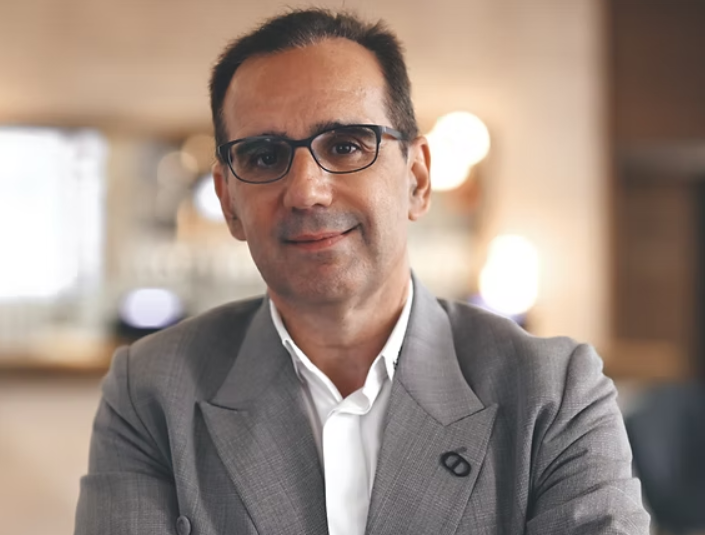


I recently went one-on-one with Joann DiGennaro, co-founder and President of The Center for Excellence in Education (CEE).
Adam: Thanks again for taking the time to share your advice. First things first, though, I am sure readers would love to learn more about you. How did you get here? What experiences, failures, setbacks, or challenges have been most instrumental to your growth?
Joann: Admiral Rickover presented me with an opportunity I could not refuse when he asked me to help him establish a foundation dedicated to nurturing excellence and leadership in young STEM scholars. Saying yes to him was a turning point in my life. Working with the longest-serving officer in U.S. Navy history and a pioneer in civilian nuclear power was an incredible experience.
Rickover was a vociferous reader with a wide range of interests, from poetry and biographies to the science of seashells. He had a passion for learning and a keen eye for detail, which set a high standard for excellence in everything he did. I can’t count the reviews and amount of editing he did on my work. He prioritized subject and verb in a document without getting bogged down in flowery language or excessive use of adjectives.
Rickover was an extremely principled leader and a fierce believer in creating a better world through education. Working beside a man like that doesn’t just teach you the skills you need; it also has a lasting impact on your own values and approach to life.
The biggest challenge was when he passed in 1986. I had co-founded an organization with one of the most consequential leaders of the 20th century. At the time, CEE was relatively new and still proving itself. The Admiral had been the magnet for talent, for credibility, and for attention. When he was gone, the mission didn’t change, but the weight of carrying it landed on my shoulders and on a small organization that many people expected to fade away. Funding was an issue because all CEE programs were established free to participants.
I stayed true to Rickover’s principles: honesty, grit, insistence on excellence, and a deep love of country. This experience was pivotal to my personal growth.
Adam: What are the best leadership lessons you have learned from leading a non-profit organization? What are your best tips for fellow leaders of non-profit organizations?
Joann: Leading a nonprofit is very driven by the bottom line, because we are doing consequential work without the resources of the private sector and the authority that government carries.
CEE has had three U.S. presidents on our Board. I’ve negotiated educational science programs with 56 nations, built partnerships with institutions like MIT and Harvard, and raised the money required to keep our educational programs vibrant and growing. It happened because I could articulate with total conviction why our work mattered to America’s future. That’s a lesson that is relevant for any non-profit organization leader. A nonprofit is still a business at its core, no matter its mission or values. Without adequate funding, there can be no future.
Adam: What are the best lessons you learned from your time spent with Admiral Rickover?
Joann: I knew Admiral Rickover as few people did. He was the longest-serving officer in U.S. Navy history with 63 years of active duty and was the father of both the nuclear Navy and civilian nuclear power. However, to me and our team at CEE, he is the founder of our Research Science Institute (RSI) at MIT, which is nationally and internationally recognized; our USA Biolympiad program; and our two programs for underresourced students and schools.
The most important things I learned from him are principles that I have tried to live by for over 40 years:
- Insist on excellence and mean it. The Admiral had zero tolerance for “good enough.” He believed that anything worth doing was worth doing to the absolute highest standard, and he held himself to that bar before he held anyone else to it.
- Honesty is non-negotiable. Rickover was straightforward and sometimes uncomfortably direct. He had no patience for ego, pretense, or people who told him what he wanted to hear.
- Science and Technology are crucial for America’s future, and investing in them is essential. Admiral Rickover was concerned that the American education system was failing future generations. He believed that nurturing young scholars in science and technology was vital for the U.S. to remain a global leader. That is why we founded CEE together in 1983, and it’s the reason I’m still involved today. I strongly believe that nurturing young minds in these fields is key to the country’s success.
- Grit outlasts talent. Rickover is the embodiment of the American Dream, in which hard work and perseverance can take you to the top. He succeeded because he refused to quit and never compromised on his values. He didn’t let other people’s low expectations define him. That is the lesson I most want our students at RSI and USABO to take with them: with grit and determination, they can overcome any obstacles and achieve their goals.
- Surround yourself with people who will tell you the truth. Rickover interviewed every officer who entered the nuclear program because he would not let anyone else control the standard. He taught me to protect people with loyalty and to listen to the ones who are brave enough to disagree with you.
Adam: In your experience, what are the defining qualities of an effective leader?
Joann: Effective leadership is honesty, persistence, grit, insistence on excellence, and the courage to act on what you know is right. You cannot lead without being honest with the people who are following you. And to be successful, a leader must demand and reward persistence and the highest standards.
Adam: How can leaders and aspiring leaders take their leadership skills to the next level?
Joann: I care about this issue deeply because developing leaders has been my life’s work. I didn’t set out to be in education; my goal was to own the property Bergdorf sits on and become a financial guru. I would tell any aspiring leader who wants to make it to the next level that it is never enough to be “good enough.” Admiral Rickover held himself to incredibly high standards before expecting the same from others. Leaders who want to grow must start with their own drive and accountability. Ask yourself this tough question: “Am I accepting in myself what I would not accept from the people I lead?’ If the answer is yes, then that’s where you must make changes. Excellence begins at the top. It begins with you.
Adam: What is the future of work and what are the keys to excelling in it?
Joann: The future of work is all about science, technology, engineering, and math (STEM). Over the next 50 years, the things that will really matter are how we manage energy, health, artificial intelligence, national security, climate, and space exploration. Those leading the charge will be people who understand science, are driven to succeed, and have earned their leadership positions through meritocracy. They are the ones who can work towards a common goal with passion, dedication, and ability. And they believe that “A no is a delayed yes.”
This is the future that the admiral and I saw coming 43 years ago when we founded the CEE, and it’s the one we’re still preparing young leaders to meet!
Adam: What are your three best tips applicable to entrepreneurs, executives, and civic leaders?
Joann: That’s a wonderful question. Entrepreneurs, executives, and civic leaders are the audiences I think about most. They’re the individuals who will impact our country and future generations. They’re the ones who most need the lessons Admiral Rickover instilled:
Insist on excellence and start with yourself. Rickover had zero tolerance for being “good enough,” and he held himself to that bar before he ever held an officer or a young scholar to it. Excellence begins with you. For entrepreneurs and corporate executives, it means offering a product or service that is more than just okay. It means creating something that you are proud to put your name on. For civic leaders, it means understanding that the work you do – public safety, education, infrastructure, defense – has stakes that outlast your term. There is no “good enough” when the consequences fall on future generations. Insisting on excellence isn’t just a personal goal; it is a responsibility that leaders have to their communities.
Build a culture where people will tell you the truth… and protect the people who do. Rickover personally interviewed every officer who entered the nuclear Navy. He wanted to make sure everyone held his high standards. The founder of a startup who surrounds himself with only with people who agree is potentially leading the organization over a cliff it never saw coming. Hire the person who will disagree with you… then, thank them! This is also true for big companies. Leaders must cultivate people who will tell them the hard truths about the market, their products, and themselves. A leader who has the only voice in the room has stopped learning. For community leaders, this can be even harder. They face contrasting pressures between what their bosses want to hear versus the real experiences of the people they serve. So, find people of integrity, listen to them, and make sure they feel safe speaking the truth. That’s how to avoid big mistakes that happen when leaders hear only their own echo.
Attach yourself to a mission bigger than yourself. Every leader in America should remember this. For me, it’s the reason I’m still at CEE after 43 years: the mission is bigger than I am. When leaders get burned out, it’s often because they were only in it for themselves. But the ones who endure and really make a lasting impact are the ones who are working towards something much larger than personal goals.
Adam: What is the single best piece of advice you have ever received?
Joann: Insisting on excellence is an act of respect, not a punishment. Some people thought Admiral Rickover was too tough, but what I realized that others perhaps did not was that he respected the people under him too much to let them settle for less than they were capable of. He held them to the highest standard because he believed in them. He knew that lowering the bar to make someone comfortable is the opposite of leadership; it’s abandonment dressed up as kindness.
Adam: What can anyone do to pay it forward?
Joann: Admiral Rickover presented me with an opportunity 43 years ago to invest in the future of this country. I have devoted my life to ensuring that opportunities in STEM fields reach as many young people as possible. You don’t have to be the head of an education foundation to do this – anyone can! Find a young person with ability and hunger – in your office, your neighborhood, or your family – and really invest in them. I’m not talking about just responding to a LinkedIn message, grabbing a cup of coffee, or scheduling one meeting. Open a door. Introduce them to people who can help them. Write a letter on their behalf. Be willing to tell them the truth about what they’re doing well and what they need to work on. That is paying it forward at its most powerful. The best part is that it won’t stop with you; a young person will go on to help someone else, too.
Adam: Is there anything else you would like to share?
Joann: I’ve seen alumni of CEE’s RSI program go on to become leaders at OpenAI, SpaceX, Google, and Citadel. Some have started their own very successful companies. Many others are top scientific and technological researchers and have made discoveries across the STEM penumbra. I have had the privilege to watch them grow from teenagers into talented young adults who are now at the top of their fields. I am proud of all of them.
The highest level of leadership is when you are no longer just building the institution; you are building the people who will outlast it. If you want to take your leadership to the next level, find brilliant young people, invest in them, and then watch them flourish. Admiral’s admonition is worth remembering: You can’t go to heaven if you die dumb!