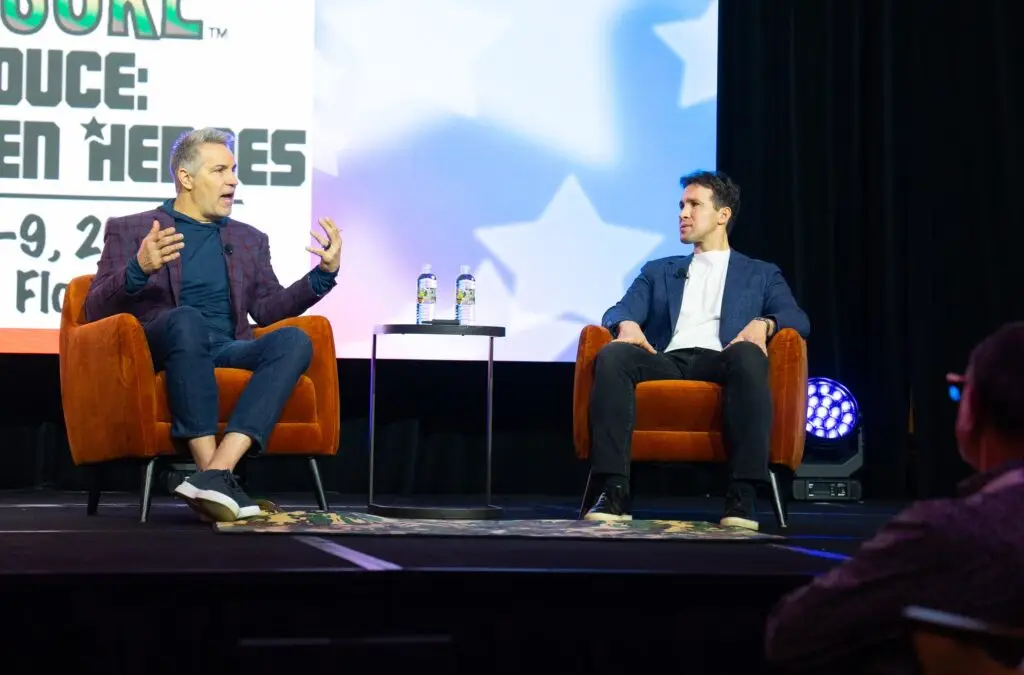

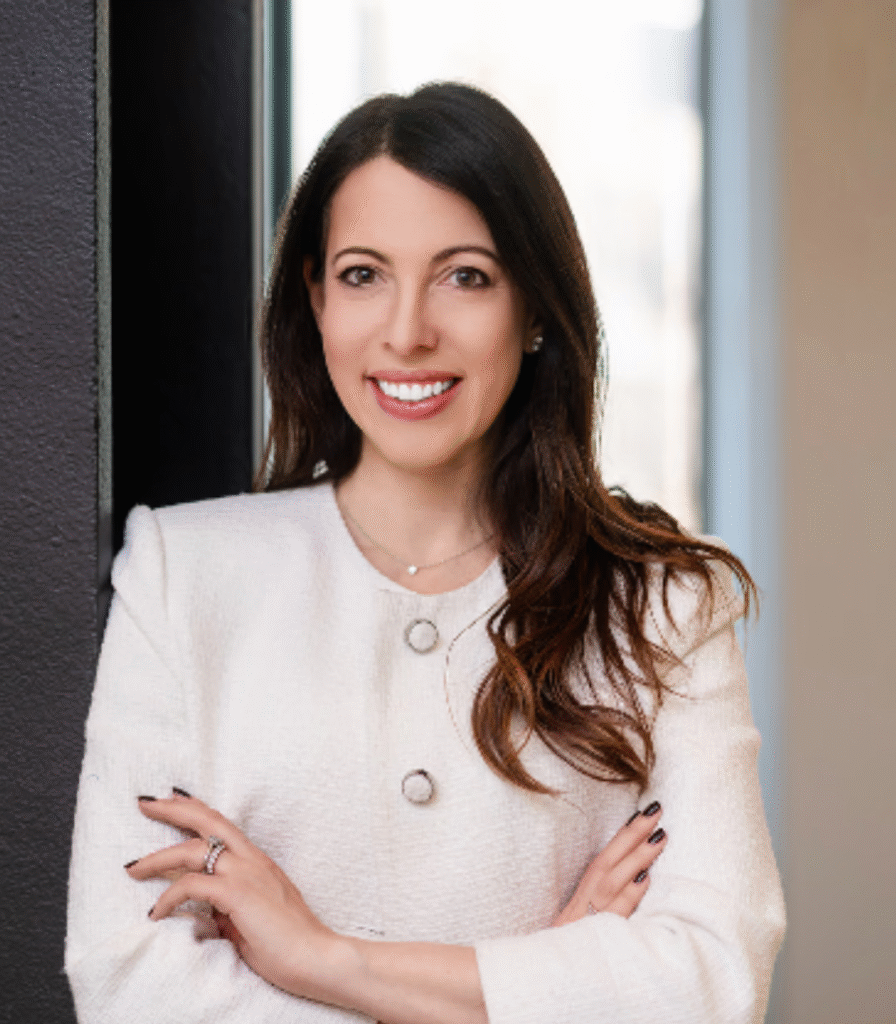
I recently interviewed The Knot CEO Raina Moskowitz on my podcast, Thirty Minute Mentors. Here is a transcript of our interview:
Adam: Our guest today is the leader of one of the largest and best-known companies in the wedding industry. Raina Moskowitz is the CEO of The Knot Worldwide. Raina, thank you for joining us.
Raina: Thanks for having me, Adam. Great to be here.
Adam: You grew up in Cooper City, Florida. You were a cheerleader at Cooper City High School. You continued to cheer while you went to Penn for college. You grew up in a version of the Huxtable family. Your dad was a doctor, your mom a lawyer. Can you take listeners back to your early days? What early experiences and lessons shaped your worldview and shaped the trajectory of your success?
Raina: Yeah, I can’t believe we’re opening up talking about Cooper City, Florida. It has been a minute, but I will say that actually, Cooper City really continues to resonate and continues to be something that has really shaped me. The tagline for Cooper City is “Someplace Special,” and when I think about growing up, for me, what it was really all about was community.
Yes, you did mention that I was a cheerleader for Cooper City High School. Go Cowboys. But when I think about that, there are two main things that instilled in me that carry through today. One was a focus on a team and being part of a team, so that’s something that has really shaped my career. Also, just zooming out, when I think about cheerleading, I can barely tell you what’s happening in a football game still, but what I remember was being in front of a crowd and having a lot of pride and bringing people together to celebrate.
That actually brings me full circle to my time at The Knot Worldwide. I joined as CEO last year, and for me, I was so drawn to the elements of community and celebration. So while my days in Cooper City were a long time ago, that is definitely a through line that has carried with me. For my family, they really instilled a sense of community service, particularly my dad. That’s something that was always a big part of my childhood and throughout my career as well.
My dad is very service-oriented, and whether it’s a beach cleanup or a fundraiser, we were always doing something on the weekend or extra to give back to our community as well. So that is still very relevant today, something that I also hope to instill in my own kids today. But I’d say community and service are definitely big pillars from my childhood that continue to resonate and have shaped who I am today as a leader.
Adam: As you talk about community, which is such a key area of focus for you, not only growing up but as a leader, what advice do you have for leaders on how to successfully build community within their own organizations?
Raina: We’re a very global company. We operate in 11 countries. We have a number of brands globally, and with the shift to remote work over the past couple of years, this has become more important than ever before. So for me, it’s about being intentional about connection.
Over the past many years, there’s been so much debate about hybrid, remote, in-person work, and the principle that I have really focused on is just creating moments of connection. To build that across the team, it’s not about having to be in the office every day or working only remotely; it’s about intentional gathering. That’s something that we talk about here, and over the past several years, is how do we make a point? How do we create structure across the company to make sure that the right groups of people are getting together in the right moments?
Especially leading a wedding company or a tech platform focused on celebrations globally, we stand for celebration, we stand for connection. Weddings are one of the few moments where everyone you know and love is in one room, and so we want to make sure that we practice that as well. While folks aren’t in the office every day, and we’re incredibly globally distributed, we do make a point of getting together when it matters, particularly around solving customer problems, and so rallying together in key moments to really dig into work together, as well as have fun together.
Adam: How can leaders create those moments of connection, or at the very least create an environment that lends itself to those moments of connection?
Raina: First, we try to bring structure to it, because what I’ve seen is it doesn’t necessarily happen organically. So we have our culture and experience team focused on intentional gathering programming to make sure that leaders are empowered, they know how to plan gatherings, make sure they have budget to plan a gathering, and to get together in key moments, and measure the impact of that as well.
Just like you measure other parts of your business, it’s actually quite important to measure and monitor the amount of folks getting together in different moments. We’ve made that a priority over the past year, to be just more intentional about it and bring rigor, so process, measurement, just like you would to another initiative at the company. We treat this like an initiative as well.
So what you measure matters, and so making sure that you’re keeping track of it, making sure leaders are empowered and know how to do it, and that they don’t have to do it on their own to be successful as well. You don’t want all of the burden to be on managers to do this. We do have a team who helps create really effective moments for teams as well, so that’s our culture and experience team, to make sure that we are getting together and having real impact when we do.
Adam: You mentioned that you joined The Knot Worldwide last year as CEO. Before that, you were the COO and CMO of Etsy, and before that you were an executive at American Express. What were the keys to rising within your career, and what can anyone do to rise within their career?
Raina: I want to start with my time at American Express. I was there for about 13 years, and I often say I grew up there. What I think Amex did exceptionally well were two things. First, they have a very strong culture of internal mobility, and so in my 13 years there, I had eight or nine different roles, and that allowed me to gain experience in a number of different functions. I had roles ranging from strategy to sales to marketing to customer service, and that really allowed me to build empathy for our customers, being able to see our work from a number of different angles, a number of different functions.
The company did a great job of that. People stay at the company a very long time because you have such a variety of opportunities, and that really helped to accelerate my early learning, my growth, and my customer empathy. Amex also placed a real premium on leadership, and I often think about Amex as a leadership academy. So not only do you have to know your function, your craft, the technical work, but it really trains you to be a great leader, to lead teams, to not just be a manager but also a leader over time.
Those are definitely two things that I feel I really learned in my time at American Express, and really benefited from that. Given the focus of this podcast as well, I had amazing mentors early in my career, and I believe in not just mentorship but also having champions for you. I was able to form relationships over the years there with leaders who I didn’t just work for, but leaders who I admired, who I could go to with questions, and also champions who looked out for me when there were opportunities, who would serve me up when there were opportunities to take on projects.
Part of that was I have a high bar for excellence, always worked hard, always wanted to take on more, but also I had amazing mentors and champions in my time there who helped me, who served as sounding boards. So I really believe in the power of mentorship and also advocates and champions as well.
Adam: You shared a lot there that I would love to unpack. The first thing that you brought up was the fact that at American Express you worked in a very, very wide variety of roles, and when you look at it from the perspective of someone coming up through their career, there’s enormous value in that. You get to see all different things, and number one, you get to figure out what you’re good at, what you enjoy, where you want to be, and number two, even if you experience a role that isn’t well-suited for you, you have the opportunity to learn an area of the business, a function that you otherwise wouldn’t understand. As you rise, as you grow, having that holistic sense of how an organization runs is invaluable. Looking at it from the perspective of a leader, a really important question to ask yourself is, what kind of opportunities am I giving to the people who work for me? Are they stuck in one role? Are they stuck in one silo within the organization? Or do they have the ability to move around? Do they only gain exposure to one slice of the way the business is run, or will they gain visibility into how all these different areas within the business are running?
Raina: Yeah, I really believe that there are so many skills that are transferable. Of course, there are some roles that are incredibly technical, and you can’t just step into, but there are a lot of different functions, moving from customer support to sales, or sales to marketing, or marketing to product analytics to marketing. There are so many transferable skills.
I loved, throughout my early career, because I moved around so much, that really set me up later and now to be a CEO, because I’ve led so many of those functions. But in turn, I’ve worked over the years then to develop talent, and I have so many stories throughout my career of finding someone, they’re in a certain role, but seeing that that skill set that they have can be applied somewhere else.
It’s really important in developing leaders, making sure you are solving problems and understanding customer needs from a lot of different angles. Especially in tech, where when I joined Etsy, and I think in tech, perhaps different than American Express, people do tend to move around a bit more, and this is a way that I’ve been able to retain great talent by creating opportunities across different functions that they might not have thought of otherwise.
You hear a lot of, well, how do I grow my career? People often associate that with a promotion or a raise, but actually, when you think more broadly about internal mobility, it creates a lot more opportunity and develops even stronger skills and even stronger leadership as a result. The question that I tend to ask people, which a mentor of mine at American Express, someone who remains my mentor today, he always asks, what job do you want two jobs from now?
That was the question that we always thought about. How do you then work backwards, and what’s the skill set that you need to gain to get you there? It’s not just about moving function to function, it’s about being really intentional about what you’re building towards, and then working backwards to say, well, what’s that skill gap that I have? What type of experience do I need that’s going to set me on that path? People on my team know I continue to ask this all of the time in career development conversations, what job do you want two jobs from now? It’s not 10 years from now, it’s not five. So much is happening so quickly these days. It’s less about timeframe and more just where are you going, to make sure that we’re creating the right opportunities or taking on the right projects to help get you there. Credit to my mentor who asked me that, and I continue to ask that in every conversation.
Adam: It’s a lot easier to get somewhere if you know where you want to go. There are going to be ebbs and flows and zigs and zags along the way, and the goal that you set today might be different than the goal that you set tomorrow, but it’s a lot easier to achieve success once you define success.
Raina: I agree with that, and today definitions of success are changing very rapidly. I will admit I’ve thought of success pretty linearly over time, but that really changes, and I love what I’m seeing, actually, when I talk to people on my team, and even when I think about my own career. I love thinking about more broadly of what is the definition of success.
I also believe with the pace of innovation right now, there is so much opportunity to chart different paths through entrepreneurship, through embracing technology differently. It’s not just a one-size-fits-all linear path to success, and so I would really just encourage people to zoom out and think a bit differently. I think Gen Z has completely redefined what this could look like as well. When you look at the role of creators, when you look at the role of founders and entrepreneurs, there are so many different paths, which is really exciting.
I saw it in my time at Etsy, supporting creative entrepreneurs and really helping people create a business doing what they love, and same thing here at The Knot Worldwide on our platform. We’re empowering creative professionals, we’re empowering DJs and florists and photographers to pursue their careers and their success. I am really inspired by their craft and the work that they do, and that has been my way of contributing as well, to focus on these platforms that help creative entrepreneurs find success. That’s really important to our economy and different paths to success.
Adam: What were the most important skills that you developed that allowed you to become the CEO of The Knot Worldwide? And what are the most important skills that you utilize today as CEO?
Raina: When I think about some of the most important skills, first, it’s about developing talent. When I think about how have I been successful to date, it’s by building the best teams possible, and knowing what my strengths are, and knowing how important it is to surround myself with people who are even stronger than I am in key areas.
We talked about internal mobility, but for me, I’ve focused on a mix of thinking about my leadership teams as a portfolio. What skill sets do I need? How can I bet on internal talent? Where do I need external talent to complement to get us where we need to go? I also, over time, have really focused on communication as a key skill set.
So much of my role now, and as I’ve excelled through my career, is about being able to not just define a vision and a strategy, but to be able to articulate it in a way that inspires the company and inspires the team, and then repeat it over and over and over again to make sure that we are really moving forward together towards a shared vision. Communication is something that early in my career, I spent a lot of time writing the talking points, making the decks, operating a bit more behind the scenes. Especially for a number of years, I was in a chief of staff role, as an example, and so I got to watch up close fantastic leaders who really just inspired the team and motivated the team and were really clear about where we were headed.
That’s something that I have then focused on practicing, and now has become a strength. Where I actually spend a lot of my time as a leader personally is making sure we’re really clear about the company vision and making sure that everyone understands how their work connects to it, so that we can all move forward together. Communication has been a key focus, and something, as I’ve advanced in my career, has become more and more important.
Adam: There are very few, if any, skills more important than communication. You shared a little bit about your philosophy around effective communication, starting off with clarity of vision, explaining the why, why we do what we do, how is what you’re doing connecting with the broader mission? How can anyone become a better communicator?
Raina: Takes practice, and you don’t need a big stage for it. It’s really about, in any form, starting with what are we solving for? Where are we going? Setting the stage and just framing up what we’re doing in any interaction. Leaders at all levels have opportunities to practice this day to day in any size forum, in any topic.
It’s getting into good habits around setting up a meeting, framing it up. It’s about getting teams to the right outcomes, and by the way, you don’t have to be a leader. You don’t even have to be a manager to practice. Anyone in an organization through their day-to-day has opportunities to just practice, and I would encourage it. It took me many years to get there, many tries, but it’s not about big bang moments. It’s not about being on a big stage.
In fact, we’re often virtual half the time. I also think being remote and being on Zoom levels the playing field too, and it creates opportunities for more voices to be heard in many ways. I would just encourage leaders to really think about in every interaction, big or small meetings, to frame it up. What are the objectives? What are we solving for? Reminder, this is the North Star of what we’re doing. That type of habit really sets things up, brings clarity, sets context, and you get better outcomes as well.
While my focus has been certainly coming in as a new CEO, setting the strategy, providing clarity, it’s a real driver of engagement of teams as well. When there’s clarity of the North Star, and they understand the meaning behind their work, you just get better outcomes. That’s true at the company-wide level, but it’s true in every interaction, because on whatever initiative you’re working on, you want a great outcome. If you can show up in different interactions being really clear about why, you’ll just have better results across the board.
Adam: You mentioned that half the time you’re working remotely, and in a way that can be an opportunity, in another way that can be a significant challenge. What are the keys to leading in a remote and in a hybrid setting?
Raina: We’re very intentional. We are globally distributed as a company. I am in the office quite frequently, but not everyone lives near an office, and so most of our meetings end up being hybrid. Now, what I think we do really well today versus pre-pandemic, let’s say, is we’re much more intentional about our practices.
Rarely is there only one person on a screen, so it’s usually a true hybrid mix, and so we’ve gotten better and better about making sure that you’re not having a separate conversation in the room, that you really have one conversation. Something that I try to be very intentional about, and I’ve seen leaders do really well, I’ve also seen leaders do a less good job here, but a piece of advice that I would give, and I try to do, is I watch people on the screen, and I look to see, did they unmute for a second, or are they looking like they’re going to say something?
I look for these cues, and I make sure to call on people, because I want to make sure that, especially if it’s a hybrid meeting, people on the screen have a chance to chime in. Of course, there are great hand-raising tools and other things, but I watch for the smaller cues as well, and I intentionally call on people to make sure that they have a chance to chime in and be heard.
Often, truly, I look for that. Does someone unmute really quickly, and then just change their mind, because they couldn’t break in? Then I’ll intentionally pause and see if they want to chime in. I don’t want to put people on the spot, but I really try to be intentional about hearing from voices that I haven’t heard. I’m sure I don’t do it perfectly in every meeting, but I certainly try to be intentional about that practice. I would absolutely encourage people to really pay attention to the faces on the screen as well.
Adam: What you’re sharing is really interesting, because such an important part of successful communication is being able to understand and read the body language of the person or the people that you’re communicating with. In a virtual setting, it’s very easy to write off the fact that we just don’t have access to body language, so that’s something that, given that we don’t have at our disposal, we’ll have to figure out how to operate without. But what you shared is a totally different way of looking at it, which is what is their virtual body language? Are they muting, unmuting? Are they using other digital tools that could provide the kind of signals that you would otherwise receive if you were having a face-to-face conversation?
Raina: There’s a whole host of other cues to look at now as well. Again, the idea of making sure that you’re hearing from everyone is really important, without putting folks on the spot, but creating the space in the room. Broadly, actually, I want to build on that point, Adam, because as a leader, it’s very important that you’re not always the first or the last one to speak, that you’re really allowing conversation to take place, for debate to take place. I don’t do this perfectly every meeting, that’s for sure, but really working to make sure that there’s active debate, because that’s what a good meeting is about. If there’s not debate in a meeting, it probably could have been an email.
Really, also being intentional about when and why you’re meeting and creating space for voices, that’s very important. The best leaders that I’ve worked for, and something that I try to instill, is making sure there’s space for voices in the room, and it’s not just mine. We won’t get to the best outcomes if I’m driving too much of the conversation. That’s something that I continue to work to develop and practice, making sure that there’s space for debate, making sure that there’s very clear setting at the top of the meeting, we wrap with clear action items.
Generally, just having effective meetings is very important, especially in a hybrid environment. But most importantly, it’s hearing from voices, because the team is the one with the expertise. Your team is going to have the best ideas, and so making sure you get the best out of them by creating the space, whether it’s in person or hybrid or virtually, is something that all leaders should be practicing and very mindful of.
Adam: How do you do that? What steps can you, as a leader, take to enable people within your organization to feel comfortable stepping up to the plate, sharing what they genuinely think, not feeling inhibited by what people often feel inhibited by? Am I going to say something that’s going to make me look stupid? Am I going to say something that might get me in trouble with the higher-ups? Am I better off just keeping quiet? How are you able to get people to be themselves, be their best selves in whatever setting they’re in?
Raina: It starts with building a culture of trust, transparency, psychological safety. There are broad themes that you have to have across the culture that take work. Back to communication, one of the elements, as I think about communication, and something that’s helped to accelerate my career, is transparency and authenticity. That is something as well, where it’s not just about the big vision moments, the big strategy moments, it’s just operating more transparently and authentically as a leader, as a company.
I do think there are foundational elements that allow teams and employees to be able to feel safe at the broad level, to be able to speak up, to be able to share their real point of view. There are smaller ways, though, in the top of a meeting, setting the tone, setting the ground rules for the meeting, really encouraging it, and then role modeling it, and making sure that you hold that promise true.
There are big ways that have to be true across the culture of a company, but also you can get there in smaller moments as well. Being very intentional about how meetings are structured, who’s in the room, and setting the tone at the top, giving people permission, and then making sure that you encourage it throughout, thank people for their feedback, and then sort of connect the dots at the end. That can go a long way, but I do think you have to have a foundation of trust, transparency across the culture, and it’ll get easier over time, but leaders need to role model it in big and small interactions.
Adam: How can leaders cultivate trust?
Raina: I think about this a lot. I have worked over time to make sure that even as the CEO, I operate transparently. I’m very accessible. I want to make sure that people feel that they can reach out to me at any time. Slack is a great enabler of that. Slack as a channel makes leaders very, very accessible. I show up authentically and create a lot of touch points for communication, so I spend a lot of time thinking about where I show up, how I show up, making sure that I’ve got a lot of time with teams in different forums.
The more that, as a CEO or as an executive, you show up, both as a leader, but also human, accessible, create space to get to know people, that goes a long way as well. I’ve found that that’s harder to do, just being virtual. You feel like you have to be very efficient with your time, sort of jump into it, but just creating space for the team to get to know you both as a leader, but also as a human, being less scripted, being more authentic in communication, all of that helps to build trust.
And then doing what you say you’re going to do. I host a series of roundtables at all levels of the company. I am always taking notes in those meetings, and then I’m always very intentional. There are typically one or two themes that come out of those forums, things that maybe aren’t going as well, areas where leaders need help, or things we could do better as a company, and I’m very intentional. I follow up on those immediately. Maybe not every last thing, but are there one or two things that really show that I’m listening, that really show that I am true to my word, and I can follow up and make those improvements?
It’s about creating the space for connection at all levels of the organization, creating forums for teams to feel heard, both formally and informally, and then acting on it. So not just listening, but then acting on it, following up, finding those ways to show the teams that they’re heard, and that we are working as executives to make progress. Spending a lot of my time at different levels of the organization and different forums to create those connections outside of the meetings around key initiatives, so it’s having the right balance across your calendar as a leader and being very intentional about a communication strategy. I treat that equally as important as any other initiative that we’re working on to drive growth across the company.
Adam: The framework you shared around building trust is so valuable, and that last piece, taking action, trust is ultimately built through action. Are you following through on what you say you’re going to do, or are you not? And that is the difference between whether people trust you, whether people don’t trust you. We can all talk the talk, but how many of us are walking the walk?
Raina: Couldn’t agree more. In all of these themes, it’s all about the big moments, right? Companies do, and we just did our voice of the employee survey to really understand what’s working and what’s not working. We report back on it. We share not just the good stuff, but also where we can do better. Those are the big moments, but trust can be built in smaller moments too.
For all of this, whether it’s communication or career growth, it’s all about the big moments. But day to day, you can really work to build trust too. It’s important that leaders don’t just feel like there’s one big moment for this. It’s in every interaction, big and small, all day long, and the team is watching. So truly, the expectations around trust are higher than ever before, and transparency as well. This is an area where I believe I’ve gotten more and more comfortable and confident over the years, truly just showing up transparently, authentically. Not every interaction has to be perfect, but I’m being authentic, I’m being transparent, and that’s what employees are craving and expect.
Adam: Raina, what do you believe are the key characteristics of the very best leaders, and what can anyone do to become a better leader?
Raina: The very best leaders do a great job listening, creating space, and hearing from a number of voices before making decisions. That’s very important, and again, similar to what we talked about. How do you create space for voices and debate to get the best outcomes and make the best decisions?
Back to communication, being really clear about the why, about where we’re going, so that people can connect their work to something bigger. That’s a real driver of engagement, being clear about the mission and why the work matters. I just see that people will go that extra mile, will be all in if they understand the why, and if they feel connection, and especially if they feel the impact they’re making on the lives of your customers.
And then something that I think a lot about as a CEO, and as I got more senior in my career, is just there’s an element of being relentlessly optimistic that I think about. The more senior you get, the more pressure, the more decisions you have to make, but it is so important to just be relentlessly optimistic. People feel that, and it’s not about having rose-colored glasses. I don’t want to take that in a bad way, but if you’re optimistic, it doesn’t mean all smiles. Again, grounded in authenticity, but that really matters.
It gives the team confidence to do whatever it’s going to take to get to the goal. If they can feel your confidence, your conviction, your optimism, and it doesn’t have to be all day, every day, but that’s really important as a leader as well, showing up with the conviction about where you’re going, to get the team motivated, to get them excited about what that looks like. They’re going to show up their best for you as well.
Adam: How you show up as a leader impacts how everyone else around you shows up. If you show up as a downer, people around you are going to be downers, but when you show up with energy, enthusiasm, positivity, when you’re fired up, it’s a lot more likely that the people around you are going to be fired up.
Raina: I believe that. I really do, and it’s not just the leader. I think making sure your whole executive team is fired up as well. One other area that we work on a lot is thinking about your executive team as your first team. So maybe back to my cheerleading days of being on a team. Yes, I’m the CEO of the company, but my exec team is my team, and we are in it together.
We talk a lot about what does it mean to show up as a first team. When I hire people, and I’ve done a lot of hiring over the past year. I’ve hired my new CFO, as an example, and I said to him, and I say all the time, I don’t need a head of finance, I need a member of my executive team, because we are going to show up together as one team to grow this company, to take on whatever challenge comes our way. So I’m not looking, even though, yes, he’s good with numbers, he’s a great CFO, but really I’m looking for someone who’s part of the executive team.
That’s something that’s very important as well. In addition to the CEO showing up all in, bringing that optimism, the more that the entire executive team together can show up as a united front, aligned, I believe that also has a very big impact on the organization and how things run effectively. So that would be something as well to just actively focus on. The CEO, they’re not doing it themselves; they’re doing it by having the best and most aligned executive team.
The other piece that I was thinking, as well, just back to the relentless optimism, and something that I try to practice, though not always perfectly, but I would say it’s important that you invest in yourself as a leader too, because you are making a lot of decisions, you are carrying a lot of weight. I’ve talked for years about just making sure you put your oxygen mask on first. That’s something I don’t always practice, but is very important. It goes back to how do you have the stamina? How do you show up your best? Really making sure that you’re taking care of yourself is going to benefit the team in big or small ways. It’s very important that leaders take time to make sure they’re caring for themselves, their needs, creating the space in their day and their calendar, so that they can show up to bring that energy, make the best decisions. That’s actually a very intentional practice as well.
Adam: What do you look for in the people who you want on your team? What are the most important qualities?
Raina: They are hungry and they want to win. So I look for people who are really motivated to be all in, who are excited about the mission that we’re after. They also have to be good at what they do, but I have found that just solving for someone who’s the best expert in a certain thing is not always the right answer. It’s actually someone who is the most motivated by the mission, the most excited about it, and also great at their function. So it’s leading with that excitement, that hunger, that mission orientation. That’s what I look for when I’m hiring at all levels.
Adam: You can’t fake that. You can’t fake excitement. You can’t fake enthusiasm. You can for a very short period of time, but you can’t fake excitement and enthusiasm sustainably. When you’re trying to figure out what you want to do, you want to follow your passion, you want to follow your excitement, you want to follow your enthusiasm, and as a leader, you want to bring people in who have that passion, have that excitement, have that enthusiasm. Those are the people you want in the foxhole with you.
Raina: Yeah, those are the people you want to be surrounded by each and every day, on the good days, on the tough days, the people who are motivated, who care deeply about the customers that you serve, the people who are excited by the industry, by the mission. Those are the people who are going to be successful. Those are the people you want to roll up your sleeves with, day in and day out.
So that’s what I look for. Anytime I’ve strayed from that, I’ve found that to really get the best out of the team, it’s to find those people. That’s what I look for, and I think it’s true at all levels.
Adam: The last piece of advice that you shared, which is so essential, taking care of yourself as a leader. If you’re not taking care of yourself, then the people around you aren’t going to be at their very best. You ultimately need to be at your best for you to lead at your best.
Raina: So, as I said earlier, you’ve got to put your oxygen mask on first, and I’m not always perfect at this, but I do try to be very intentional about making sure that I block my time, making sure that I use my calendar just like I would on any other topic to create time for myself.
For me, it’s about exercise, time with my family, and getting sleep. I know that sometimes I reach a point where I need those things to be able to show up my best, to be able to make the best decisions for the team and the company. It’s really important for any leader to prioritize whatever those things are that give you fuel, that keep you at your best, to create the space for it and be intentional to block out that time. If you don’t block it, it’ll be filled up with work, so work will always fill the space that it’s given. I use my calendar as a tool for that, to really make sure I’m prioritizing the things that I need to show up my best.
Adam: Thanks for blocking out the time today to have this conversation, Raina. Thank you for all the great advice, and thank you for being a part of Thirty Minute Mentors.
Raina: Thank you for having me.