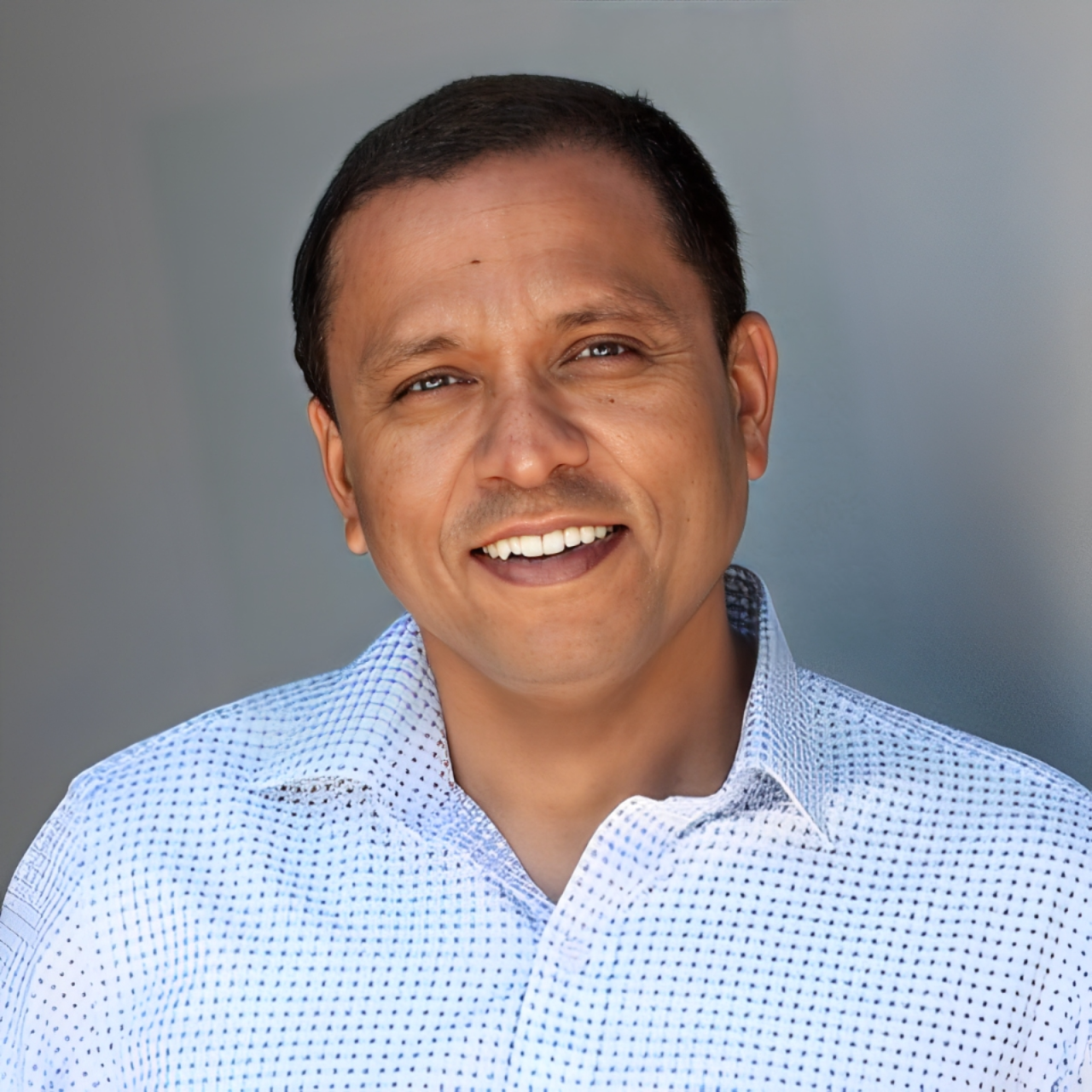


I recently went one-on-one with Seth Pinsky, CEO of 92NY.
Adam: Thanks again for taking the time to share your advice. First things first, though, I am sure readers would love to learn more about you. How did you get here? What experiences, failures, setbacks, or challenges have been most instrumental to your growth?
Seth: My career did not follow a straight line, and it has not ended up where I thought it would when I started out. The biggest lesson I have learned from that is that one should treat one’s “life roadmap” as a guide, not a cage. When a door opens that you did not plan for, look hard at what is behind it before deciding it is the wrong one. Not every detour is worth taking, but some of the best things in my career came from taking detours out of which I almost talked myself.
The clearest example was how I got to my role at The New York City Economic Development Corporation (NYCEDC). I was hired into a role with a specific set of responsibilities, and took close to a two-thirds pay cut to do it. I then discovered fairly quickly that the person who hired me for that role was not really authorized to hand it to me. So, I found myself with a title and very little to do. Rather than wait for someone to define my work for me, I started picking up projects across the organization that looked interesting to me and that no one else was moving forward – I called them “orphan projects” and it turned out that, in government, there were a lot of them. That turned out to be an incredible experience. These projects put me in rooms with people across city government, built relationships I never would have otherwise built, and eventually led to my becoming president of NYCEDC. None of that would have happened if the job I had thought I was taking had been the job I actually got.
Two lessons from this really stuck with me. One, do better due diligence before taking a job. But two, and more importantly, when a setback lands in your lap, look for what it frees you up to do. Sometimes the absence of a defined path is the path.
Adam: What are the best lessons you learned from your time in government?
Seth: Three things have stayed with me. The first is that communication is not optional. Leaders have to explain themselves clearly and honestly. That means being straight about what you can do, what you cannot do, and why. It also means actually listening to what people tell you in response. People will accept a hard answer far more readily than a vague one and are even more willing to take hard answers if they feel listened to (and, even more, heard).
The second is that framing a question well matters as much as answering it. If you do not slow down and define the actual problem you are trying to solve, you will almost always end up solving the wrong one, often at great expense. A lot of bad policy comes from skipping that first step.
The third is the importance of empathy. When you hit what feels like an impasse (which, in government, happens a lot), the useful move is to understand why the person across the table is holding onto his or her position. Once you know what the motivation of your counterparty is, you can often find a version of a solution that gives you what you want and need, while also addressing your counterparty’s concerns at the same time. Seeking “win-win outcomes” instead of “zero-sum outcomes” is usually the difference between losing on principle versus actually getting things done.
When I worked for RXR Realty, I worked on a major rezoning of a downtown in a suburb of New York City. Our goal was to create over 10 million square feet of new development, creating a new model for suburban living that we hoped would be applicable elsewhere in the region and across the country. As we worked towards this goal, on several occasions, we and our development partner on this project, another private developer, would find ourselves stuck as we negotiated with the city officials sitting across the table from us. We would say that we needed X, they would say they needed Y, and we would find ourselves stuck, digging in our heels with positions that seemed by all accounts to be fatally irreconcilable.
When this would happen, I would ask the city officials to explain not just what they needed, but why what they needed was so important to them. With this understanding, I found that it was often possible to craft a solution that got us a different version of what we needed and got them a different version of what they needed – versions that, while not exactly what we had originally sought, effectively met both of our requirements and broke the logjam. By taking this approach, we were able to overcome every obstacle that we encountered, not just receiving unanimous support for the project in a community that had been deeply divided, but receiving that support within a timeframe that nobody on the outside had thought possible given the project’s scale and complexity.
Adam: What are the best leadership lessons you have learned from leading a non-profit organization?
Seth: Mission comes first. If the organization does not stand for something clear, it will eventually drift and fail, no matter how well run it is. The mission is the reason anyone shows up, whether that be staff, donors, or the people the organization serves.
Business is a close second, and I mean that seriously. You can stand for something important, but if your budget does not balance, you will not be standing for it for very long. Financial discipline does not compete with mission. It is what lets you keep pursuing it.
And finally, communications are not a luxury. It is not enough to have a mission. You have to be able to say what it is and why it matters, again and again, especially to people who are not already on board. A nonprofit that cannot articulate its own purpose has a much harder time raising money, recruiting talent, and earning the public’s trust.
At 92NY, these priorities have been tested in real time as we have navigated a deeply divided community and world while remaining committed to being a true “big tent” organization. What has allowed us to keep people with many different perspectives engaged is a willingness to be clear about our core values—recognizing that some will agree with them completely and others will not—while also listening carefully to feedback from across our community and ensuring that everyone feels heard, whether they agree with us or disagree. At the same time, we have remained focused on strengthening our financial foundation, because without a sustainable business model, even the most important mission ultimately becomes impossible to advance.
Adam: What are your best tips for fellow leaders of non-profit organizations?
Seth: Do not accept the status quo just because it is the status quo. I came to 92NY without ever having worked at a nonprofit before. Admittedly, there is a real downside to this. Things that would have been second nature to someone with more sector experience took me time to learn. But the upside turned out to be significant, too. I got to look at everything we do with fresh eyes. Instead of accepting a practice because that is “how it is always done,” I could ask why it is done that way. In some cases, there would turn out to be a good reason, and I learned something new. In others, though, there was not. In these cases, asking the question opened up opportunities we would have walked right past.
Adam: In your experience, what are the defining qualities of an effective leader? How can leaders and aspiring leaders take their leadership skills to the next level?
Seth: The first is a willingness to empower the people who work for you. Your job is not to be the chief cook and bottle washer. It is to set direction, then prod, question, and challenge, but ultimately to let the talented people who work for you do their jobs. If everything has to run through you, the organization can only move as fast as you can, and your blind spots become everyone’s. This is a lesson I learned firsthand from Mayor Michael Bloomberg, who has made an incredible career in the public, private, and philanthropic sectors living by this principle.
The second is being both strategic and tactical. Setting lofty goals with no plan to reach them leads to frustration. So does getting lost in the day-to-day with no larger vision guiding you. You have to hold the forest and the trees at the same time.
The third is the one that I think people underrate the most: the importance of communication and listening. The best leaders I have known do both constantly, treating the listening half of the equation as the more important half.
To get better at any of this, I would put the most effort into the first strategy. Hiring people who are smarter than you with expertise that you do not have, and then actually trusting them, is the fastest way to raise your own ceiling as a leader.
Adam: What are your three best tips applicable to entrepreneurs, executives, and civic leaders?
Seth: Do not be afraid to try things. Most of the opportunities in my career came from being willing to attempt something with an uncertain outcome rather than waiting for a sure bet that never arrived or that delivered a result that was underwhelming.
Do not put all of your chips on any one bet. Build a portfolio of efforts so that no single failure is fatal.
And trust your gut, but trust data more. Instincts developed over time are valuable and worth listening to. But when the data tells you something different from what your gut wants to believe, the data is usually right.
Adam: What is your best advice on building, leading, and managing teams?
Seth: Hire really smart people who are genuinely aligned with your vision, and then give them a lot of rope with which, hopefully, to succeed. The alignment is what makes the rope a tool, rather than a trap. When you bring in people who share your general vision, you do not have to manage every decision, because they are making those decisions with the same end in mind. That frees you to do the work only you can do, and it gives them room to take ownership and grow into bigger roles. The mistake leaders make is hiring strong people and then refusing to let go. You pay for the talent without ever getting the benefit of it.
Adam: What is the single best piece of advice you have ever received?
Seth: A former boss of mine, Scott Rechler, CEO of RXR Realty, used to say, “Doing well, plus doing good, means doing better.” It stuck with me because it rejects a false choice. People tend to treat success and service as a trade-off, where you either chase the bottom line or you do good and accept the cost. This says the opposite. Done right, the two reinforce each other. An organization that creates real value and serves a genuine purpose tends to do better on both counts over time. I have tried to build my career and my work around that.
Adam: What can anyone do to pay it forward?
Seth: Find the things you genuinely care about and devote your life to them. That sounds simple, and in a way it is. Paying it forward does not require a grand gesture or a foundation with your name on it. It requires deciding what you actually care about, whether that be your community, an institution, an issue, or a group of people, and then showing up for it consistently over time. The people who have had the biggest impact on me did not do one dramatic thing. They committed to something larger than themselves and stayed committed. Anyone can do that, regardless of resources. It is mostly a matter of attention and persistence.