

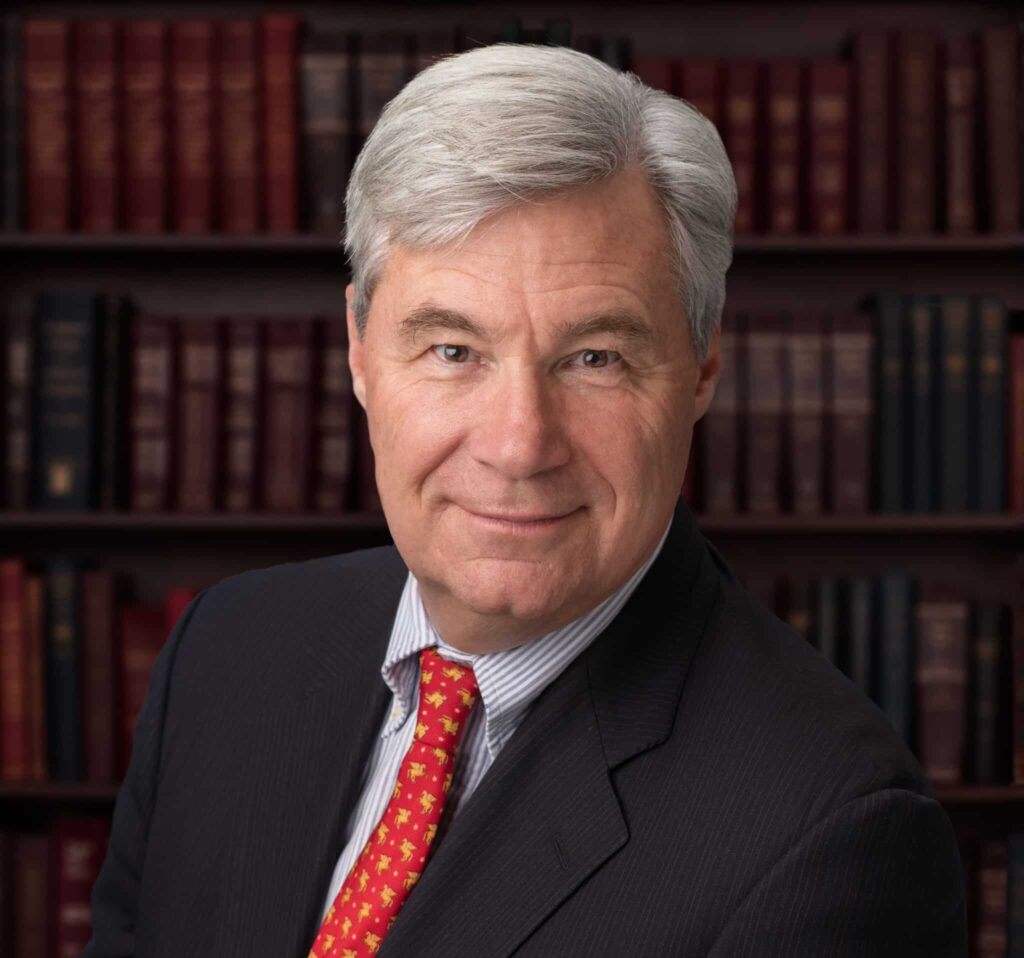
I recently interviewed Senator Sheldon Whitehouse on my podcast, Thirty Minute Mentors. Here is a transcript of our interview:
Adam: Our guest today is the United States Senator from the state of Rhode Island. Senator Sheldon Whitehouse has spent the past two decades serving in the United States Senate, where he is currently the Ranking Member of the Senate Environment and Public Works Committee and a senior member of the Judiciary, Budget, and Finance Committees. Senator Whitehouse, thank you for joining us.
Senator Whitehouse: Thank you for having me on.
Adam: You grew up all over the world. Your dad was in the Foreign Service, which meant that you lived in Vietnam, Cambodia, South Africa, the Congo, Guinea, Laos, and Thailand before going to high school, college, and law school in the United States. Can you take listeners back to your early days? What early experiences and lessons shaped your worldview and shaped the trajectory of your success?
Senator Whitehouse: Actually, worse than that, not only was my father a Foreign Service officer, but so was my grandfather, and so was my uncle. We spent a lot of time overseas, and we were a Foreign Service family beyond my immediate family. I think the strongest thing that came out of that was a very abiding sense that America had a rather unique place in the world, and that not only did we know that, but most of the rest of the world knew that too. Expectations for America were different from, and higher than, expectations for other countries. Even when we were doing things that were annoying and people would object, my father used to call it “tweaking the eagle’s beak.” The underlying premise was that, over the long haul, America would do the right thing and represented a nation of real values. What I’ve seen in my life is enormous value accrue to the country because of all that. The breaks tend to go our way. Even if everything is not always perfect, we tend to get the benefit of the doubt, and we’ve lived in a slowly moving tide of international goodwill that has helped history move in our direction almost without specific individual effort by a president here or a secretary of state there. That tide of goodwill has had enormous consequences for our country.
Adam: When you lead with good intent, you’re going to get the benefit of the doubt, and that’s true as a country. That’s true as an individual.
Senator Whitehouse: Here’s a very specific and much more immediate example. I spent some time in the Department of Justice, and one of the things the Department of Justice enjoys when DOJ lawyers show up in court is something called the presumption of regularity. Sometimes DOJ lawyers mess up. We do lose cases from time to time. Sometimes mistakes are made. But by and large, over time, the Department of Justice established such a reputation for propriety, decency, and principle that the court system as a whole conferred upon the Department of Justice a presumption of regularity, a presumption that government operations being defended by the Department of Justice were conducted properly. You may get an advantage in a particular case by playing dirty, but if you lose that presumption of regularity, you lose something of immense value to the department and to the American people. There was a similar international presumption of regularity about America’s goodwill, good intentions, and generosity.
Adam: When you lead with morality, when you lead with ethics, it might not serve you in every single case, but people are going to respect you. People are going to trust you. People are going to show up for you. People are going to give you the benefit of the doubt. In the long run, it’s going to serve you well.
Senator Whitehouse: That’s right. I agree.
Adam: You mentioned your time at DOJ. What were the keys to rising in your career? What were the keys to going from law school graduate to United States senator?
Senator Whitehouse: Well, particularly if you want to get into public life, not necessarily as an elected official, but even as an employee of a government office or for an elected official, the currency of the realm is hard work, being honest and honorable, and being a good team player whenever you can be. Maybe that’s more true in Rhode Island than it is in other places because Rhode Island is a state of a million people, and you all tend to know each other. You get to the lawyers’ community, and it’s even smaller. You get to lawyers in public service, and it’s even smaller. You tend to bump into people you may have had a political fight with or a legal fight with at church, at the grocery store, or while your kids are playing in the same soccer league. It matters to be decent and not get a bad reputation. Some of the obvious ways you get a bad reputation are by sloughing work onto others instead of staying late and doing it yourself, or by backstabbing and misbehaving instead of being decent and honorable. That’s kind of the baseline predicate for what you need to do to succeed.
Adam: It’s the basic blocking and tackling, which so many people do, so many people don’t do, and, to your point, often that’s the difference between being successful and not being successful.
Senator Whitehouse: Yeah. No shirking, no cheating, no dirty tricks. None of that.
Adam: Were there key moments? Were there key experiences that were transformative for you in your career and helped you get to where you are today?
Senator Whitehouse: Yeah, I’ll mention two. One was when I first came into the Attorney General’s Office as a brand-new lawyer. They called us Special Assistant Attorneys General because we were paid so little, and a whole new group of people had come in after a big turnover election. The different responsibilities were being doled out to different people, and I drew the short straw of public utility regulation, which was not sexy, involved loads of work, was kind of boring, and was arduous in some respects. I got it because I was the newest guy and nobody else wanted it. Basically, it was, “Let Mikey have that because, from the old commercial, he’ll eat anything.” I was disappointed briefly, but then I came to really like the cases. They were complicated. They were interesting. I was up against managing partners of major law firms in town because the big utility and the telephone company wanted the best lawyers, so they hired top-line people and paid them well. There was little me on the other side, and that was very, very good for me because I had the chance to go up against lawyers who, had I been in their firm, I’d probably have been carrying their bags and writing memos for them. Instead, it was me against them. Then there was another big political turnover in the Attorney General’s Office, and pretty much everybody who had come in with me got washed out. But nobody wanted the public utilities work, so they kept me on because I was willing to do it and had done a reasonably good job. Don’t worry too much about the job you’re tasked with. It may very well prove to be a blessing in disguise, and it really was for me. To this day, fighting over energy issues and climate issues, I still remember what I learned going up against those big utilities, looking through their books, understanding how electric rates were set, and where they hid the money. That was story one.
Story two was when a newly elected governor asked me to come up to the State House and be his legal counsel. I said, “I’m more than happy to come up to the State House and work for you. I’d love to do that, but I’m not sure I should be your legal counsel. I don’t know which side of the building the House and the Senate are on. I’m not political. I don’t know the players up here. I don’t know where the bodies are buried. You should hire somebody who has more juice in the political system, and I’ll work for them. I’d be totally happy with that.” He said, “No, you don’t understand. I’m going to have plenty of people who know their way around this building. But what I need in my lawyer more than anything else is somebody who’s going to be exclusively loyal to me. I don’t have to look over my shoulder and wonder who else they’re interested in helping. You’re my lawyer, and you’ll fight for me and what we’re trying to accomplish.” I said, “Okay, I’ll take it, but make sure you know I get a couple of big mistakes that you can forgive me for while I’m learning my way around.” He said, “Yeah, that’s the deal.” Sure enough, I made a few corkers, and he forgave me. I became a pretty effective legal counsel to the governor, well enough that he lobbied hard to get me the position of U.S. Attorney, which was the really big leap into being a principal rather than staff.
Adam: I love that, and as you describe how you were able to get started, that relationship that you were able to develop with the governor. Relationships are essential to not only getting to where you want to be, but succeeding once you’re able to get to where you want to be. What are the keys to building successful relationships?
Senator Whitehouse: Part of it is going to the sound of the battle. Run toward the sound of the guns. One of the interesting things about going to work for Governor Bruce Sundlun was that everything fell apart immediately in Rhode Island. The state-backed banking system fell apart the night before we were sworn in. We inherited the worst budget deficit any state had ever reported on a percentage basis. About three months in, the workers’ compensation system utterly collapsed and needed to be instantly rebuilt. All of that caused really massive ethics problems. Government became so unpopular that all the members of the General Assembly unscrewed their special General Assembly member license plates, which they had been proud of, and put regular plates on their cars so people wouldn’t honk at them or flip them off as they drove by. That’s how bad things got. In that environment, Bruce’s team worked really, really hard together. To this day, and this was back in 1990 through 1992, we are all still close because of that baptism by fire, that crucible of hard work we went through together. If you didn’t keep up, if you didn’t cut it, you went by the wayside. But those of us who stuck with the work and got it done forged relationships that have now lasted more than 30 years. Friends are great. I love having friends. But people who’ve been with you in battles, and you’ve seen their strength of character, their stick-to-itiveness, their courage, their willingness to work late into the night, and their good judgment under pressure. Those are bonds that, in some ways, are even closer than personal friendship.
Adam: As you describe the people who you want to go to battle with, the people who you trust, the people who you know are going to be there when the going gets tough. Those are people who you have the privilege of being able to surround yourself with. But in just about every environment professionally, and your job is the perfect example of it, we don’t have the privilege of being able to only surround ourselves with those kinds of people.
Senator Whitehouse: No. Other people get a vote.
Adam: Exactly. What are the keys to working with people who you may not necessarily like, may not necessarily get along with, may not necessarily trust, and may not necessarily want to be in the same room with?
Senator Whitehouse: Well, what I do is put different people into different buckets. In some respects, in the Senate, with 100 of us, it’s really not that different from your small high school graduating class. You kind of know who’s who. There’s some turnover, but it’s a limited cast of characters, and you come to learn pretty quickly who isn’t worth your time, who’s a showboat, who can’t be trusted, who will walk away from a deal when they get even a whisper of dissent, who’s just a bad character, and who’s simply not a good person. Frankly, there are some of those here, and you just don’t do things with them. Other people you may have really strong disagreements with on a great many issues, but you find a way to work with them in the areas where you do agree. Being able to compartmentalize matters. I’ll tell you another story. The person who was my biggest opponent and adversary on everything having to do with climate change was an Oklahoma senator named Jim Inhofe. Jim Inhofe was the guy who famously brought a snowball onto the Senate floor to prove, because it was still snowing, that there wasn’t global warming. I was the one who rushed over to the floor to say, “Well, you can talk about snowballs, but let’s talk about satellites and moon rovers and the things NASA scientists have put into space and sent to the moon and even to Mars. Those are the scientists who say climate change is real. So who are you going to believe, the senator with the snowball or the scientists who have rovers driving around on Mars and satellites circling the Earth?” We had a very oppositional relationship over all those issues.
But another Republican senator and I agreed to work together on ocean plastics and try to clean up ocean pollution. We had a hearing in the Environment and Public Works Committee on that bill, and everything was going smoothly. In walks Jim Inhofe, and I thought to myself, “God damn it. Couldn’t he at least stay away for this? Oklahoma doesn’t even have a shoreline. Why is he even here?” That’s all in my mind. He sits down, it comes time for questions, and he says, “You know, when I was a boy, I used to go down to the Texas shore. I’d take a cooler, a flashlight, and a folding chair, and I’d stay out all night because those little sea turtles were coming out of their eggs and making their way to the ocean. I didn’t want anybody driving along the beach in a truck and smashing the baby sea turtles, so I’d wave them away with my flashlight.” I had absolutely no idea this guy cared a hoot about sea turtles. At the end he said, “When you guys get your bill done, would you come to me? I’d like to be an original co-sponsor when you file it.” Sure enough, he was, and the bill ultimately passed by unanimous consent because everybody looked at it and said, “Wait a minute. Sheldon Whitehouse and Jim Inhofe agree on this. There’s a lot of room for me between those two, so let’s do this.” Even when somebody is extremely oppositional on issues that are extremely important to you, you still have the opportunity to find their sea turtle and figure out how to work together. With some people, that’s a tiny slice in a huge wall of opposition. With others, it’s, “We can do most things together. There are just a few areas where I can’t go, where I’ve got my political no-fly zone.” And of course, you’ve got colleagues on your own side whom you tend to agree with a little more often, though not always.
Adam: I love that, and there’s so much to unpack there. But to me, the big takeaway is don’t make assumptions about the people around you. If you walk into a room and assume this about that person and that about that person, you’re automatically going to be less likely to get to where you want to be. Show up with an open mind and let other people prove you wrong. Let other people show you who they are.
Senator Whitehouse: Yeah. There was Jim Inhofe and Sheldon Whitehouse together on the ocean plastics bill. Who would’ve thought?
Adam: So much of your job, so much of your work revolves around persuasion. Whether you’re trying to persuade your colleagues to come closer to your position, whether you’re trying to persuade the public, or whether you’re trying to persuade other stakeholders, what are the keys to successful communication? What are the keys to persuasion?
Senator Whitehouse: There are some basic things about persuasion and the communication that gets you to persuasion, and I’m no expert on that. Nobody’s ever confused me with Abraham Lincoln, Winston Churchill, or one of the great persuaders. But I do live by some rules. One is to keep it as simple as possible and, in particular, try to avoid jargon. Churchill had this wonderful phrase: “Small words are best, and old small words are best of all.” That’s a good reminder to use regular speech. There’s so much jargon around this building that, if you can stay away from it, that’s very helpful. That’s kind of the technical communication part of it to me. The really important things are that you need to be able to understand and describe the situation. You need to be trusted as someone who’s knowledgeable about what you’re talking about, and you need to be a bit predictive. You need to be able to look ahead. Everybody can look at what’s happening right now and have their view of it, but looking ahead and accurately predicting what’s coming down the road so we’re prepared for it matters. Then there’s persistence. That matters in this body. If you show up on the Senate floor and give one speech about an issue, nobody cares. But if you’re persistent, if you’re constantly working on something, if you make sure you’re knowledgeable, and if you’re deeply engaged on an issue, that lends credibility because people know you’re there all the time fighting for it. Those would be the three things. Be persistent. Constantly remind people this is an issue you care about. Be accurate in describing it so people can trust you. And have a forward-looking perspective because things are going to come at you, and you want to be the person who saw them coming and prepared for them.
Adam: What do you believe are the keys to successful leadership, and what can anyone do to become a better leader?
Senator Whitehouse: I don’t know that there’s a particular key. I’ve got different colleagues who bring very different skills to the Senate, and their strongest skills are what allow them to lead. But they’re very different skills, and I think part of it is simply being true to your own skill set. You can’t fake it and pretend to be Winston Churchill when you’re not. Some people can speak with great effect. Other people work much more quietly and build a trusted network of colleagues they know they can rely on, people they can go to with ideas who’ll say, “Yeah, you’re one of us. We’ll trust you on that.” Others are much more narrowly focused. Others have external followings they can bring to bear on colleagues, so the environmental movement, the labor movement, or some other outside force comes in with them and gives them support and influence. I don’t think there’s anything that’s really magic. The things that are poisonous are when you lie to people, when you walk away from a deal when things get tough. Sometimes everybody has to do that once in a while, but if that becomes your modus operandi and you’re known for it, nobody wants you in the room. And if you shoot your mouth off when you shouldn’t, that’s fatal too. You have to be trusted. A lot of conversation takes place before you can work a deal together, and if somebody’s blabbing about what you’ve been saying privately, that’s a real problem. Those are the three things that, at least in my line of work, are pretty fatal to leadership.
Adam: What I’m hearing from you is that a key skill that’s universal is authenticity. You have to be yourself. If you try to be the best version of the person next to you, you’re not going to be the best version of yourself. I’d love to know if you could share some examples of leaders you’ve been around and admire. When you mention colleagues who bring different strengths to the table, what are some examples of that? What are examples of key leadership skills you’ve seen that have served different people well when they lean into what they authentically do best?
Senator Whitehouse: I’ll talk about some of our departed colleagues. Harry Reid grew up broke in a little dump town called Searchlight, Nevada, where his mom did the laundry for the whorehouse, and he made extra money by fighting in bars where they’d set up a little ring. Gradually he became a good enough fighter that he was able to get on the card in small venues. He was rough, plainspoken, and not long on courtesies, but he was formidably focused on what he wanted to do. He brought a boxer’s, a pugilist’s, sensibility to his work, and he didn’t need much beyond the respect of his colleagues and the hard work he put in on the Senate floor to become kind of the legatee of Robert C. Byrd, the acknowledged master of Senate floor procedure. He’d done his homework, so he had this very distinct personality that he stayed true to. He didn’t really care much for me because I’d created a primary when I first ran for the Senate. He didn’t like that I’d created a primary. Ultimately, my primary opponent vanished from the race, and I became the Democratic nominee. Then Harry invited me down to see him. Before hello, before any pleasantries, his first question was, “Why are you running such a terrible campaign?” I said, “Actually, I’m not. I’m running the only campaign that will win under the circumstances I’m facing, and here’s why.” We ended up getting along, but there are a lot of people who couldn’t pull off being that blunt.
Another would be Ted Kennedy. I’m in his seat on the Senate floor. He had a completely different approach. He was friendly, loquacious, garrulous, cheerful, and charismatic. He had the Kennedy family connections and the drama. He was always pulling little jokes on the floor. He made you feel like you were part of his exciting world of fun, fascinating people, and big decisions. He had this big, booming voice and loved having arguments and giving speeches. The two of them couldn’t have been more different, but each was true to his own personality. Each had his own background, and they both ended up being very effective colleagues and leaders on the Senate floor.
Adam: You mentioned that first race for the U.S. Senate. You ran against a difficult candidate, Lincoln Chafee, a relatively popular incumbent. He bucked the establishment. He voted against the Iraq War. It wasn’t an easy race for you. What were the best lessons you learned from that experience? What were the keys to winning that race?
Senator Whitehouse: I guess I would say two things. One, the guy who was my opponent in the primary rushed into the race and rushed out to California and New York to do fundraising and establish himself as the Democratic candidate, trying to fill the space so that neither I nor anybody else would get into the race. He wanted to make himself the guy. One reason I didn’t do that was because two House members from Rhode Island, Patrick Kennedy and Jim Langevin, hadn’t yet decided whether they were going to run for the Senate. I thought I owed it to them to let them have first call. If Jim Langevin wanted to run, then I would support Jim Langevin. If Patrick Kennedy wanted to run, then I would support Patrick Kennedy. I told them that and just sat back and waited. Eventually, both of them decided they didn’t want to run. So I declared, and within about two weeks, both of them had endorsed me, and we had a nice press conference with the three of us lined up together. It paid a lot of dividends to have been courteous and willing to take the chance that one of them might run, in which case I couldn’t. It backfired a little bit on my opponent that he had tried to rush in and take over the spot without showing respect to the two members of Congress whose help he was likely going to need in order to beat, as you said, a very well-liked incumbent. The Chafee name was like the Republican version of the Kennedys in Massachusetts. It was a really big deal. John Chafee, Lincoln’s father, was an amazing hero. He was a Marine who fought on Guadalcanal, went back to war in Korea, led a rifle company while married, and signed back up. Some of his soldiers said he was the bravest and noblest man they’d ever met. He became governor in a fairly Democratic state as a Republican, then Secretary of the Navy, then a U.S. senator. The Chafees were a very big deal, so it was a significant misjudgment on my opponent’s part to compromise the support he could have received from the Democratic members of our congressional delegation.
Adam: Were there any lessons in particular from going head to head against Lincoln Chafee? Not an easy candidate by any means. What did you take away from that matchup?
Senator Whitehouse: I had to work like hell. This was before there were super PACs and before there was unlimited money, before Citizens United poisoned our political system, so you had to raise your own money. You’re making an awful lot of phone calls. I remember making so many calls that, by the end of the day, my ear was sore from having the phone pressed against it all day long. I actually had to sleep on one side because of it. There’s an element of drudgery to campaigning, but there’s also an element of fun. It turned out I actually liked campaigning. I didn’t know I would. I’d been around campaigns, but I’d never been the principal in a national election before. It turned out I really enjoyed it, and I think people were attracted to how much fun we were having. We held community dinners. During the summer we’d do hot dogs and hamburgers in a nice outdoor location. During the winter we’d take over a veterans hall or someplace similar and serve pasta and meatballs. Anybody who wanted to come was welcome. I’d give a short speech, and then we’d just talk and answer questions. It made me a much better candidate because of all that exposure, but it was also fun. People got to see me in a natural setting. I wasn’t some guy on a television screen standing next to plans wearing a hard hat or walking down the street with a family in New York. I was right there in the room with them. Whatever they wanted to ask, it was open season on Sheldon. Come one, come all. So you’ve got to look for the fun, but you’ve also got to perform the drudgery.
Adam: What’s the toughest decision you’ve had to make in the course of your political career, and what advice do you have on the topic of decision-making?
Senator Whitehouse: There are a lot of hard political choices that you make, but those kinds of decisions come and go. Sometimes they’re fatal for people. There was a House member named Tom Perriello from a very conservative Virginia district who cast a key vote for Nancy Pelosi to pass the cap-and-trade bill, which, had we passed it in the Senate, would have put us on a completely different and much safer climate trajectory than we’re on right now. That vote probably cost him his seat. There are decisions like that, but for me, most of the tension has been between the demands of family and the demands of public life. My kids were pretty young when I first ran for attorney general and later when I ran for the Senate. In between, I had an unsuccessful run for governor. It’s easy to underappreciate how much your family goes through, particularly when your kids have to see negative ads about their dad. That’s just a little weird and unpleasant. It’s also very easy to become a little intoxicated by your public responsibilities and your public persona so that you don’t fully meet your responsibilities as a good husband and a good father.
Adam: Senator Whitehouse, what can anyone listening to this conversation do to become more successful personally and professionally?
Senator Whitehouse: I don’t think there are magic spells that work. I go back to where I started. Your reputation matters. Not everybody’s going to know you, but a lot more people are going to know of you than actually know you. That’s true not just because somebody’s in politics. Whatever you do, there are more people who know of you because they know your friends, your family, they went to school with you, or they know someone who knows you. The people who know of you are really your best allies if you’ve been a good person, if you’ve gone out of your way to work hard, and if you’ve gone out of your way to be kind whenever you can. When you have to be tough, get over it as quickly as you can and move on. Characteristics like hard work, decency, and kindness, when you can show them, pay a lot of dividends. There are some people who are geniuses. They know how to build a rocket that nobody else can build, and they can be the biggest jerk in the world because their rocket is still going to fly, so people are going to hire them. There are other people who know how to make a billion dollars, and they can have everybody fawning all over them because they’ve got so much money they can behave however they want. But for normal people who don’t have genius-level skills or billionaire-level wealth, your social circle really defines you, and your reputation among the people who know of you, as well as those who truly know you, is something that’s really worth making sure is a good one.
Adam: Senator Whitehouse, thank you for all the great advice, and thank you for being a part of Thirty Minute Mentors.
Senator Whitehouse: Thanks for having me on. This was fun. It was nice to do some reminiscing.