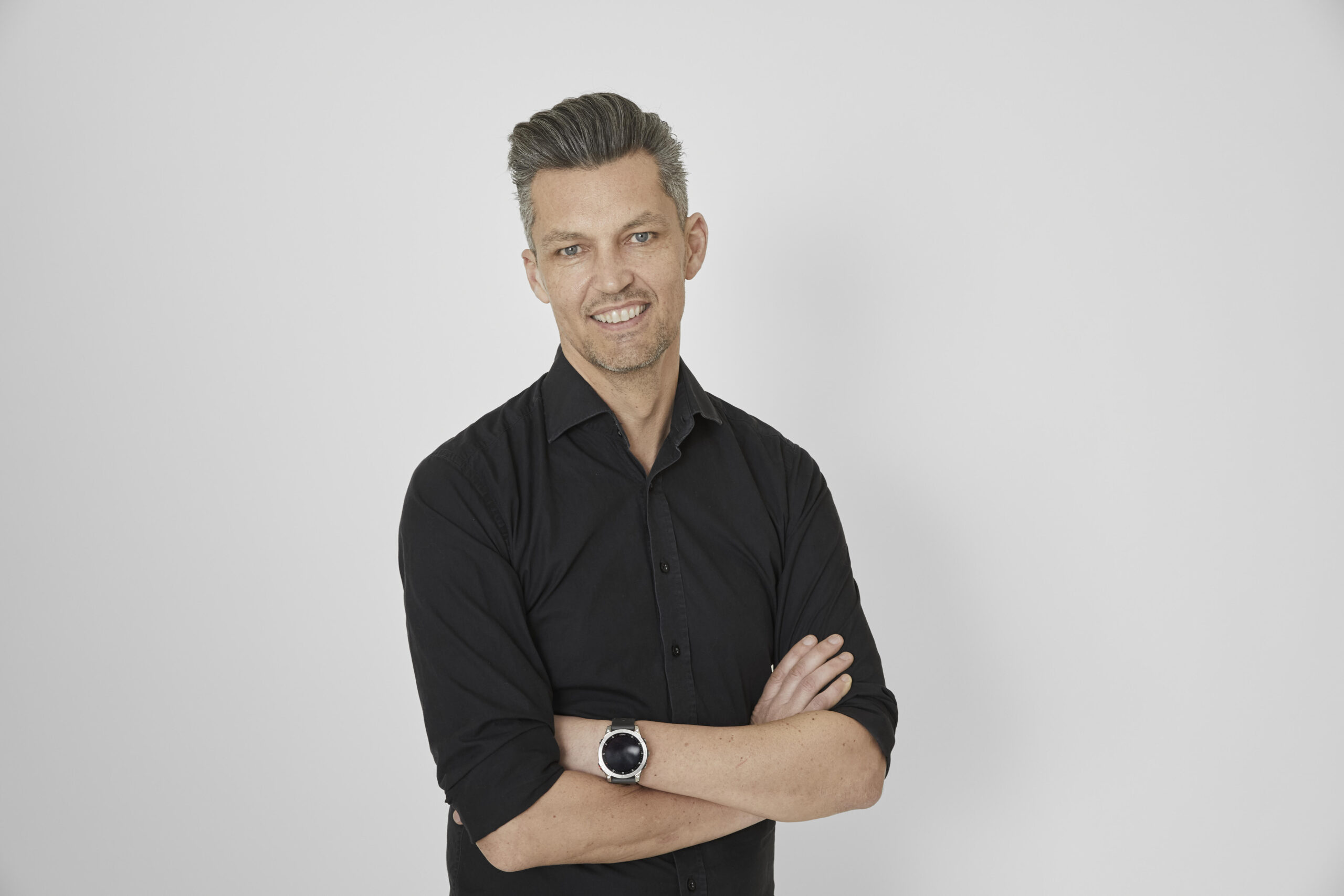
I recently went one-on-one with Tal Kollender, founder and CEO of Remedio, to discuss her journey, the challenges of building a cybersecurity company, and how the field is evolving.
Adam: Thanks again for taking the time to share your advice. First things first, though, I am sure readers would love to learn more about you. How did you get here? What experiences, failures, setbacks, or challenges have been most instrumental to your growth?
Tal: I started hacking as a teenager because I was obsessed with figuring out how systems worked and how to break them. That curiosity became serious during my military service in an elite cyber warfare unit within the IDF’s Cyber Security-Systems Division. That high-pressure environment taught me how to think about risk, speed of execution, and what it actually means to solve a problem under pressure.
After the military, I joined Dell EMC as a security architect. Moving from a mission-driven defense unit to a large corporate enterprise was a massive culture shock. I quickly realized that corporate holds stem from organizational inertia. I watched massive organizations sit on critical vulnerabilities for months because the internal friction of applying a fix without disrupting workflows was simply too high.
Bootstrapping Remedio for six years before taking outside capital was another intense pressure test. There were plenty of moments when the path forward was murky, but that period forced a radical discipline of keeping your head down, focusing on reality, and ignoring the macroeconomic noise. Setbacks stopped looking like existential crises and started looking like data points showing us where our model needed an upgrade.
Adam: How did you come up with your business idea and know it was worth pursuing? What advice do you have for others on how to come up with and test business ideas?
Tal: The idea came directly from what I kept seeing as a practitioner. Over 80% of serious enterprise breaches exploit simple misconfigurations and known vulnerabilities. Yet, the entire cybersecurity industry was pouring billions into detection tools. Every vendor wanted to build a louder fire alarm, but nobody was building a tool that could actually put out the fire safely and at scale. I knew it was worth pursuing because the problem was massive, highly technical, and structurally ignored.
My advice for testing an idea is to stay as close as possible to the people who live with the problem. Go sit in the trenches with your potential users and build the product that way.
Adam: What are the key steps you have taken to grow your business? What advice do you have for others on how to take their businesses to the next level?
Tal: We stayed incredibly narrow because when you build powerful technology, the temptation to be everything to everyone is overwhelming. I resisted adding random features just to win isolated deals. Instead, we focused relentlessly on closing the gap between detecting a misconfiguration and automatically fixing it without disrupting business operations. We also focused entirely on proof over marketing hype because trust in enterprise security is built through outcomes. We focused on making our early adopters wildly successful, letting our metrics do the talking.
I learned when to check my ego and bring in specialists. I am a technical founder and an intense operator, but scaling an enterprise business requires a diverse set of elite skills. Hiring executives who were vastly better than me at global sales, customer success, and finance was what unlocked our true growth.
Adam: What are your best sales and marketing tips?
Tal: Stop selling your product and start selling your understanding of their problem. Enterprise buyers are highly skeptical and completely exhausted by vendor buzzwords and generic product demos. If you walk into a room and map their exact reality back to them, showing them that you understand their needs, the entire dynamic shifts, and you become a trusted partner helping them solve a structural operational risk.
For marketing in a highly technical field, you must provide insights and frameworks that practitioners can apply to their jobs tomorrow, completely independent of whether they ever buy your platform. And it’s critical to back every claim with hard, undeniable numbers. Security is full of qualitative fear-mongering.
Adam: What are the most important trends in technology that leaders should be aware of and understand? What should they understand about them?
Tal: The single biggest trend leaders are underestimating is the explosion of AI-generated code and AI agents operating inside enterprise environments. This is something happening right under our noses, and it’s creating a security surface that most organizations have no framework for governing.
When developers spend weeks writing backend code, they develop an intuitive understanding of every dependency and security decision. When AI generates that same backend in minutes, those decisions become invisible. Leaders should understand that at its core, this is a configuration governance problem. The attack surface is growing faster than the visibility into it.
Adam: In your experience, what are the defining qualities of an effective leader? How can leaders and aspiring leaders take their leadership skills to the next level?
Tal: An effective leader has the courage to make decisive, high-stakes calls with incomplete information, and completely own the outcome. Certainty is a luxury you rarely have when scaling a company or managing a crisis. If you wait for 100% of the data, the market moves past you or the threat materializes. Closely tied to that is radical intellectual honesty. The best leaders I know don’t pretend to be infallible. They can look their team in the eye and admit they were wrong with a plan to pivot.
For aspiring leaders, run toward the ambiguous problems that everyone else is actively avoiding. Take on the assignments where you have accountability for an outcome but lack full control over all the moving parts, because that’s where you build real leadership muscle.
Adam: What is your best advice on building, leading, and managing teams?
Tal: Hire for how people think, rather than the hard skills they already possess. Especially in fast-moving technical fields, the landscape changes fast enough that specific knowledge has a shorter shelf life than the ability to reason well under pressure. I want people who can hold a hard problem, stay with the discomfort of not having an immediate answer, and work through it systematically.
Adam: What are your three best tips applicable to entrepreneurs, executives, and civic leaders?
Tal:
1. Fall in love with the problem, never your solution. Solutions must remain completely fluid based on market data and reality, meanwhile the problem is your permanent North Star.
2. Be ruthless with your time. Every day, look at your agenda and ask yourself if you’re the only person in the organization who can uniquely drive the outcome. If the answer is no, delegate it so you can focus on strategic clarity.
3. Build a high tolerance for being wrong in public. If you’re terrified of making a mistake or injuring your ego, you will default to safe choices. Share your logic openly, invite intense feedback, and pivot when data changes.
Adam: What is the single best piece of advice you have ever received?
Tal: Early in my career, a mentor saw me spending days trying to engineer an absolutely flawless, theoretically perfect architecture for a deployment. He stopped me and said, “Tal, an imperfect solution operating safely in the real world today is worth infinitely more than a perfect architecture sitting in your notebook for six months.”
That fundamentally shifted my worldview. Perfectionism is often just a socially acceptable form of fear and procrastination. True operational resilience is built by deploying, learning, iterating, and scaling in real time.
Adam: Is there anything else you would like to share?
Tal: Leaders across every sector need to realize that cybersecurity and system resilience are no longer isolated, back-office IT cost centers to be checked off on a compliance list once a year. Technology is the core infrastructure of modern operations. Whether you are running hospitals, manufacturing lines, logistics networks, or financial systems, a flaw in your digital configuration is an immediate failure in your physical operations.
We also have to stop looking at security through a single lens. Patching alone is not enough. As AI tools and autonomous agents are pulled into enterprise workflows, they introduce massive configuration drifts that traditional risk models completely miss. All of this must be managed quickly and safely.
Conversations like this highlight just how much the field has evolved. For anyone considering a move into the industry, it’s worth understanding is cyber security hard to break into today, given how fast the threat landscape and required skill set are changing.